For a home gym with free weights, choose dense rubber before soft foam. A 15mm rubber crumb tile is the most useful starting point for a dedicated lifting area; EVA foam is more comfortable for stretching and bodyweight sessions. “Puzzle” describes an interlocking edge, not a third material: the tiles can be rubber or foam. None of these products, on its own, guarantees that a dropped barbell will leave the subfloor or your neighbours undisturbed.
Our top 4 picks

Best full-floor rubber choice — Rubber crumb 15mm tile.
A dense 1m × 1m tile for a garage or dedicated weights area; buy enough tiles to cover the measured space.
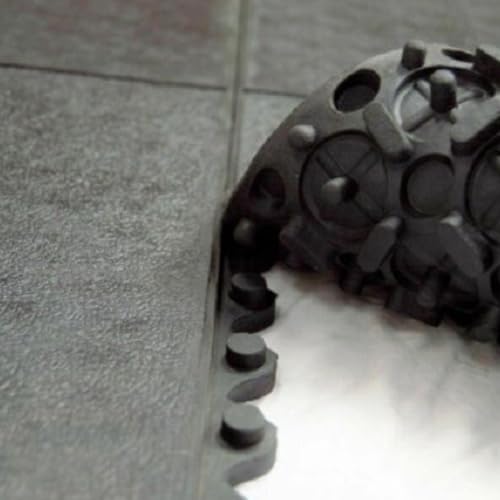
Best rubber puzzle format — Interlocking rubber 14mm tile.
A 90cm × 90cm single tile that links to adjacent tiles; feedback on this exact variant is limited.

Best for floor exercises — bemaxx EVA foam 18-tile set.
A 1cm EVA set covering about 1.67m²; cushioning is useful, but it is not a lifting platform.

Best single-piece equipment zone — Heavy Duty Rubber 12mm mat.
A 1.82m × 1.22m mat for a rack or machine footprint when you do not need a whole-room floor.
In this guide
- Comparison at a glance
- Four products reviewed
- Rubber, foam and puzzle: what actually differs
- Noise and floor protection
- Measure and install
- Cost per square metre
- How we chose
- The bottom line
- Frequently asked questions
Comparison at a glance
| Product | Material / format | Coverage | Best use | Main limit |
|---|---|---|---|---|
| Rubber crumb 15mm tile | Solid rubber tile | 1m² per tile | Dedicated weights area | Buy multiples; no drop guarantee |
| Interlocking rubber 14mm tile | Rubber puzzle tile | 0.81m² per tile | Modular rubber floor | Limited buyer feedback |
| bemaxx EVA 18-tile set | Foam puzzle tiles | About 1.67m² per set | Bodyweight and stretching | Can compress under equipment |
| Heavy Duty Rubber 12mm mat | Solid rubber mat | About 2.22m² per mat | One equipment zone | Fixed footprint; heavy to move |
Coverage is calculated from the stated dimensions of these packs, before trimming and gaps. A puzzle edge can alter usable dimensions slightly; measure the finished area and allow a spare tile. For a broader shortlist of rubber floors, see our best gym flooring guide.
Four products reviewed
1. Rubber crumb 15mm tile: best full-floor rubber choice
This single 1m × 1m, 15mm rubber-crumb tile is the cleanest recommendation for a garage or dedicated weights zone. Its flat square edges make coverage arithmetic simple: a 3m × 3m room needs at least nine uncut tiles, with extra material if the outline is irregular. Dense rubber is a firmer base under a rack than the EVA set below. The trade-off is the weight, the need to buy and align several tiles, and the absence of a published floor-protection guarantee for your particular subfloor.
Choose it for a mostly permanent floor on a sound, level base. If lifting includes deliberate drops, ask a flooring or platform specialist about the full build-up rather than assuming 15mm is a safe rating. Our power-rack anchoring guide covers another decision that the surface tile cannot settle.
2. Interlocking rubber 14mm tile: best rubber puzzle format
This is a genuine rubber interlocking tile, not EVA foam marketed as “rubber matting”. This black tile is listed as 90cm × 90cm and 14mm thick, sold singly. Joined edges are convenient when you want to expand or lift part of the floor, but each cut edge and doorway still needs planning. Check that replacement tiles use the same joint profile; generic puzzle tiles are not interchangeable.
Buyer feedback on this variant is limited, so its high star score is not strong evidence of long-term durability. Treat it as a modular layout option, not proof that it outperforms the simpler square tile. Start with an accurately measured area rather than buying by pack count alone.
3. bemaxx EVA foam 18-tile set: best for floor exercises
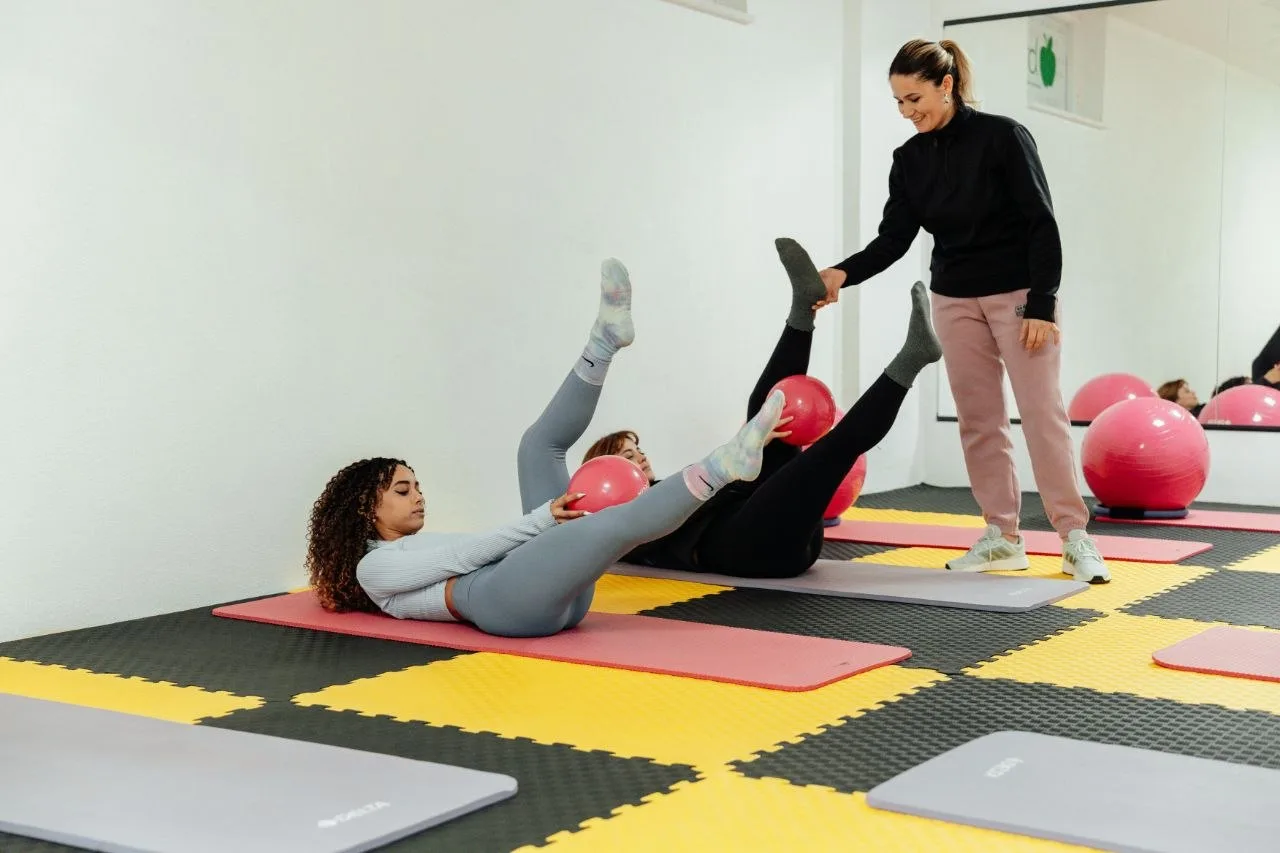
The bemaxx set has 18 anthracite EVA foam tiles, approximately 30cm square and 1cm thick, covering about 1.67m². It is the comfortable pick for floor exercises, Pilates and stretching where you kneel or lie down. Small puzzle pieces are easy to fit around an awkward corner or put away after a session.
The softness is exactly why it is a poor base for a heavy rack, loaded barbell or repeated impact. Equipment feet may indent the foam, and a joint can open under lateral movement. For a dedicated mobility area, compare the surface with a standalone yoga mat before covering an entire room.
4. Heavy Duty Rubber 12mm mat: best single-piece equipment zone
The 12mm solid rubber mat covers roughly 1.82m × 1.22m. It suits a defined rack or machine area where whole-room tiles would be unnecessary. With no tile seams under that footprint, it is simpler to set down and inspect around the edges. It is also heavy and difficult to trim neatly; measure the equipment feet and access route before ordering.
Do not interpret “heavy duty” as a certified drop-height rating. A single mat can reduce scuffs and provide a more robust contact surface, but impact depends on the weight, drop, floor structure and any platform beneath. For apartment or upstairs training, our home-gym noise guide explains why the whole room matters.
Rubber, foam and puzzle: what actually differs
Material is the first decision
Rubber is denser and more suitable as a stable surface under most weights equipment. EVA foam is lighter and more forgiving under knees and hands. “Interlocking” or “puzzle” only tells you how sections connect: both rubber and foam can use those edges. Read the material line, thickness, tile dimensions and pack coverage separately. A product title that says “rubber” may still describe EVA in its specifications.
Choose by training zone
- Weights and a rack: start with a firm rubber area; check subfloor condition and rack anchoring separately.
- Floor exercises: use EVA foam or an exercise mat where softness helps.
- Mixed room: separate the lifting and floor-work zones rather than asking one material to do both jobs.
- One machine: a correctly sized rubber mat can be simpler than wall-to-wall coverage.
If you are still planning the room, our home-gym space guide helps measure circulation around the equipment before you buy flooring.
Noise and floor protection
A thicker tile is not a universal decibel rating or a promise against damage. Impact sound depends on the structure beneath, the dropped object, and how the entire floor is built. Approved Document E addresses sound insulation of building elements; it does not certify a loose gym mat for barbell drops. In a flat or upstairs room, avoid deliberate drops and discuss the structure with a qualified professional if impact noise or loading is a concern.
Also check traction in the conditions you actually train in. HSE flooring guidance stresses matching a surface to its use; a marketing claim of “non-slip” is not a substitute for cleaning sweat and checking joints or curled edges. Keep the surface dry and level, and inspect it when moving equipment.
Measure and install
Calculate coverage before ordering
Measure the usable length and width in metres, multiply for square metres, then subtract fixed obstructions only when you are confident the tiles can be cut around them. Divide by the stated coverage per tile or pack and round up. For example, a clear 2m × 2m zone is 4m²: four 1m² rubber tiles, five 0.81m² interlocking rubber tiles before cuts, or three bemaxx sets at about 1.67m² each. Check the actual border layout; buying one spare tile is often easier than matching a later batch.
Prepare the subfloor
Clean and dry the base, and follow the flooring maker’s installation instructions for the specific material and room. Test-fit the first row, stagger seams only if the system permits it, and keep doorways and exposed edges flush. Do not lay a lifting platform over an unassessed uneven or damp base. In a garage, check for moisture and drainage before covering concrete; trapped dampness is a different problem from surface scuffs.
Cost per square metre
Use the current pack price divided by usable coverage, then add cutting waste and delivery. A low pack price can hide a very small area: the bemaxx set covers about 1.67m², the rubber puzzle tile 0.81m², the square rubber tile 1m², and the large mat about 2.22m². Compare like-for-like area and material, not the displayed price per “mat”. Prices move, so compare current cost per square metre rather than relying on a fixed price table.
If the room is a budget build, decide first whether you need full-room flooring or only a stable zone beneath the equipment. Our budget home-gym guide covers that wider allocation.
How we chose
We compared material, exact linked dimensions, coverage, installation format, and whether the product suits a lifting zone, floor-work area or single equipment footprint. This is a specification-led guide, not a claim that we tested each mat or measured sound attenuation in a home. The choice remains conditional on the subfloor and training style; a seller’s durability language cannot establish structural protection.
The bottom line
Choose the 15mm rubber crumb tile for a permanent weights area, the 14mm interlocking rubber tile when a modular rubber layout matters, and the bemaxx EVA set for bodyweight or stretching work. Buy the large 12mm rubber mat if you only need to cover one equipment footprint. Do not choose by thickness alone, and do not count on any loose mat to make heavy drops safe or quiet.
Frequently asked questions
Is puzzle gym flooring rubber or foam? Either. Puzzle refers to the interlocking edge. Check the material specification: the rubber interlocking tile in this guide is rubber, while the bemaxx interlocking set is EVA foam.
Which flooring is best under a squat rack? A firm rubber surface is a more suitable starting point than soft EVA foam. Measure the rack footprint and check anchoring, subfloor condition and the maker’s instructions separately.
Can 15mm rubber tiles make barbell drops safe? No thickness alone guarantees floor protection or sound control. The result depends on the load, drop, subfloor and any platform system. Avoid deliberate drops without an appropriate assessed setup.
How many tiles do I need for a 2m by 2m gym area? The area is 4m². It needs four 1m² square rubber tiles before cuts, or five 0.81m² interlocking rubber tiles before cuts. Allow extra for borders and mistakes.
Are EVA foam mats suitable under a treadmill? They may compress under equipment feet. Check the machine maker’s flooring guidance and use a correctly sized, stable protective mat if needed.
Will gym flooring stop noise reaching a downstairs neighbour? No loose flooring product can promise that. Impact sound depends on the whole floor structure and how you train; avoid dropped weights and assess the building before relying on a mat.