The BRAINGAIN 24kg Pair is the best adjustable-dumbbell set for most UK home gyms. Its 2.5–24kg range, 15 settings and handle-based selection cover beginners, general strength work and demanding upper-body sessions without taking over the room. Stronger lifters should buy enough headroom once: the BRAINGAIN 40kg Pair is the clear heavy option.
Do not compare these products by maximum weight alone. The shape, minimum weight, adjustment speed, increment pattern and tolerance for careful handling determine whether a set works for your training. PowerBlocks are compact and expandable; BowFlex feels familiar but stays long at every setting; spinlocks are slower but simpler and far cheaper.
Guide Sections
- Comparison table
- Six adjustable-dumbbell reviews
- Which design should you buy?
- Choosing the right weight range
- Floor, space, safety and care
- Final verdict
- Frequently asked questions
Best Adjustable Dumbbells at a Glance
Every selector model below is sold as a pair in the validated product title. The Yaheetech is a conventional two-handle plate set. Check quantity carefully whenever comparing other listings: adjustable dumbbells are frequently sold as singles.
| Model | Best for | Range | Settings | Adjustment |
|---|---|---|---|---|
| BRAINGAIN 24kg Pair | Best overall | 2.5–24kg each | 15 | Twist handle |
| PowerBlock Elite EXP Stage 1 | Best expandable design | 2.3–22.7kg each | 16 | Selector pin |
| NordicTrack Select-A-Weight 25kg Pair | Best for progressive increments | 5–25kg each | 15 | Selector tabs |
| BowFlex Results Series 552 Pair | Best premium dial design | 2.3–23.9kg each | 15 | End dials |
| BRAINGAIN 40kg Pair | Best for heavier lifting | 5–40kg each | 17 | Twist handle |
| Yaheetech 30kg Set | Best budget spinlock set | Up to 15kg each | Plate combinations | Spinlock collars |
The Six Best Adjustable Dumbbells
1. BRAINGAIN 24kg Pair — Best Overall

The 24kg SmartBells earn the overall recommendation because the range is broad without making the dumbbells excessively heavy or expensive. Fifteen settings run from 2.5kg to 24kg per hand, with a twist of the handle selecting the load while unused plates stay in the tray.
This pair suits beginners who expect to progress, intermediate lifters and anyone combining presses, rows, split squats and accessory work. It offers a lower starting weight than the 40kg BRAINGAIN and a more conventional dumbbell shape than the PowerBlock.
Main compromise: the 39cm body remains the same length at light settings, so curls and lateral raises can feel bulkier than fixed dumbbells. Buying check: 24kg must be enough for your heaviest row, press and leg exercise for the next few years—not merely enough today.
2. PowerBlock Elite EXP Stage 1 — Best Expandable Design

The Elite EXP earns its category through a compact nested-block design and a genuine upgrade path. Stage 1 covers roughly 2.3–22.7kg per hand; compatible Stage 2 and Stage 3 kits can raise that ceiling later. The magnetic selector pin changes the main load, while removable adder weights provide smaller steps.
It suits a permanent home gym where compact dimensions and long-term progression matter more than a traditional round-dumbbell feel. Compared with BRAINGAIN 24kg, it is shorter and expandable; BRAINGAIN is quicker for repeated changes and has an open handle.
Main compromise: your hand sits inside the block, which some exercises and wrist positions may expose to the rails. Buying check: expansion kits are model-specific—Elite EXP accessories are not automatically compatible with similarly named PowerBlock ranges.
3. NordicTrack Select-A-Weight 25kg Pair — Best for Progressive Increments

NordicTrack earns this category with 15 settings from 5kg to 25kg and a pattern of 2kg or 2.5kg jumps. That progression is useful for lifters who want more steps than a selector system offering only large jumps at the top end. The included trays keep the plate stacks aligned.
It suits general strength training where 5kg is light enough for the smallest movement. It provides slightly more top-end capacity than BRAINGAIN 24kg, but the BRAINGAIN starts at 2.5kg and is the better all-rounder for lateral raises, rehabilitation-style work or different users sharing the set.
Main compromise: 5kg is a relatively high minimum and the selector arrangement requires changes at the tray rather than one handle twist. Buying check: list your lightest shoulder and arm exercises before choosing it; the extra kilogram at the top is irrelevant if the minimum is too heavy.
4. BowFlex Results Series 552 — Best Premium Dial Design

BowFlex earns the premium dial category with two end dials per dumbbell, 15 settings from about 2.3kg to 23.9kg and a curved shape that resembles a conventional dumbbell more closely than a PowerBlock. Metal components connect the selected plates to the handle, and each unit returns to a marked tray.
It suits buyers who value the established SelectTech layout and need small lower-end increments. The BRAINGAIN 24kg is the stronger value choice with a faster single-handle selection; BowFlex counters with independently selected ends and a familiar grip-and-plate profile.
Main compromise: each dumbbell stays about 43cm long even at the lightest setting, and changing both end dials takes more movements than twisting one handle. Buying check: confirm the listing is explicitly the pair—single 552 listings are common and can make comparisons misleading.
5. BRAINGAIN 40kg Pair — Best for Heavier Lifting

The 40kg SmartBells earn the heavy category because each dumbbell reaches 40kg across 17 settings. That ceiling gives stronger lifters substantially more room for presses, rows, Romanian deadlifts and split squats than any 24–25kg option here, without requiring separate expansion kits.
It suits lifters already approaching 20kg-plus on compound movements and people replacing a broad fixed rack. The PowerBlock is the better path when compactness and staged expansion matter; the 40kg BRAINGAIN delivers the full range immediately in a conventional selector format.
Main compromise: the minimum is 5kg, each tray needs a stable permanent position and the full pair is awkward to move between rooms. Buying check: do not pay for 40kg because it sounds future-proof—make sure the larger increments and physical size also suit your lighter exercises.
6. Yaheetech 30kg Set — Best Budget Spinlock Set

The Yaheetech earns the budget category because it uses ordinary removable plates, two bars and star-lock collars rather than a proprietary selector mechanism. The set provides up to 15kg per hand and can be divided unevenly when an exercise needs only one heavier dumbbell.
It suits beginners, occasional training and buyers who value low cost over rapid changes. Every selector pair above is better for supersets and shared workouts; the Yaheetech is easier to understand, has fewer specialised moving parts and costs far less.
Main compromise: changing four collars and moving plates interrupts the session, while long bar ends can interfere with some movements. Buying check: 30kg is the total set weight, not 30kg per dumbbell, and the cement-filled plates are bulkier than equivalent iron plates.
Which Design Should You Buy?
Dial and Handle Selectors
BRAINGAIN and BowFlex leave unwanted plates in a fitted tray. They are the fastest choices for drop sets, circuits and households sharing one pair. The trade-off is a fixed overall length and an internal selection mechanism that needs controlled handling. Never change the setting while the dumbbell is out of its tray.
Nested Blocks
PowerBlock changes length as weight increases, keeping lighter settings compact. The block shape is excellent for storage but puts rails around the hand. Its staged expansion is valuable only if compatible kits remain available, so record the exact range and generation before buying upgrades.
Spinlock Plates
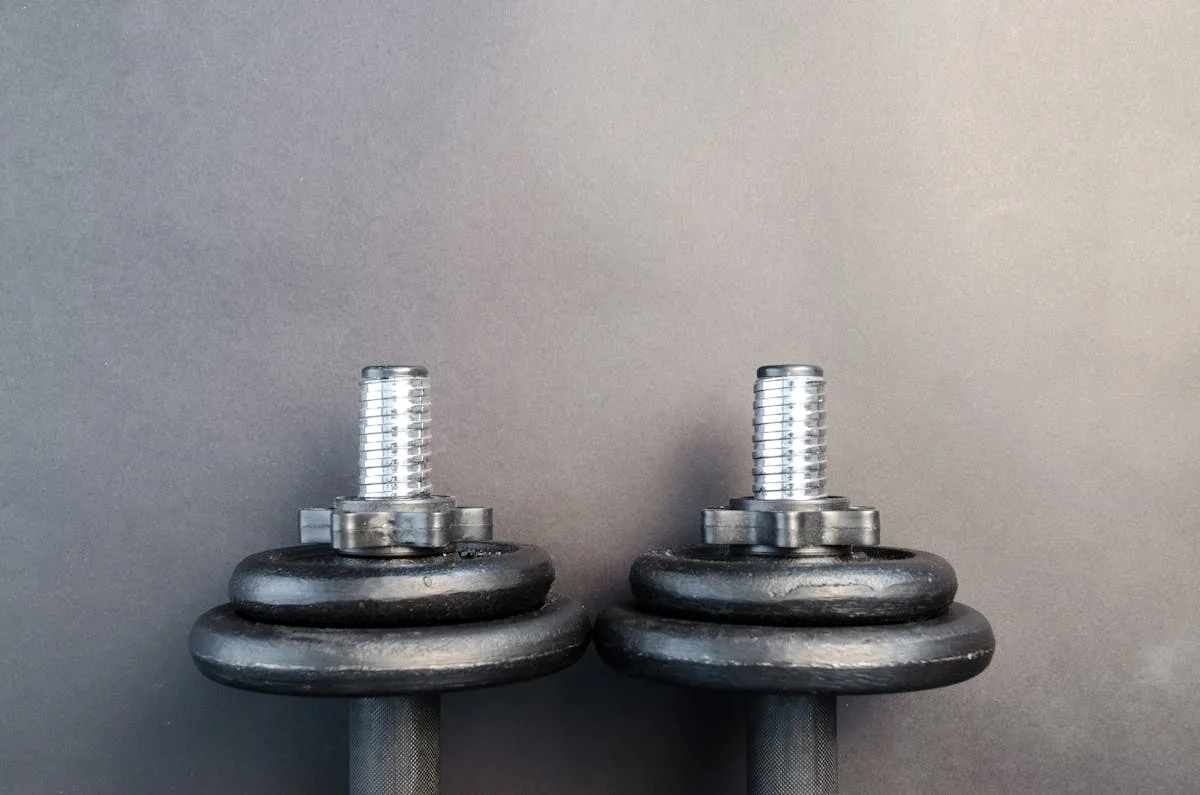
Spinlocks are slow but transparent: load plates, tighten both collars and recheck them during training. They suit conventional sets, not fast circuits. Their long bars and bulky plates can make goblet squats or dumbbell bench setup less comfortable, yet there is no selector tray to align.
Choosing the Right Weight Range
Start with the Lightest Movement
A pair that starts at 5kg may be fine for rows but too heavy for lateral raises, rear-delt work or a second user. Choose the minimum from your weakest controlled movement. The NHS strength guidance recommends building up gradually and working all major muscle groups, which favours usable steps over an impressive maximum.
Allow Realistic Headroom
Use your heaviest dumbbell press or row to judge the ceiling, then allow room for progress. A beginner may use 24kg per hand for years; an experienced lifter can outgrow it quickly on rows while still needing 5kg for shoulder isolation. Our dumbbell-weight guide helps map exercise choice to sensible starting loads.
Compare Increments, Not Just Counts
Fifteen settings do not guarantee even progression. Some selectors use tight steps at light weights and larger jumps later. Write down the exact sequence and look at percentage change: a 2.5kg jump is modest near 25kg but substantial when moving from 5kg.
Floor, Space, Safety and Care
Plan the Training Area
Allow room for the trays, a clear lifting area and a safe route to the floor or bench. Heavy selector pairs belong on a stable level surface, not a high shelf. See our guides to home-gym space, gym flooring and the best weight benches before committing to the heaviest set.
Controlled Handling Matters
Selector dumbbells are not bumper plates. Put them down under control and return them squarely to the tray before changing weight. If a plate does not engage cleanly, stop and reseat the handle rather than forcing the dial or pin. No manufacturer specification makes a selector mechanism suitable for deliberate drops.
A Simple Care Routine
- Before each session: check that every selected plate lifts cleanly and both selectors agree.
- Keep trays clear: grit or small objects can stop plates seating correctly.
- Check collars: spinlock users should retighten both ends during longer sessions.
- Keep mechanisms dry: follow the manufacturer’s cleaning instructions and avoid unapproved lubricants.
- Inspect after impact: stop using a dumbbell if a plate, pin, dial or handle is damaged.
For a complete starting setup, combine the pair with our beginner dumbbell routine or use the broader home gym under £500 guide.
Final Verdict
Choose the BRAINGAIN 24kg Pair for the best overall balance. Its low starting weight, 15 settings and quick handle selection suit more users and exercises than the heavier alternatives. Pick PowerBlock Elite EXP when compactness and expansion matter more than a conventional shape, or NordicTrack when its 5–25kg progression fits every movement you perform.
The 40kg BRAINGAIN is the correct heavy-lifting choice; the BowFlex 552 is the premium familiar-shape option. Yaheetech wins only when budget matters more than adjustment speed. Whichever design you choose, confirm that the listing includes a pair and that both the minimum and maximum—not just one headline number—fit your programme.
Frequently Asked Questions
What are the best adjustable dumbbells for most home gyms?
The BRAINGAIN 24kg Pair offers the best balance here. Each dumbbell adjusts from 2.5kg to 24kg across 15 settings, covering light accessory exercises and substantial compound lifts.
Are adjustable dumbbells sold as a pair?
Not always. Some listings show two dumbbells but sell one unit. Confirm the quantity, total weight and wording before comparing prices. Every selector product in this shortlist is explicitly sold as a pair.
What maximum weight should I choose?
Choose enough weight for your heaviest press or row with room to progress, but also check the minimum for shoulder and arm exercises. General users often find 24–25kg per hand sufficient; stronger lifters may need 40kg or an expandable system.
Can adjustable dumbbells be dropped?
Selector dumbbells should be lowered under control because impact can damage plates, pins, dials or locking mechanisms. Spinlocks are mechanically simpler, but neither design should be deliberately dropped.
Are PowerBlocks better than dial dumbbells?
PowerBlocks are compact and expandable, while dial or handle-selector dumbbells have a more conventional shape and are often quicker to understand. The better choice depends on grip enclosure, storage and future weight needs.
Do I need a stand?
A stand is optional, but it can reduce repeated bending and gives heavy trays a stable permanent position. A solid low platform or protected floor also works when it keeps the selectors level and accessible.