You’re 20 minutes into a run, breathing hard, legs complaining, and your watch is flashing a number at you — 156 bpm. Is that good? Bad? Should you speed up? Slow down? The number means nothing without context, and most people either ignore it entirely or obsess over it without understanding what they’re looking at. Which is a shame, because heart rate is one of the simplest and most useful tools for training effectively — once you know how to read it.
Heart rate training has been used by elite athletes for decades. It’s not new, not complicated, and not just for marathon runners or Tour de France cyclists. Whether you’re training for fat loss, building endurance for a weekend hike, or trying to stop feeling wrecked after every session, understanding your heart rate zones tells you whether you’re working hard enough, too hard, or just right. It’s like having a fuel gauge for your body. We’ve used heart rate zone training across running, cycling, and rowing machine sessions to see how it plays out in practice.
Here’s how it works, in plain English.
What Are Heart Rate Zones?
Heart rate zones are ranges of heartbeats per minute (bpm) that correspond to different levels of effort. There are five zones, numbered 1 to 5, each representing a progressively higher intensity. Your body responds differently in each zone — burning different fuel sources, stressing different energy systems, and producing different training adaptations.
Think of it like gears on a bike. Zone 1 is first gear — easy, sustainable, barely feels like work. Zone 5 is top gear — absolute maximum effort that you can only sustain for seconds to a couple of minutes.
The zones are based on percentages of your maximum heart rate (max HR), which is the highest your heart can beat. Everyone’s max HR is different, determined mostly by age and genetics. The zones themselves are universal in concept but individual in their specific numbers.
How to Calculate Your Maximum Heart Rate
Before you can figure out your zones, you need to know your max HR. There are three approaches, ranging from rough estimate to properly accurate.
The Formula Method (Quick and Dirty)
The classic formula is 220 minus your age. For a 40-year-old, that gives a max HR of 180 bpm.
It’s a starting point, nothing more. Research shows this formula can be off by 10-15 bpm in either direction. If you’re 40 and your actual max HR is 190, training zones calculated from 180 will have you working too easily. If your actual max is 170, you’ll be overtraining.
A slightly better formula is the Tanaka formula: 208 minus (0.7 × age). For a 40-year-old: 208 – 28 = 180. Similar result in this case, but it’s been shown to be more accurate across age groups, particularly for older adults.
The Field Test Method (More Accurate)
A max HR field test is simple but unpleasant. After a proper warm-up (10-15 minutes of progressively harder exercise), do a maximal effort for 3-4 minutes. On a run, this means sprinting the last 60-90 seconds of a steep hill climb as hard as you possibly can. On a bike, a 4-minute all-out effort on a turbo trainer. Your heart rate at the end — when you’re bent double, gasping, and questioning your life choices — is very close to your max HR.
Important safety note: Don’t do this if you have any cardiac concerns, haven’t exercised regularly for several months, or haven’t been cleared for vigorous exercise. The British Heart Foundation recommends checking with your GP before starting vigorous exercise if you’re unsure. This isn’t a casual test.
Lab Testing (Most Accurate)
A VO2 max test at a sports performance lab measures your exact max HR along with other useful data. Costs about £100-200 in the UK (universities with sport science departments often offer cheaper options). Worth it if you’re serious about training. Overkill if you just want to run three times a week.
Practical recommendation: Start with the formula method. If you’ve been training for a few months and the zones feel wrong (you’re either unable to stay in the prescribed zone or it feels way too easy), do a field test to calibrate.
The Five Zones
Here are the zones expressed as percentages of your max HR, along with what’s actually happening in your body and what each zone feels like:
Zone 1: Active Recovery (50-60% of max HR)
For a max HR of 180: 90-108 bpm Feels like: Walking briskly, gentle cycling, easy swimming. You could hold a full conversation without any breathlessness. It barely feels like exercise.
What’s happening: Your body is using almost exclusively fat as fuel, with minimal contribution from carbohydrates. Blood flow is elevated, which helps flush metabolic waste products from previous hard sessions. Stress on your muscles, joints, and nervous system is minimal.
What it’s for: Recovery days. Warming up and cooling down. Light movement on rest days to promote healing without adding training stress. Many people skip Zone 1 because it feels “too easy” — but it’s a legitimate training zone that aids recovery between harder sessions.
Real world: A gentle 30-minute walk, an easy social bike ride, light yoga.

Zone 2: Aerobic Base (60-70% of max HR)
For a max HR of 180: 108-126 bpm Feels like: A comfortable jog, moderate cycling, brisk walking uphill. You can talk in full sentences but might pause for breath occasionally. You could sustain this for hours.
What’s happening: This is where aerobic fitness is built. Your body is still primarily burning fat, with an increasing contribution from carbohydrates. Your heart is working hard enough to stimulate cardiovascular adaptation — the heart muscle gets stronger, capillary density increases, and mitochondria (the cellular powerhouses that produce energy) multiply.
What it’s for: Building your aerobic engine. This is the zone that professional endurance athletes spend 70-80% of their training time in. It’s the foundation that everything else sits on top of. The famous “80/20 rule” in endurance training (80% easy, 20% hard) means 80% of your training time should be in Zones 1-2.
It’s also the most efficient zone for fat burning during exercise — though this doesn’t necessarily mean it’s the best zone for fat loss overall (more on this later).
Real world: A steady 45-minute jog where you could chat to a running partner. A 90-minute bike ride at a comfortable pace. The “long slow distance” runs that marathon training plans are built around.
Zone 3: Tempo (70-80% of max HR)
For a max HR of 180: 126-144 bpm Feels like: Moderately hard. You can speak in short sentences but not hold a flowing conversation. Breathing is noticeably elevated. This feels like “proper exercise.”
What’s happening: Your body is shifting from predominantly fat burning to a mix of fat and carbohydrates. Lactate production increases but your body can still clear it — you’re right at the threshold of sustainable effort. Your cardiovascular system is under meaningful stress, improving both heart stroke volume and oxygen delivery.
What it’s for: Tempo training — sustained effort that improves your lactate threshold, which is the point at which your body starts accumulating fatigue faster than it can clear it. Pushing this threshold higher means you can sustain a faster pace before “hitting the wall.”
Zone 3 is sometimes called the “grey zone” by coaches because it’s hard enough to be tiring but not hard enough to produce the specific adaptations of Zones 4 and 5. Spending too much time here — which many recreational runners do — leaves you too fatigued for proper high-intensity work but without the aerobic base-building benefits of Zone 2. It’s useful in moderation, not as your default intensity.
Real world: A 30-minute tempo run at a pace that feels “comfortably uncomfortable.” A spin class at moderate intensity. Brisk hiking uphill with a loaded backpack.
Zone 4: Threshold (80-90% of max HR)
For a max HR of 180: 144-162 bpm Feels like: Hard. Speaking is limited to a few words at a time. Your breathing is heavy and rhythmic. You’re aware that this isn’t sustainable for much longer. Sustainable for 20-40 minutes maximum for a trained individual.
What’s happening: You’ve crossed the lactate threshold. Lactate is accumulating in your muscles faster than your body can process it. Carbohydrates are now the dominant fuel source. Your cardiovascular system is near maximum output, and your muscles are under significant stress.
What it’s for: Improving your VO2 max (maximum oxygen uptake) and racing performance. Zone 4 intervals are the “bread and butter” of performance improvement for runners, cyclists, and swimmers. Typical workouts include 4-6 intervals of 3-5 minutes at Zone 4, with equal recovery between intervals.
This is the zone where performance improvements happen fastest — but also where overtraining risk is highest. Two Zone 4 sessions per week is plenty for most people. Three is maximum for serious athletes with excellent recovery practices.
Real world: Interval training at your local parkrun. The hard efforts in a spin class. Hill repeats. The pace you’d hold for a 5K race. For related guidance, see our How to Choose a Chest Strap Heart Rate Monitor guide.
Zone 5: Maximum Effort (90-100% of max HR)
For a max HR of 180: 162-180 bpm Feels like: All-out. Speaking is impossible. Your legs (or arms, depending on the exercise) are screaming. You’re counting seconds until you can stop. Sustainable for 30 seconds to 2-3 minutes maximum.
What’s happening: Your body is at or near maximum cardiovascular and muscular output. Anaerobic metabolism dominates — your muscles are producing energy without sufficient oxygen, generating large amounts of lactate and metabolic waste. This is pure survival-level effort.
What it’s for: Developing maximum speed, power, and anaerobic capacity. Sprint training, short intervals (30 seconds to 2 minutes), and competition efforts. Zone 5 is where you develop the ability to kick at the end of a race or cover a sudden burst of effort.
Most recreational exercisers rarely need to train in Zone 5. It’s genuinely unpleasant, carries injury risk, and requires significant recovery time. One Zone 5 session per week is plenty for anyone who isn’t competing at a high level.
Real world: The final sprint of a parkrun. The last 30 seconds of a Tabata interval. Chasing your kid who’s about to run into a road.
Training Plans by Goal
Knowing the zones is half the picture. Knowing how to use them is the other half.
Fat Loss
There’s a persistent myth that you need to stay in the “fat burning zone” (Zone 2) to lose fat. This is technically true — Zone 2 burns a higher percentage of calories from fat. But it’s misleading, because total calorie burn matters more than the fuel source during exercise. For related guidance, see our How to Build a Home Gym for Under £500 guide.
A 30-minute Zone 4 interval session burns more total calories (and therefore more total fat over the course of the day) than a 30-minute Zone 2 jog. Your body also continues burning calories at an elevated rate for hours after high-intensity exercise (the “afterburn effect” or EPOC), which doesn’t happen much after low-intensity exercise.
An effective fat loss training week: – 2 sessions of Zone 2 cardio, 40-60 minutes each (builds your aerobic base, aids recovery) – 2 sessions of interval training mixing Zones 3-4, 20-30 minutes each (maximises calorie burn) – 1 optional Zone 1 recovery session (a walk, gentle swim) – Strength training 2-3 times per week (preserves muscle mass during a calorie deficit)
The training matters, but the kitchen matters more. You can’t out-train a bad diet. Training in the right zones makes your exercise time more effective, but fat loss ultimately comes down to calories in versus calories out.
Endurance Building
If you’re training for a half marathon, a cycling sportive, a long hike, or simply want to be able to exercise for longer without fatigue, Zone 2 is your best friend.
An effective endurance training week: – 3-4 sessions of Zone 2, 45-90 minutes each (the bulk of your training) – 1 session of Zone 3 tempo, 30-45 minutes (pushes your lactate threshold) – 1 session of Zone 4 intervals, 20-30 minutes (improves VO2 max) – 1 rest day or Zone 1 recovery
The temptation is to go harder. Everyone wants to run faster in every session. Resist this. The 80/20 principle is backed by decades of research: athletes who spend 80% of their training time in Zones 1-2 and only 20% in Zones 3-5 improve more than athletes who train at moderate intensity all the time. Easy days need to be really easy. Hard days need to be properly hard. The middle ground is where progress stalls. For related guidance, see our Best Adjustable Dumbbells 2026: UK Home Gym Tested guide.
Performance
For competitive athletes — racers, club runners, serious cyclists — training becomes more periodised and specific. But the principles remain the same:
Base phase (8-12 weeks): Heavy Zone 2 emphasis. Build the aerobic engine. Long, slow, boring — and essential. Build phase (6-8 weeks): Introduce more Zone 3 and Zone 4 work. Tempo runs, threshold intervals, race-pace sessions. Peak phase (3-4 weeks): Add Zone 5 sprints and race-specific efforts. Volume drops, intensity rises. Taper (1-2 weeks): Reduce volume while maintaining some intensity. Arrive at race day fresh and sharp.
Heart Rate Monitors: What to Buy
To train with heart rate zones, you need a way to measure your heart rate accurately. Options range from free to £350+.
Chest Straps: The Accuracy Standard
A chest strap with an electrode sensor is the most accurate consumer heart rate monitor. It measures the electrical signal from your heart directly — the same principle as a medical ECG. Accuracy is within 1-2 bpm of medical-grade equipment.
- Polar H10 (about £65-80) — widely considered the best chest strap on the market. Accurate, reliable, comfortable, and works with virtually every fitness app and watch via Bluetooth and ANT+. Dual transmission means it can connect to two devices simultaneously — your watch and a gym bike, for example. If you’re buying one chest strap, this is it.
- Garmin HRM-Pro Plus (about £100-120) — excellent accuracy, stores workout data if you forget your watch, and transmits running dynamics data to compatible Garmin watches. Premium price for features most people don’t need, but superb if you’re in the Garmin ecosystem.
- Wahoo TICKR (about £40-50) — the budget king. Accurate, reliable, comfortable. Misses some of the Polar H10’s features (no onboard memory, single Bluetooth connection) but costs half the price. Fantastic value.
The downside of chest straps: comfort. Some people hate wearing them, especially in hot weather. They can chafe on longer sessions (apply some anti-chafe balm). And you have to remember to put it on, which sounds trivial but means it’s often left in the gym bag.
Optical Wrist Monitors (Smartwatches)
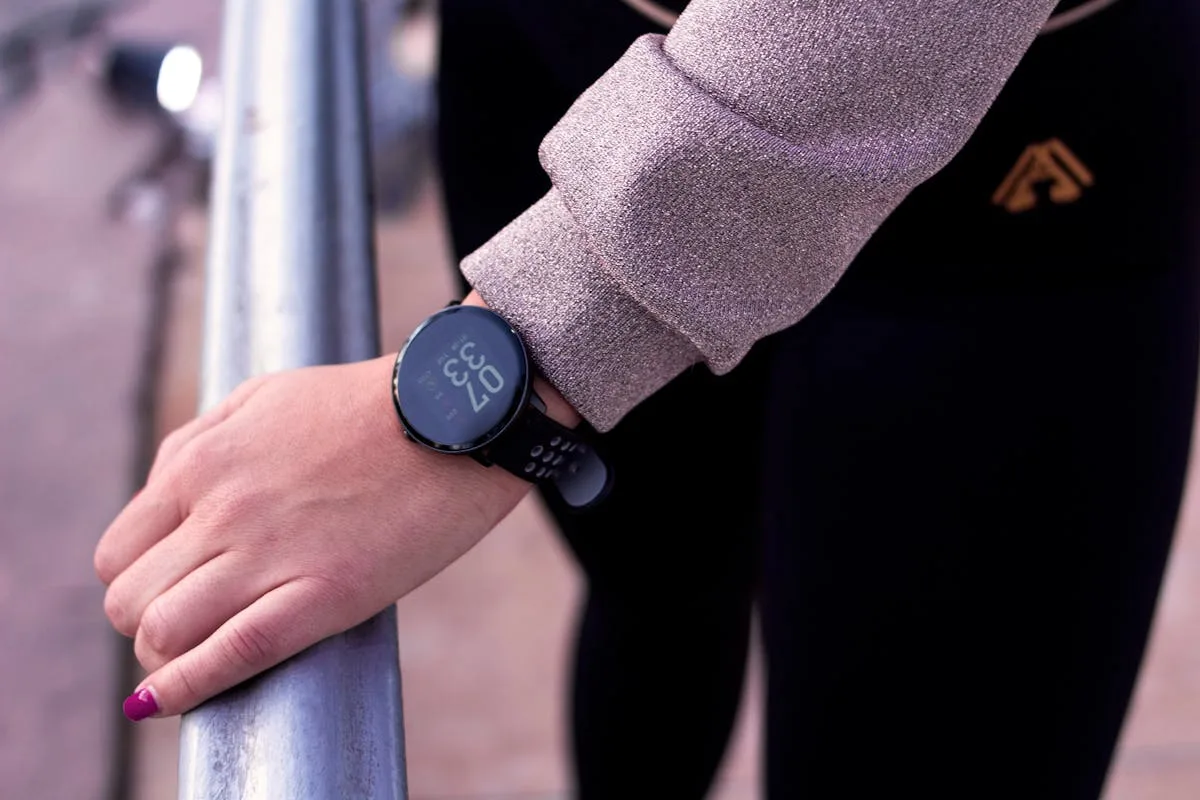
Modern smartwatches use optical sensors (green LED lights that detect blood flow changes in your wrist) to measure heart rate. Accuracy has improved enormously but still lags behind chest straps, particularly during high-intensity or interval training where rapid HR changes occur.
- Apple Watch Series 10 / Ultra 2 (about £400-800) — good optical HR accuracy in steady-state exercise, decent during intervals. The Apple Watch is the most popular fitness device in the UK and its heart rate features are solid. The health tracking (ECG, blood oxygen, irregular rhythm notifications) adds genuine value beyond training. Not the most accurate for serious HR zone training, but good enough for most recreational exercisers.
- Garmin Forerunner 265 (about £350-400) — better HR accuracy than the Apple Watch for sports, thanks to Garmin’s newer Elevate v5 sensor. Excellent training features, built-in structured workouts, and detailed zone analysis. The best mid-range option for runners and cyclists who want proper training tools. Also pairs beautifully with the Garmin HRM-Pro chest strap for times when wrist accuracy isn’t enough.
- Garmin Forerunner 165 (about £220-260) — slightly less premium than the 265 but with the same HR sensor and core training features. Excellent value if you don’t need maps or advanced metrics.
- Polar Vantage M2 (about £200-250) — great training watch with Polar’s excellent HR zone guidance. The “FitSpark” daily training suggestions adjust based on your recovery and readiness, which is useful for structuring your week.
- Wahoo ELEMNT Rival (about £200-250, often discounted) — simpler interface, strong optical HR, and designed specifically for multisport athletes. Less “smartwatch,” more “training tool.”
Optical Armband Monitors
Worn on the forearm or upper arm, these use the same optical technology as wrist monitors but get better accuracy because blood flow in the forearm is more consistent and less affected by wrist movement. For wider safety context, NHS exercise guidance is a useful reference.
- Polar Verity Sense (about £70-85) — the best optical armband currently available. Accuracy approaches chest strap levels in most conditions. Swim-proof, long battery life, lightweight. The ideal choice if you hate chest straps but want better accuracy than a wrist watch.
- Wahoo TICKR FIT (about £60-75) — good armband alternative, comfortable, accurate. Slightly less consistent than the Polar Verity Sense in testing but still much better than most wrist sensors.
What Should You Buy?
For casual training (gym, running, general fitness): Your existing smartwatch is probably fine. If you’re setting up a home gym, a chest strap that connects to your cardio machine’s display is worth the investment. Apple Watch or Garmin Forerunner will give you useful zone data that’s accurate enough to guide your training. Don’t let perfect be the enemy of good.
For serious training (racing, structured programmes, performance goals): The Polar H10 chest strap paired with whatever watch you already own. The strap gives you accurate real-time data; the watch displays it. Total cost: £65-80 on top of what you’ve already got.
For people who want accuracy but hate chest straps: The Polar Verity Sense armband. Comfortable, accurate, set-and-forget.
Putting It All Together
Heart rate zones remove the guesswork from training. Instead of “I think that was hard enough” or “I should probably run faster,” you have objective data telling you exactly where you are and whether it matches your intended session.
Start simple. Calculate your zones using the formula method. Wear a heart rate monitor during your next few sessions and just observe — see which zones you naturally gravitate to. Most people discover they spend nearly all their time in Zone 3: too hard for base building, too easy for performance gains. The classic “junk miles” trap.
Then adjust. Make your easy days easier (Zone 2 — it will feel embarrassingly slow at first). Make your hard days harder (Zone 4 — short intervals with proper recovery). Give yourself permission to walk during a “run” if your heart rate creeps above Zone 2 on an easy day. Ego is the enemy of effective training.
Within a few weeks, you’ll notice the difference. Recovery improves because easy days are actually easy. Performance improves because hard days are focused and effective. And that number flashing on your watch — 156 bpm — finally means something.
Frequently Asked Questions
Are fitness trackers accurate? They are useful for trends rather than perfect measurements. Step counts and heart-rate zones are directionally helpful, but calorie estimates can be very rough.
Which fitness tracker features matter most? Battery life, comfortable fit, clear heart-rate tracking and reliable app syncing matter more than dozens of niche sport modes.
Do you need a fitness tracker to train well? No. A tracker can improve consistency and accountability, but a simple written plan and progressive training still beat obsessing over every metric.