You cancelled the gym membership three months ago because you weren’t going enough to justify £45 a month. Now you’re standing in the spare room — or staring at the garage — thinking about putting together a home setup instead. The maths feels obvious: a few hundred quid on equipment versus £540 a year to Virgin Active, no commute, no waiting for the squat rack, no bloke doing bicep curls in the power cage. But five minutes on Amazon UK reveals an overwhelming number of options, from £30 dumbbell sets to £3,000 multi-gyms, and it’s not immediately clear what you actually need versus what’s just nice to have.
The good news — and we’ve built and tested home gyms at every budget level — is that a genuinely useful home gym doesn’t require a massive budget or a double garage. With the right choices, you can build an effective training space in a spare bedroom, a single garage, or even a corner of a living room. The key is buying the right things in the right order rather than impulse-purchasing a rowing machine that becomes a clothes horse within six weeks.
Space Planning: What Have You Got to Work With?
Before spending a penny, measure your available space and be honest about it.
The Spare Room Gym
A typical UK spare bedroom is about 2.5m x 3m — roughly 7.5 square metres. That’s enough for a surprising amount of equipment, but you need to plan around the ceiling height. Most UK bedrooms have 2.4m ceilings, which rules out overhead pressing while standing (you’d need about 2.7m for that). Solutions: press seated, or accept that standing overhead work happens in the garden.
A spare room gym works brilliantly for dumbbells, a bench, resistance bands, a pull-up bar, and a compact cardio piece like a spin bike or rower. Heavier equipment like a squat rack is possible but check your floor loading — residential upper floors in the UK are typically rated for about 150kg per square metre according to Building Regulations Approved Document A. A loaded barbell and rack can exceed that in a concentrated area. Ground floor rooms and garages don’t have this concern.
The Garage Gym
The classic UK home gym location. A single garage is roughly 2.4m x 5m — about 12 square metres, which is enough for a full setup including a power rack, barbell, bench, and cardio equipment. Double garages give you luxury.
Garage considerations: insulation (they’re freezing in winter and roasting in summer), lighting (usually poor — add LED strips or a work light), flooring (concrete is harsh on dropped weights and cold on bare feet — more on this below), and damp (check for moisture issues before putting expensive equipment in there).
Flooring is the first purchase for a garage gym. Rubber gym mats protect the concrete, reduce noise, insulate your feet from the cold, and protect equipment from impact damage. Mirafit heavy-duty gym mats (about £30-50 per mat, 1m x 1m x 20mm) are the standard choice. For a single garage, you’ll need 10-12 mats — budget about £300-500 for proper flooring. Cheaper options exist: 15mm horse stall mats from equestrian suppliers cost less but smell of rubber for weeks.
The Living Room Corner
It works if you keep it minimal. A set of adjustable dumbbells, a folding bench, and a doorframe pull-up bar take up about 1 square metre when stored. Resistance bands and a yoga mat store in a drawer. This setup is limited but handles the majority of exercises for general fitness. The key is equipment that folds away — nobody wants a power rack in their living room.
The Priority List: What to Buy First
Home gym equipment falls into three categories: essentials that enable the most exercises, useful additions that expand your options, and luxuries that are nice but not necessary. Buy in that order.
Tier 1: The Foundation (Buy These First)
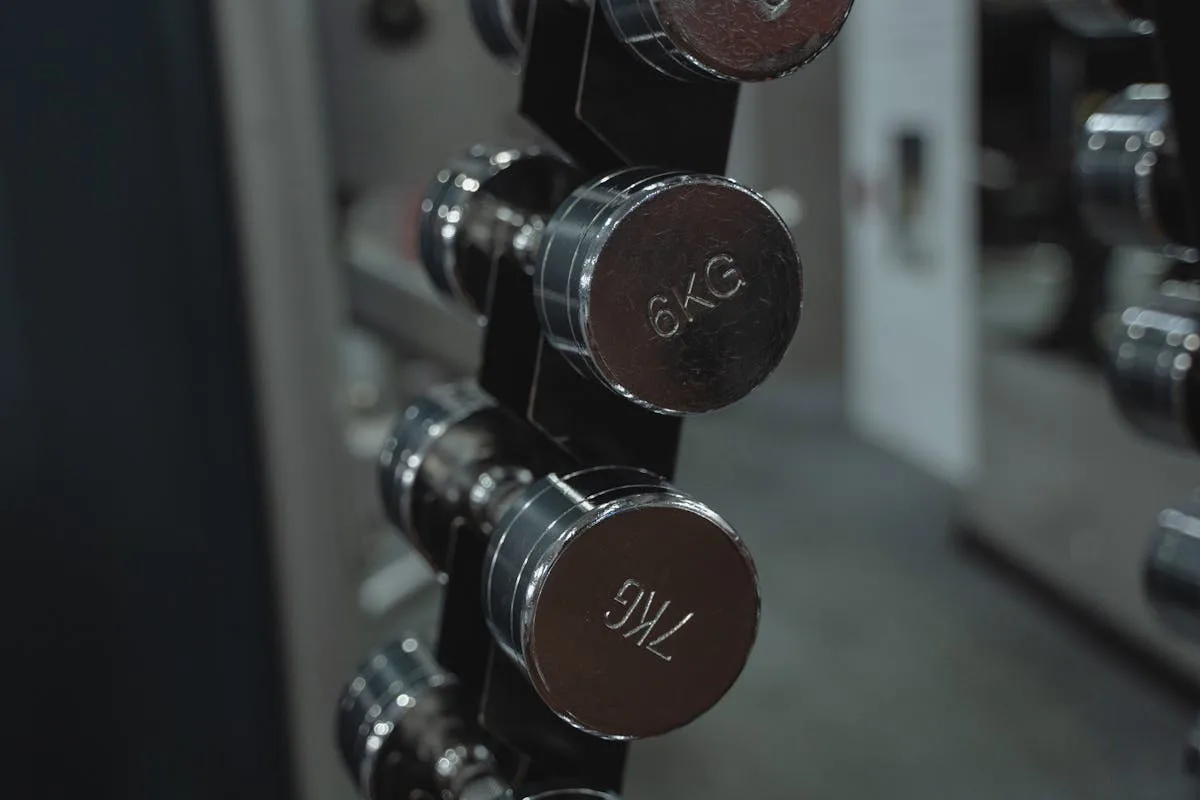
Adjustable dumbbells — the single most versatile piece of home gym equipment. A pair of adjustable dumbbells covers chest press, rows, shoulder press, lunges, curls, tricep extensions, goblet squats, and dozens more exercises. They replace an entire rack of fixed dumbbells.
The Mirafit adjustable dumbbells (about £60-100 for a pair going up to 20kg) use a spinlock collar system — cheap, reliable, slightly slow to change weight between sets. For a faster experience, Bowflex SelectTech 552s (about £300-350 for the pair) or the Mirafit M3 Smart Adjustable Dumbbells (about £250-300) use a dial mechanism that changes weight in seconds. The Bowflex go from 2kg to 24kg per hand, which covers most people.
If budget is extremely tight, the Decathlon 20kg dumbbell kit (about £35-45) gets you started. The plates are cement-filled plastic rather than cast iron, so they’re bulkier, but they work.
A bench — flat or adjustable. An adjustable bench (incline, flat, decline) unlocks incline pressing, seated shoulder press, and decline movements that a flat bench can’t do. The Mirafit M1 Adjustable Weight Bench (about £100-140) is the go-to budget option — solid, adjustable, folds upright for storage. The Wolverson Heavy Duty Adjustable Bench (about £250-300) is the step up for anyone serious about longevity. For a budget flat bench, the Mirafit Flat Bench (about £50-70) does the job.
A pull-up bar — either doorframe-mounted (£15-30 from Decathlon or Amazon UK) or wall-mounted (about £30-60). Pull-ups and chin-ups are among the most effective upper body exercises. A doorframe bar also enables hanging leg raises for core work. Check your door frame can support your weight — older UK homes sometimes have flimsy frames.
Tier 2: Building Out (Once You’ve Got the Basics)
A barbell and weight plates — this opens up the big compound movements: squats, deadlifts, bench press, overhead press, bent-over rows. These are the exercises that build the most muscle and strength per unit of time.
An Olympic barbell (20kg, 2.2m long, designed for 50mm plates) is the standard. The Mirafit Olympic Barbell (about £100-130) is popular and good quality for the price. Wolverson’s Olympic bar (about £150-200) has better knurling and spin. Budget pick: the Decathlon 20kg Olympic bar (about £80-100).
Weight plates are where the spending adds up. A basic set — 2x 5kg, 2x 10kg, 2x 20kg (totalling 90kg including the bar) — costs about £150-250 depending on brand and material. Rubber-coated plates are quieter and kinder to floors. Mirafit and Wolverson both sell plate bundles that work out cheaper than buying individually.
A squat rack or power cage — essential for safe squatting and bench pressing with a barbell. A power cage (four posts with safety bars) is safer than a squat stand (two posts) because the safety bars catch the barbell if you fail a rep. The Mirafit M100 Power Cage (about £200-250) is the most popular budget cage in the UK. The Wolverson WYSC Squat Stand (about £250-300) is a more compact option for tighter spaces.
Consider ceiling height: most power cages are 200-215cm tall. In a standard 240cm UK room, that leaves very little clearance for pull-ups on the cage — you’ll be crouching. Short cages (180-190cm) exist but limit barbell exercises inside the cage.
Resistance bands — versatile, cheap, and take up no space. A set of loop bands in different resistances (about £15-30 from Decathlon or Amazon UK) adds warm-up options, assisted pull-ups, face pulls, band pull-aparts, and accommodating resistance to barbell lifts. Buy a set of long loop bands and a set of mini bands — both are useful for different things.
Tier 3: The Nice-to-Haves
Cardio equipment — for conditioning, warm-ups, or dedicated cardio sessions.
- Spin bikes: The JTX Cyclo 6 (about £400-500) is excellent mid-range, with magnetic resistance and a belt drive (quiet, smooth, low maintenance). Budget pick: Decathlon’s Domyos EB 120 (about £200-250). Premium: Concept2 BikeErg (about £900-1,000).
- Rowing machines: The Concept2 Model D (about £900-1,000) is the undisputed king — see our full rowing machine guide for more — used by every CrossFit box, rowing club, and serious gym in the country. It’s loud though. Water rowers (like the WaterRower Natural, about £1,000-1,200) are quieter and beautiful to look at but cost more. Budget pick: the JTX Freedom Air Rower (about £300-400).
- Air bikes: A niche but devastating conditioning tool. The Assault Air Bike (about £600-700) and the Mirafit Air Bike (about £250-350) are the main options. Ten minutes on an air bike makes a 5k run feel like a rest day.
Kettlebells — brilliant for conditioning, swings, Turkish get-ups, and goblet squats. A 16kg kettlebell is the standard starting weight for men, 12kg for women. Cast iron kettlebells from Mirafit (about £30-50 depending on weight) or Wolverson (about £40-65) are all you need. Avoid the plastic-coated vinyl ones — they’re oddly shaped and the coating chips.
Gymnastic rings — if you’ve got ceiling height or a garage beam, rings (about £25-40) offer ring rows, ring dips, ring push-ups, and ring muscle-ups. Extraordinary value for the exercises they unlock. For related guidance, see our How to Build a Home Gym for Under £500 guide.
Cable machine or pulley system — adds cable exercises (face pulls, lat pulldowns, cable crossovers) to your repertoire. The Mirafit Multi-Use Cable Pulley System (about £40-60) attaches to a power cage and uses your existing weight plates. A full cable machine like the Mirafit Functional Trainer (about £500-700) is a luxury but transforms a garage gym into something approaching commercial.
Budget Tiers: What You Get at Each Level
Under £300: The Essentials
With £300, you can build a setup that covers most exercises for general fitness:
- Mirafit adjustable dumbbells (up to 20kg pair): £80
- Mirafit M1 adjustable bench: £120
- Doorframe pull-up bar: £20
- Resistance band set: £20
- Yoga mat: £15
- Remaining budget for extras (e.g., ab wheel, skipping rope, grip trainer): £45
This handles dumbbell pressing, rowing, squats, lunges, pull-ups, and most isolation exercises. You won’t be powerlifting, but for muscle building and general fitness, it’s more than enough.
Under £500: Adding Barbell Work
The £300 setup plus:
- Olympic barbell: £100
- Weight plates (60kg total): £130-150
- Basic squat stands (pair): £80-100
Now you’ve got compound barbell movements. Squats, deadlifts, bench press, overhead press, rows — the core of any strength programme. The squat stands are less safe than a full cage, so learn to bail safely or always train with a spotter.
Under £1,000: The Complete Garage Gym
- Mirafit M100 Power Cage: £220
- Olympic barbell: £130
- Weight plates (100kg total): £200-250
- Adjustable bench: £120
- Adjustable dumbbells: £80
- Rubber gym flooring (single garage): £300
- Pull-up bar (on cage), bands, accessories: £50
This is a properly equipped gym that covers every major exercise. Most commercial gym members don’t use equipment beyond what’s in this list. Add plates as you get stronger — Mirafit and Wolverson both sell individual plates.
£2,000+: The Dream Setup
Everything above, plus premium upgrades and cardio:
- Wolverson power cage and Olympic bar: £450
- Concept2 rower or BikeErg: £900
- Cable pulley system: £60
- Kettlebell set (12, 16, 24kg): £100
- Competition bumper plates: £300-400
- Stall mat flooring: £350
- Mirrors, fans, sound system: whatever’s left
At this level, your garage gym rivals most commercial gyms for the exercises that actually matter. You’re missing machines and a swimming pool, but you’ve got everything needed for serious strength training, conditioning, and general fitness.
Brands Worth Knowing in the UK
Mirafit — the dominant UK home gym brand. Based in Lincoln, competitive pricing, huge range from barbells to cages to accessories. Quality is solid at every price point. Their customer service is responsive and they hold decent stock levels. The first place most people check. For related guidance, see our Peloton vs Echelon vs Wattbike: Indoor Bike Showdown guide.
Wolverson Fitness — premium UK brand based in Shropshire. Higher prices than Mirafit but noticeably better construction, finish, and materials. If you’re buying once and keeping for decades, Wolverson is worth the step up. Their Wolverson barbell is outstanding.
JTX Fitness — UK-based, specialising in cardio equipment. Their spin bikes and treadmills are well-reviewed and reasonably priced. Good warranty support.
Decathlon — the budget option that’s surprisingly decent. Their Domyos and Corength ranges cover basic equipment at prices that undercut everyone else. Quality is adequate for beginners and occasional users. Won’t last as long as Mirafit or Wolverson gear, but at half the price, that’s expected.
Concept2 — American company, but widely available in the UK through Rogue Europe and specialist fitness retailers. Their rower and bike are best-in-class, full stop. Expensive but hold their resale value remarkably well.
Rogue Fitness — premium CrossFit-oriented brand with a European warehouse. Expensive, excellent quality, overkill for most home gym users but aspirational kit. Their Echo Bike is the air bike to beat.
Common Mistakes
Buying cardio first. A £500 treadmill is the most common impulse home gym purchase and the most commonly abandoned. If you want cardio, go for a run — it’s free. Spend the money on strength equipment first, add cardio later if you still want it. For related guidance, see our How to Maintain a Treadmill: Belt Lubrication & Care guide.
Underestimating noise. Dropped barbells, clanking plates, rhythmic rowing machine noise — they all travel through floors and walls. If you’re in a flat or semi-detached house, consider your neighbours. Rubber flooring helps enormously. Bumper plates (rubber-coated) are quieter than iron plates. And maybe don’t deadlift at 6am.
Ignoring ventilation. A closed garage in July, mid-workout, is really unpleasant. A decent fan (£30-50) is essential. In winter, a small electric heater takes the edge off. You don’t need to heat the space to gym temperature — your body warms up fast — but starting a session in 3°C air is miserable.
Buying everything at once. Start with the essentials, train for a few months, and figure out what you actually use and what exercises matter to your routine. Then expand based on real experience rather than Instagram inspiration. The best home gym is one you build gradually based on your training, not one you assemble in a weekend based on a shopping list from Reddit.
Skipping the second-hand market. Facebook Marketplace and Gumtree are goldmines for home gym equipment. People buy stuff, don’t use it, and sell it for 40-60% of retail. Cast iron doesn’t wear out — a second-hand weight plate works identically to a new one. Check for rust on barbells and bent sleeves, but otherwise, used equipment is an excellent way to stretch your budget.
Making It Stick
The best equipment in the world doesn’t help if you don’t use it. A few practical tips:
- Keep it set up. If you have to assemble your squat rack every time you train, you won’t train. Dedicate the space and leave equipment ready to go.
- Follow a programme. Random workouts produce random results. Pick a structured programme (Strong Lifts 5×5, GZCLP, or any beginner barbell programme) and follow it for 12 weeks.
- Good lighting and music matter. A dark, silent garage is depressing. LED strip lights (£15-20) and a Bluetooth speaker (£20-40) transform the atmosphere.
- Temperature management. A fan in summer, a small heater in winter, and appropriate clothing. You’re not going to train consistently in a space that’s physically uncomfortable.
The home gym pays for itself faster than most people expect. A £500 setup replaces a £45/month gym membership in under a year, and the equipment lasts for a decade or more. No commute, no waiting, no excuses. Just walk into the room and start lifting.
Frequently Asked Questions
What cardio machine is best for a home gym? The best choice is the one you will use consistently. Rowers give a full-body workout, exercise bikes are joint-friendly, and treadmills suit runners who need weatherproof training.
How much space do I need around cardio equipment? Leave at least 60 cm around the sides and rear where possible. Treadmills need extra rear clearance for safety, while folding bikes and rowers can work in tighter spaces.
Is home cardio equipment worth it? Yes if you train several times a week. It removes travel time, avoids bad weather and makes short sessions easier to fit around work and family life.
What should I check first with How to Choose the Right Home Gym Equipment? Start with the real use case, then check size, compatibility, running costs and maintenance. A product that looks good on paper can still be the wrong fit if it does not suit the room, routine or budget.
How do I avoid wasting money on How to Choose the Right Home Gym Equipment? Avoid buying on one headline feature alone. Compare the practical details, read the warranty or returns terms, and choose the option that solves your main problem rather than the one with the longest specification list.