You pick up a kettlebell for the first time, swing it between your legs, and feel it wrench your lower back. You put it down, decide kettlebells are dangerous, and go back to dumbbells. Sound familiar? The problem was not the kettlebell — it was the technique. Kettlebells are the most versatile single piece of gym equipment you can own, but they punish bad form more harshly than almost anything else. Get the basics right and they deliver strength, cardio, and mobility in one compact tool. Get them wrong and you will be visiting a physio. I spent my first three months with kettlebells making every mistake in the book before a coach fixed my swing in about ten minutes. For related guidance, see our Best Fitness Trackers for Weight Training 2026 UK guide. For related guidance, see our Exercise Bike Workouts for Beginners guide.
In This Article
- Why Kettlebells Are Worth Learning
- Choosing Your First Kettlebell
- The Hip Hinge: Learn This First
- The Kettlebell Deadlift
- The Kettlebell Swing
- The Goblet Squat
- The Kettlebell Press
- The Turkish Get-Up
- A Simple Beginner Kettlebell Workout
- Common Kettlebell Mistakes
- Frequently Asked Questions
Why Kettlebells Are Worth Learning
Full-Body Training in One Tool
A single kettlebell can train your legs, back, shoulders, core, and grip in one session. The swing alone works your hamstrings, glutes, core, shoulders, and forearms. No other single piece of equipment hits that many muscle groups in one movement. For a home gym where space is limited, kettlebells are hard to beat. If you are building a home setup, our guide to setting up a home gym on a budget explains how kettlebells fit into a minimal equipment list.
Strength and Cardio Combined
Kettlebell training blurs the line between strength work and cardio. A set of 20 swings gets your heart rate into the same zone as sprinting, while simultaneously loading your posterior chain. You do not need separate sessions for strength and conditioning — kettlebells deliver both simultaneously.
Joint-Friendly When Done Right
Unlike heavy barbell lifts, kettlebell movements are generally easier on joints because the weights are moderate and the movements emphasise full range of motion. The swing, in particular, strengthens the posterior chain (hamstrings, glutes, lower back) in a way that actively protects the spine — the opposite of the damage people fear.
Minimal Space Required
A kettlebell takes up less space than a shoebox. You need about 2m x 2m of clear floor to swing safely. That is a corner of a garage, a living room with the coffee table pushed aside, or a patch of garden. No rack, no bench, no cable machine.
Choosing Your First Kettlebell
Weight Recommendations
The right starting weight depends on your current fitness level and gender. These are guidelines, not rules:
- Men with some gym experience: 16kg
- Men new to training: 12kg
- Women with some gym experience: 12kg
- Women new to training: 8kg
These weights feel light for deadlifts and squats but challenging for presses and get-ups. That is intentional — you need a weight that works across all the beginner movements without being too heavy for the most technical ones.
Cast Iron vs Competition
Cast iron kettlebells change size with weight — heavier bells are physically larger. Competition kettlebells are all the same external dimensions regardless of weight. For beginners, either works fine. Cast iron is cheaper (about £20-40 for a 12-16kg bell from Decathlon or Amazon UK). Competition bells start at about £40-60.
What to Avoid
Avoid vinyl-coated kettlebells — the coating cracks and peels with use. Avoid adjustable kettlebells — they are clever but the mechanism creates an uneven weight distribution that affects swing dynamics. A single solid cast iron bell is all you need to start.
The Hip Hinge: Learn This First
Every ballistic kettlebell movement — the swing, the clean, the snatch — is built on the hip hinge. If you cannot hip hinge properly, you cannot swing safely. Learn this pattern before you touch a kettlebell.
What a Hip Hinge Is
Stand with feet hip-width apart. Push your hips straight back as if you are closing a car door with your backside. Your knees bend slightly (this is not a squat — the movement comes from the hips, not the knees). Your torso tips forward naturally as your hips go back. Your lower back stays flat — no rounding.
The Wall Drill
Stand with your back about 30cm from a wall. Feet hip-width apart. Push your hips back until your backside touches the wall. Your shins should stay roughly vertical and your back should be flat. If you can touch the wall without rounding your back or bending your knees excessively, you have the pattern.
Move further from the wall and repeat. Keep going until you can hinge with your hips going back a full arm’s length. This is the range of motion you need for a kettlebell swing.
Common Hinge Errors
- Squatting instead of hinging — knees bending too far forward, hips dropping straight down rather than pushing back
- Rounding the lower back — the lumbar spine curves under load, which is the mechanism for disc injuries. Keep your chest proud and your back flat
- Not going deep enough — a shallow hinge does not load the hamstrings and glutes. Your torso should reach close to 45 degrees from vertical
The Kettlebell Deadlift
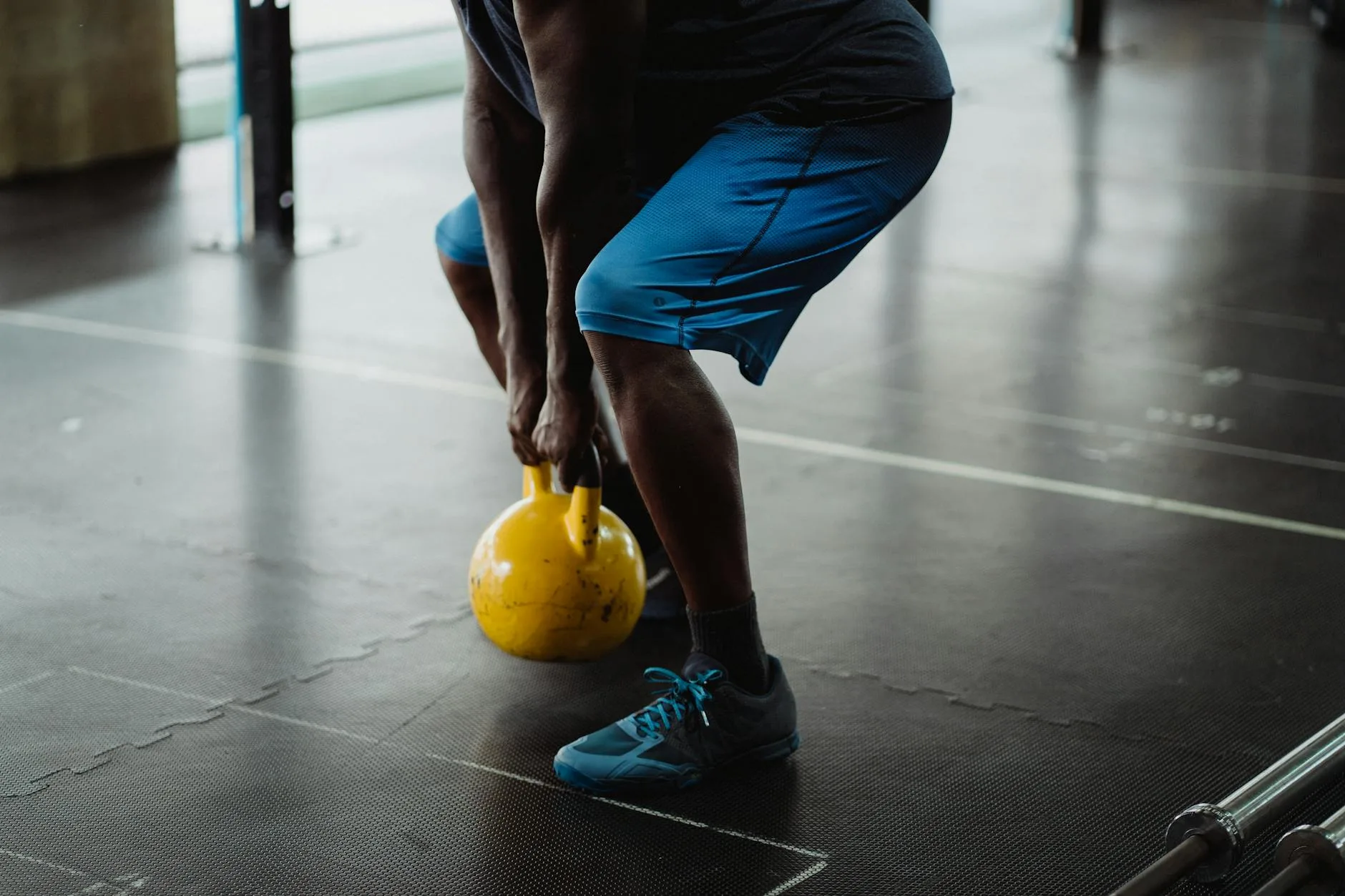
The deadlift is the first kettlebell exercise to learn because it practises the hip hinge under load without the complexity of a swing.
How to Do It
- Stand with feet shoulder-width apart, kettlebell between your feet, handle running left to right
- Hip hinge down and grip the handle with both hands. Shoulders pulled back, back flat, eyes forward
- Drive through your heels and straighten your hips and knees simultaneously. The kettlebell lifts as your body stands up — do not pull with your arms
- Stand fully upright, squeezing your glutes at the top
- Reverse the movement — hips back, controlled descent, kettlebell returns to the floor
Sets and Reps
3 sets of 10 repetitions. Focus on form, not speed. Every rep should look identical. If your back rounds on any rep, stop and reset.
The Kettlebell Swing
The swing is the signature kettlebell movement and the one that delivers the most training benefit. It is also the most commonly butchered exercise in any gym.
The Russian Swing (What You Should Learn)
The Russian swing brings the kettlebell to chest height. The American swing (overhead) is popular in CrossFit but puts the shoulders in a vulnerable position at the top — not recommended for beginners. Stick with Russian swings until your technique is bulletproof.
How to Do It
- Stand with feet slightly wider than shoulder-width. Kettlebell about 30cm in front of you on the floor
- Hip hinge down, grip the handle with both hands, and hike the kettlebell back between your legs like a rugby pass
- Drive your hips forward explosively — imagine you are jumping without leaving the ground. This hip thrust is what propels the kettlebell, not your arms
- The kettlebell swings up to chest height. At the top, your body is a straight vertical line — glutes squeezed, core tight, arms extended
- Let the kettlebell fall naturally. As it descends, hinge your hips back and guide it between your legs. Your forearms should contact your inner thighs at the bottom of the swing
- Immediately drive the hips forward again. The swing is continuous — no pausing at the bottom
The Most Important Cue
The power comes from the hips, not the arms. If your arms are doing the lifting, you are doing a front raise with momentum, not a swing. Think of your arms as ropes — they connect the kettlebell to your body, but they do not generate force. All the power comes from the explosive hip extension.
Sets and Reps
Start with sets of 10 swings. Rest 30-60 seconds between sets. Do 5 sets. As your conditioning improves, work up to sets of 15-20. The UK Strength and Conditioning Association recommends kettlebell swings as one of the most effective posterior chain exercises for both athletic performance and general fitness.
The Goblet Squat
The goblet squat teaches proper squat mechanics better than any other exercise. The weight position forces you into good posture — if you lean too far forward, you drop the kettlebell.
How to Do It
- Hold the kettlebell by the horns (the sides of the handle) at chest height, close to your body. Elbows pointing down
- Stand with feet slightly wider than shoulder-width, toes turned out 15-30 degrees
- Squat down by pushing your knees out over your toes and sitting your hips between your heels. Keep the kettlebell tight to your chest — it should not drift forward
- Descend until your hip crease drops below your knees (full depth). Your elbows should pass inside your knees at the bottom
- Drive up through your heels, squeezing your glutes at the top
Why It Works So Well
The goblet position counterbalances your bodyweight, allowing you to sit deeper into the squat without falling backward. It also forces an upright torso, which builds the core strength you need for heavier squats later. If you struggle with squat depth using a barbell, three months of goblet squats will fix it.
Sets and Reps
3 sets of 12 repetitions. If 12 feels easy with your starting weight, slow the descent to 3 seconds per rep instead of adding weight.
The Kettlebell Press
The press builds shoulder strength and stability. It is also the movement that shows you whether your starting weight is appropriate — if you cannot press it for 5 reps, the weight is too heavy for beginner training.
How to Do It
- Clean the kettlebell to the rack position — held at shoulder height with the bell resting on the back of your forearm, elbow tight to your ribs
- Brace your core and squeeze your glutes. This creates a stable platform for pressing
- Press the kettlebell straight up until your arm is fully extended overhead. The kettlebell should finish directly above your shoulder, not in front of it
- Lower the kettlebell back to the rack position under control. Do not let it drop
The Rack Position
Getting comfortable in the rack position takes practice. The kettlebell rests on your forearm between the wrist and elbow. Your wrist is straight (not bent backward), and the handle sits diagonally across your palm. It feels awkward at first — give it a week.
Sets and Reps
3 sets of 8 per arm. Alternate sides between sets or do all reps on one side before switching — either approach works.
The Turkish Get-Up
The get-up is the most technical beginner movement but also the most rewarding. It trains shoulder stability, core strength, hip mobility, and coordination in a single slow, deliberate exercise. If you can only do one kettlebell exercise, many coaches would choose this one.
How to Do It (Simplified)
The full get-up has seven distinct positions. Here is the simplified version:
- Lie on your back with the kettlebell pressed straight up in your right hand. Right knee bent, right foot flat on the floor. Left arm and left leg extended at 45 degrees
- Roll onto your left elbow while keeping the kettlebell locked out overhead. Eyes on the kettlebell at all times
- Push up onto your left hand
- Lift your hips off the ground in a bridge position
- Sweep your left leg underneath you into a kneeling position
- Stand up from the kneeling position, kettlebell still overhead
- Reverse every step to return to the floor
Start Light
Use a shoe balanced on your fist before using a kettlebell. If the shoe falls, your form needs work. This is the one exercise where the movement pattern matters far more than the weight. A 4-8kg kettlebell is plenty for your first month of get-ups.
Sets and Reps
1-2 reps per side, 3-5 sets. This is not a high-rep exercise — each rep takes 30-45 seconds. Quality over quantity.
A Simple Beginner Kettlebell Workout
Do this three times per week with at least one rest day between sessions. The whole workout takes about 25-30 minutes.
Warm-Up (5 Minutes)
- Bodyweight hip hinges: 10 reps
- Bodyweight squats: 10 reps
- Arm circles: 10 forward, 10 backward
- Cat-cow stretches: 10 reps
Workout
- Kettlebell deadlift: 3 x 10
- Kettlebell swing: 5 x 10 (rest 30-60 seconds between sets)
- Goblet squat: 3 x 12
- Kettlebell press: 3 x 8 per arm
- Turkish get-up: 3 x 1 per side
Progression
After 4 weeks of consistent training, increase the challenge by adding reps before adding weight. Move to sets of 15 swings, 15 squats, and 10 presses before buying a heavier kettlebell. When you do step up in weight, drop the reps back to the starting numbers and build again. For more workout ideas with weights you already own, see our dumbbell workout routine for beginners — many of the principles overlap.
Common Kettlebell Mistakes
Squatting the Swing
The swing is a hip hinge, not a squat. If your knees bend more than 15-20 degrees at the bottom, you are squatting. Push your hips back rather than dropping them down. Film yourself from the side — you should see your shins staying close to vertical throughout the movement.
Using Arms to Lift
If your arms are sore after swings, you are muscling the bell up with your shoulders instead of driving it with your hips. The arms are passive — they just hold on. Focus on the hip snap and let momentum carry the kettlebell.
Rounding the Lower Back
This is the big one — the mistake that causes injuries. If your lower back rounds under load, stop immediately. Go back to the wall drill and hip hinge practice. A rounded lower back under a swinging load is how disc injuries happen. Our guide on warming up before lifting weights covers how to prepare your spine and hips before any session.
Gripping Too Tight
A death grip on the handle fatigues your forearms and restricts the natural swing arc. Grip firmly enough to control the bell but not so tight that your knuckles are white. The handle should move slightly in your hand at the top and bottom of the swing.
Going Too Heavy Too Soon
Ego lifting with kettlebells is more dangerous than with dumbbells because the ballistic movements amplify bad form. A 24kg kettlebell swung with poor technique generates forces that your lower back cannot tolerate. Master the basics at a manageable weight. The heavy bells will still be there when your form is ready.
Frequently Asked Questions
What weight kettlebell should a beginner start with? Most men should start with 12-16kg and most women with 8-12kg. These weights allow you to practise all the beginner movements — swings, squats, presses, and get-ups — without any single exercise being too heavy. If in doubt, go lighter. You can always move up in weight after a few weeks.
Can kettlebells replace a full gym? For most general fitness goals, yes. A single kettlebell can build strength, improve cardiovascular fitness, develop mobility, and burn fat. You will eventually need heavier bells as you progress, but two or three kettlebells in different weights cover a huge range of training for years.
How often should I train with kettlebells? Three times per week with rest days between sessions is ideal for beginners. Each session takes 25-35 minutes. As you develop proficiency, you can increase to 4-5 sessions per week, alternating heavy and light days. Listen to your body — persistent soreness or joint pain means you are doing too much.
Are kettlebell swings bad for your back? No — when done correctly, swings strengthen the muscles that protect your back. The movement pattern (the hip hinge) is how your body is designed to lift. The injuries come from bad technique — rounding the lower back, squatting instead of hinging, or using too heavy a weight. Learn proper form before adding weight or volume.
Do I need kettlebell shoes? No. Flat-soled shoes (Converse, Vans, or dedicated lifting shoes) are ideal because they keep you stable and connected to the ground. Running shoes with thick, cushioned soles are actively bad for kettlebell training because the cushioning absorbs force and reduces stability. Barefoot is also fine on a non-slip surface.