A good exercise bike under £200 has to fit both your room and the way you ride. For regular seated cardio, compare the full-size Superun and Lacuffy on fit and current terms; if the bike must fold away, start with Jupgod or Ultrasport.
We compared five UK models by resistance system, riding position, adjustability, storage and stated capacity. The comparison uses product documentation, not hands-on ride testing.
Our top 5 picks

Full-size magnetic option — Superun Magnetic Exercise Bike
A full-size magnetic bike for regular seated cardio in a shared room.
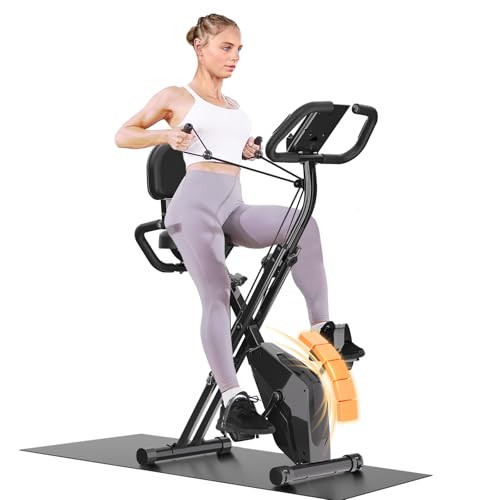
Best compact folding option — Jupgod Folding Magnetic Exercise Bike
A folding frame for steady cardio when floor space is limited.

Full-size magnetic option — Lacuffy Magnetic Exercise Bike
Compare its adjustment details, delivery and returns with Superun.

Best connected training — MERACH Magnetic Exercise Bike
App-led sessions and magnetic resistance in a full-size format.
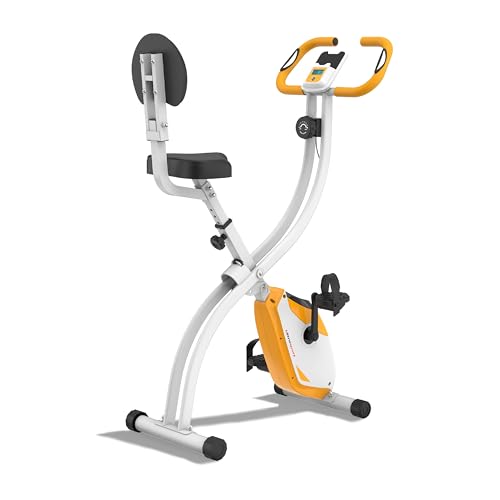
Best with a backrest — Ultrasport F-Bike 200B
A folding bike with a backrest for steady upright riding.
In this guide
- Comparison at a glance
- The five best exercise bikes
- Head-to-head recommendation
- Choosing the right budget bike
- Setting up your bike
- How we chose
- The bottom line
- Frequently asked questions
Comparison at a glance
| Bike | Best for | Resistance | Stated capacity | Storage |
|---|---|---|---|---|
| Superun | Full-size magnetic riding | Magnetic | 136kg | Full-size |
| Jupgod | Compact storage | Magnetic | Check current specification | Folding |
| Lacuffy | Full-size magnetic riding | Magnetic | 136kg | Full-size |
| MERACH | Connected training | Magnetic | Check current specification | Full-size |
| Ultrasport F-Bike 200B | Backrest and folding storage | 8-level magnetic | 110kg | Folding |
These specifications are a comparison guide, not product guarantees. Check the current price, dimensions and seller terms before buying.
The five best budget exercise bikes under £200
1. Superun Magnetic Exercise Bike — Full-Size Magnetic Option
The Superun offers magnetic resistance, belt drive and a full-size riding position for regular home cardio. Those features do not establish an advantage over the similarly specified Lacuffy; compare the adjustment details and current buying terms for the exact bikes.
It still has the limitations common to budget equipment: a basic console and less certain long-term parts support than established gym brands. Treat it as a capable home-cardio bike, not a commercial machine.
- Buy it if: you want a quiet, full-size magnetic bike for regular seated cardio
- Skip it if: you need folding storage or well-established UK service support
- Main compromise: the console and after-sales support are more basic than the riding specification
2. Jupgod Folding Magnetic Exercise Bike — Best Compact Folding Option
The Jupgod suits beginners who want steady home cardio but cannot leave a full-size bike permanently assembled. Its folding frame and magnetic resistance make it easier to live with in a bedroom or multipurpose room.
The trade-off is ride feel. An X-frame folding bike will not feel as planted as a full-size indoor-cycling bike, particularly during hard efforts.
- Buy it if: compact storage matters more than a spin-bike feel
- Skip it if: you expect standing climbs or forceful intervals
- Main compromise: the lighter folding format prioritises convenience over stability
3. Lacuffy Magnetic Exercise Bike — Full-Size Magnetic Option
The Lacuffy is also a full-size magnetic bike with a belt drive, app features and a stated 136kg capacity. Its listed 103 × 49 × 112cm dimensions match Superun’s, so those specifications do not put either bike ahead. Compare seat and handlebar adjustment, delivery and returns before choosing.
Its documentation is thinner than the better-known alternatives, so do not treat the capacity figure or substantial-looking frame as independent proof of durability.
- Buy it if: its adjustment details and current buying terms suit you better than Superun’s
- Skip it if: clear manufacturer documentation and established support are priorities
- Main compromise: limited independent documentation makes fit and long-term support harder to judge
4. MERACH Magnetic Exercise Bike — Best Connected Magnetic Bike
The MERACH is the strongest connected option in this shortlist. It combines magnetic resistance with app-led training and a full-size indoor-cycling position, making it better suited to structured sessions than a simple folding bike.
App compatibility should still be checked against the exact model and your preferred platform. Connected features are useful only when the bike reports the metrics you actually want to follow.
- Buy it if: you want quiet magnetic resistance with app-led training
- Skip it if: you prefer a simple bike with no phone or app setup
- Main compromise: connected features add complexity and do not turn budget sensors into studio-grade measurement
5. Ultrasport F-Bike 200B — Best Folding Bike with Backrest
The Ultrasport F-Bike 200B is the practical folding choice for steady seated cardio. Its backrest, pulse grips and simple LCD suit buyers who value an upright supported position more than an aggressive indoor-cycling setup.
Eight resistance levels and a 110kg stated capacity make its intended use clear: moderate home exercise rather than hard standing efforts. Check the seat and backrest position against your own fit needs before ordering.
- Buy it if: you want folding storage, a backrest and uncomplicated controls
- Skip it if: you want a full-size spin position or a higher stated capacity
- Main compromise: the supported folding design is convenient but less suited to intense cycling sessions
Head-to-head: which exercise bike should you buy?
Superun vs Lacuffy
These are the closest alternatives. Both linked models list magnetic resistance, belt drive, app features, a 136kg capacity and the same 103 × 49 × 112cm dimensions. We found no verified ride-quality, durability or service advantage for either. Choose on adjustment fit, current price, delivery and returns rather than the order in this guide.
Jupgod vs Ultrasport
Both fold, but they solve different problems. Jupgod is the simpler folding option in this shortlist. Ultrasport adds a backrest and a more upright supported position. Compare their current prices, then choose Jupgod for compact storage or Ultrasport when a backrest matters more.
For a full-size magnetic bike, compare Superun and Lacuffy on fit and current buying terms; the listed specifications do not establish a clear winner. Pick Jupgod for compact folding storage, Ultrasport for a folding bike with a backrest, or MERACH for connected magnetic training.
Do not choose solely by flywheel or capacity figures. Match the resistance system, riding position and adjustment range to your room and body. If you are recovering from injury, need a step-through recumbent design or have concerns about balance, seek an appropriate model and professional advice rather than relying on this shortlist.
Choosing the right budget exercise bike
Resistance and drive
All five picks here use magnetic resistance, which avoids contact with the flywheel. Friction bikes can offer continuous adjustment, but their contact pads may need inspection or replacement. A belt drive is usually quieter than a chain drive, although assembly and alignment also affect noise. Our guide to reducing noise in a home gym covers mats, floor vibration and placement.
Flywheel and riding position
A heavier flywheel can help maintain momentum, but its weight alone does not determine ride quality. Frame geometry, bearings, resistance design and build quality matter too. Folding X-frame bikes favour storage and steady seated cardio; full-size indoor-cycling bikes are usually better suited to harder efforts.
Fit and maximum user weight
Check the saddle and handlebar adjustment ranges, not just the headline user-height claim. Leave a sensible margin below the listed maximum weight, particularly if you plan vigorous sessions. Taller and shorter riders should read recent owner feedback because published dimensions do not always describe usable fit clearly.
Display and app features
Basic displays commonly estimate time, speed, distance and calories. Treat calorie figures as guidance rather than measurement. App compatibility can be useful, but confirm the named app and any required subscription for the exact model; Bluetooth support does not automatically mean a bike works fully with Zwift or every training platform.
Setting up your bike
- Saddle height: start around hip height and adjust until the knee remains slightly bent at the bottom of the pedal stroke.
- Reach: set the handlebars so you can ride without locking your elbows or rounding your lower back.
- Stability: assemble on a level surface, tighten fasteners to the instructions and use a suitable mat where needed.
- Pedals: secure the straps without restricting circulation and stop if you experience persistent knee, hip or back pain.
Start with short, easy sessions and build duration or resistance gradually. The NHS activity guidance recommends combining aerobic activity with strengthening work across the week; an exercise bike can contribute to the aerobic portion. Use our beginner exercise-bike workouts for a sensible first plan, and check home-gym space requirements before committing to a full-size frame.
If you are deciding between cardio machines rather than bike models, compare the movement and space demands in our treadmill, bike and rowing-machine guide.
How we chose
We compared resistance design, riding position, adjustability, storage, stated user capacity and the clarity of product documentation. Magnetic bikes suit quieter shared spaces; folding bikes trade some planted feel for easier storage. We did not assess ride quality or long-term durability in hands-on tests.
Documentation remains uneven in this price range, so headline capacity, flywheel and app claims should be read cautiously. Fit, assembled dimensions, resistance type, warranty and returns terms matter more than the largest number in a product title. If you are planning more than one purchase, our guides to setting up a home gym on a budget and choosing home gym equipment help prioritise the wider kit list.
The bottom line
For regular seated cardio on a full-size magnetic bike, compare Superun and Lacuffy on adjustment fit and current buying terms; neither has a verified overall edge. Choose Jupgod or Ultrasport when the bike must fold away, or MERACH for connected magnetic training.
Frequently asked questions
Is an exercise bike under £200 worth buying?
Yes, if you need convenient home cardio and choose a bike that fits your body, space and intended intensity. Higher-priced bikes may offer better adjustment, clearer service support or sturdier components, but price alone does not prove durability.
Is magnetic resistance better than friction?
Magnetic systems are generally quieter and avoid brake-pad wear. Friction systems provide continuous adjustment but use a contact pad that needs inspection and eventual replacement.
What flywheel weight do I need?
There is no universal minimum. Flywheel weight affects momentum, but resistance design, bearings, frame quality and intended use also matter.
Can I use an exercise bike every day?
Easy cycling can be frequent for many people, but training should build gradually and harder sessions need recovery. Seek medical guidance where an injury or health condition affects exercise.
How much room does an exercise bike need?
Check the assembled dimensions and allow extra clearance for mounting, dismounting and safe movement. If storage is important, check the folded dimensions too.