For a home gym that doubles as a spare room, the FLYBIRD Adjustable Bench is a practical starting point: it offers several pressing angles and folds between sessions. Buy the Komodo if flat work is all you need; consider the GYM MASTER GM3 if you have a permanent space and want a larger stated load allowance. The JX Fitness prioritises compact storage, while the Finer Form adds back-extension and core positions.
Our top 5 picks
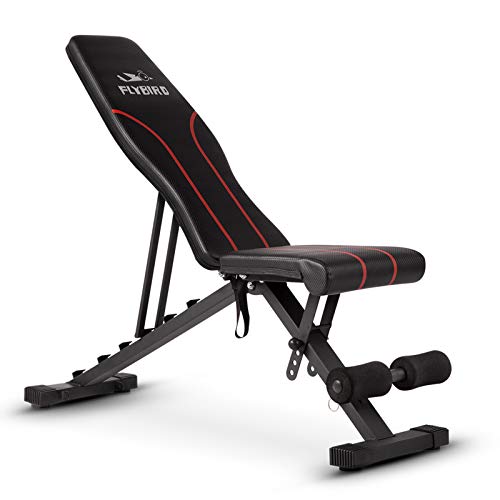
Flexible home-gym pick — FLYBIRD Adjustable Bench
Incline, decline and upright positions in a folding design.

Simple flat bench — Komodo Flat Weight Bench
Fixed frame for flat pressing; no angle adjustment.

Permanent FID setup — GYM MASTER GM3
Flat, incline and decline positions with a higher stated load limit.

Compact storage — JX Fitness Adjustable Bench
Folding bench with multiple back and seat settings.

Pressing and extensions — Finer Form FID Bench and Roman Chair
Extra support positions for core and back-extension work.
The right bench depends on the exercises you will actually do, your available floor space and the model-specific load instructions. Stated capacities from different brands are not a like-for-like stability test. If dumbbell work is your main use, our guide to adjustable dumbbells can help plan the rest of the setup.
In this guide
- Comparison at a glance
- The five best weight benches
- Head-to-head recommendation
- Choosing the right bench
- Setup and lifting safety
- How we chose
- The bottom line
- Frequently asked questions
Comparison at a glance
| Bench | Our verdict | Type | Best for | Main compromise |
|---|---|---|---|---|
| FLYBIRD Adjustable Bench | Flexible home-gym pick | Adjustable; folds | General home-gym strength training | More hinges and locks to check than a fixed bench |
| Komodo Flat Weight Bench | Best budget flat bench | Flat; fixed | Simple dumbbell and barbell pressing | No incline or decline positions |
| GYM MASTER GM3 | Best premium FID bench | Flat, incline and decline | Permanent FID setup with a higher stated load limit | Costs more and needs dedicated floor space |
| JX Fitness Adjustable Bench | Best folding bench | Flat, incline, decline and upright | Shared rooms and compact home gyms | More folding joints to check before use |
| Finer Form FID Bench and Roman Chair | Best multi-function bench | FID plus Roman-chair positions | Pressing, back extensions and core work | Large, complex and slow to reconfigure |
Prices and availability move, so the table focuses on the differences that should decide the purchase. Check the latest model-specific manual before ordering, especially for dimensions and position-specific load limits.
The five best weight benches
1. FLYBIRD Adjustable Bench: flexible home-gym pick
The FLYBIRD is a useful starting point for a mixed home-gym programme. Its current design offers eight back positions, four seat positions and three leg-pad positions, covering the useful range from decline work to upright shoulder press. The folding frame matters in a UK spare room where the training area may need to become an office or bedroom again after the session. The seller states a 300kg combined capacity, but users should follow the supplied manual rather than assuming every angle carries the same limit. It is more versatile than the Komodo and easier to store than the GM3.
- Buy it if: you want one bench for dumbbell pressing, rows, shoulder work and core exercises.
- Skip it if: you regularly handle very heavy barbell loads and have room for a permanent commercial-style bench.
- Main compromise: folding joints and adjustment locks need careful checking before each lift.
2. Komodo Flat Weight Bench: best budget flat bench
The Komodo does one job without adjustment hardware getting in the way. Its fixed steel frame, padded top and rubber feet make sense for flat dumbbell press, barbell work inside a rack, supported rows and step-ups. The listing states a 250kg maximum including the user, which is enough for many recreational lifters but must be calculated carefully. An 85kg person pressing two 35kg dumbbells already places 155kg on the bench before dynamic forces are considered. It is a better budget buy than a flimsy multi-position model if you never use incline or decline.
- Buy it if: flat pressing matters more than exercise variety.
- Skip it if: upper-chest, seated shoulder or decline work is part of your programme.
- Main compromise: the fixed pad leaves no room to change pressing angle.
3. GYM MASTER GM3: best premium FID bench
It is a dedicated flat, incline and decline bench with seven stated positions, thick nonslip cushions, transport wheels and a heavy steel frame. GYM MASTER states a 450kg maximum load, giving it a higher stated figure than the portable folding benches here. Capacity remains a manufacturer claim, so use the model-specific instructions and include body weight in any calculation. The bench is intended to stay assembled; wheels help reposition it, but this is not something most people will fold behind a door.
- Buy it if: you lift hard, want decline positions and have a permanent training space.
- Skip it if: the bench must disappear after every workout.
- Main compromise: the higher price and larger footprint are wasted on light occasional sessions.
4. JX Fitness Adjustable Bench: best folding bench
The JX Fitness is the storage-first alternative to the FLYBIRD. It offers six backrest positions and three seat positions, including flat, incline, decline and upright settings. The advertised total-load figure is about 299kg, but the separate user-weight limit is about 136kg; do not confuse them, and check the manual for each configuration. Its folding format works well in a flat or shared room, while the upright position adds seated shoulder exercises. If your rack work calls for a permanent bench, compare the GM3’s setup and model-specific instructions before deciding.
- Buy it if: you need several useful angles but cannot dedicate permanent floor space.
- Skip it if: you need a permanent bench and do not want folding hardware.
- Main compromise: compact storage adds hinges and locks to check.
5. Finer Form FID Bench and Roman Chair: best multi-function bench
The Finer Form earns its place by doing more than pressing. Eight backrest angles, three seat positions and adjustable support pads let it function as an FID bench, Roman chair, back-extension station and supported core bench. It can replace several small pieces of equipment for someone who will actually use those movements. That last point matters: extra pads add bulk, setup time and possible obstructions around ordinary dumbbell work. If your programme is mostly presses and rows, the FLYBIRD is simpler and cheaper.
- Buy it if: back extensions, supported core work and broad exercise variety justify a larger station.
- Skip it if: you mainly want quick flat and incline dumbbell sessions.
- Main compromise: more functions make the bench bulkier and slower to adjust.
Head-to-head: which weight bench should you buy?
Buy the FLYBIRD Adjustable Bench for the best all-round balance. It offers flat, incline and decline positions, then folds away between sessions; check the current price against the fixed and permanent alternatives. The Komodo is the simpler choice for a rack and flat-only programme because it has no adjustment hinge to set; check its load and dimensions against the rack.
Choose the GYM MASTER GM3 when its higher stated capacity, FID angles and permanent footprint suit your programme; stated ratings are not directly comparable across brands. Pick the JX Fitness when storage is non-negotiable, and buy the Finer Form only when its Roman-chair and back-extension functions will appear in your weekly plan. The common mistake is paying for adjustment positions that sound useful but never get used.
Choosing the right weight bench
Bench type and useful angles
A flat bench is the cleanest option for flat presses and rack work. An adjustable bench adds incline and upright settings; around 30° is useful for upper-chest work, while a steeper setting supports shoulder press. FID means flat, incline and decline, but decline is not mandatory for a balanced home programme. Buy it only if you know you will use it.
Capacity and stability
Add your body weight to the heaviest load you expect to handle, then leave a sensible margin. Capacity numbers from different brands are not automatically comparable, and some apply only in the flat position. Foot placement, a secure adjustment lock and a level floor matter as much as the headline number. If a bench rocks before loading, check assembly and floor contact rather than trying to train through it.
Dimensions, pad and hinge gap
Check the assembled length, width and height against your room and rack. You need room at both sides for dumbbells or plate loading, not merely enough floor space for the frame. Dense, grippy padding should support the shoulder blades without feeling like a sofa. On adjustable benches, a large seat-to-back gap can sit under the lower back in the flat position; it is a small specification with a big effect on comfort.
Storage and movement
A folding bench is useful only if the folding sequence is quick enough that you will use it. Check the stored dimensions and whether it stands safely when folded. Heavy fixed benches should have a handle and wheels. Our guides to setting up a home gym on a budget and home-gym space requirements help plan the rest of the room.
Setup and lifting safety
Assemble and check before loading
Build the bench on a level surface, tighten fasteners in the sequence given by the manufacturer and recheck them after the first few sessions. Before every set, confirm the backrest ladder or pin is fully seated and the bench feet are flat. Do not use a folded or partly engaged position as an improvised angle.
Train within the setup
A bench does not make solo barbell pressing safe by itself. Use correctly set rack safeties or a competent spotter, secure plates where the equipment instructions require it and keep the floor clear. Dumbbells are often easier to abandon safely in a compact home gym, but they still require a clear landing area. Our home-gym workout plan guide can help keep progression measured, while the guide to choosing the right dumbbell weight helps set a sensible starting load.
Look after the bench
Wipe sweat from the upholstery, inspect seams and check bolts, pins and weld areas regularly. Stop using the bench if a lock bends, a weld cracks or the frame develops movement that tightening does not fix. Store folding benches dry and avoid leaving heavy weights on the pad, which compresses the foam.
How we chose
We compared the features that affect how a bench fits an ongoing home-gym routine: frame layout, stated combined load, adjustment mechanism, usable angles, pad support, footprint, transport and storage. Each recommendation also needed a distinct job. There is little value in listing five similar folding benches while ignoring a proper flat bench or a heavier FID model.
This is a specification-led guide, not a claim that we laboratory-tested every bench. Published manufacturer specifications and model instructions inform the comparison, but stated capacities are not directly comparable unless the same test method is used. The NHS strength and flex guidance is a useful starting point for controlled strength work; the bench manual remains the authority for assembly, locks and permitted loads.
The bottom line
The FLYBIRD Adjustable Bench is the flexible starting point when several pressing angles and folding storage matter. Buy the Komodo for simple flat work or consider the GYM MASTER GM3 for a permanent FID setup with a higher stated capacity. Whichever model you choose, measure the room, include body weight in the load calculation and check every adjustment lock before lifting.
Frequently asked questions
What weight capacity bench do I need?
Add your body weight to the heaviest weight you will lift, then leave a margin. Check whether the stated limit changes between flat and inclined positions.
Is a flat or adjustable bench better for a home gym?
An adjustable bench is better for most mixed dumbbell programmes. A flat bench is simpler and has no adjustment hinge to set when flat pressing is the main job.
Is an FID bench worth it?
Only if you will use decline positions. Flat and incline settings cover most home-gym pressing, so do not pay for FID merely because it sounds more complete.
How much room should I leave around a bench?
Measure the assembled bench, then leave clear working space at both sides and behind it for dumbbells, plates and safe movement. Your rack may require more clearance.
Can I use a folding bench for heavy lifting?
Some folding benches have high stated capacities, but the model-specific manual and lock design matter. For demanding barbell work, compare each model’s stated limits, lock design and manual; do not assume a heavier frame alone proves a bench is safer.
How often should I check the bench?
Check the adjustment lock before every set and inspect fasteners, upholstery and frame movement regularly. Re-tighten only as directed by the manufacturer.