The best yoga mat is the one that stays put, gives your hands reliable purchase and has enough cushioning for your practice without making balance work feel vague. The Core Balance Rubber Alignment Mat is our best overall choice because its 4mm natural-rubber base, PU grip surface, 183 × 68cm footprint and alignment markings suit the broadest mix of home and studio sessions.
A thick foam mat is better for Pilates and floor exercises, while a foldable travel mat solves a completely different problem. The six recommendations below separate those jobs clearly. Fixed prices are omitted because they change quickly; choose the right construction first and check the current offer afterwards.
In This Article
- Best yoga mats UK: our direct answer
- The best yoga mats at a glance
- Our six yoga mat recommendations
- How to choose yoga-mat thickness
- Grip, materials and sweat
- Size, weight and portability
- Cleaning and looking after your mat
- The Bottom Line
- Frequently Asked Questions
Best Yoga Mats UK: Our Direct Answer
Buy the Core Balance Rubber Alignment Mat if you want one recommendation. Four millimetres is firm enough for standing balance while still separating knees and wrists from a hard floor. Its extra 7cm of width over a typical 61cm mat is useful without becoming awkward in a class, and the listed 2.7kg weight helps it lie flat.
Choose the FITMIND PU Rubber Mat for sweat-prone practice because its PU top is designed to absorb moisture rather than relying only on a raised foam texture. The Core Balance 10mm Pilates Mat is the cushioning choice for slower floor work, but it is too soft for people who prioritise precise standing balance.
For travel, the Respire Fitness Foldable Mat packs into a 35cm square instead of a long roll. The HAPBEAR 183 × 91cm Mat gives broader movement space at home. The Yogamatters Eco Rise is the clearest eco-led choice because its specification names sustainably harvested natural tree rubber and excludes toxic dyes, though those environmental claims are manufacturer statements rather than independent certification.
The Best Yoga Mats at a Glance
| Mat | Best for | Size | Material / thickness | Weight | Main compromise |
|---|---|---|---|---|---|
| Core Balance Rubber Alignment | Best overall | 183 × 68cm | 4mm natural rubber / PU | 2.7kg | Heavy for commuting |
| FITMIND PU Rubber | Best for sweaty practice | 183 × 68cm | 4.5mm rubber / PU | About 2.8kg | Natural-rubber smell at first |
| Core Balance Pilates | Best thick mat | 180 × 60cm | 10mm NBR foam | About 850g | Soft for standing balance |
| Respire Fitness Foldable | Best for travel | About 173 × 61cm | 5mm layered PVC | About 1.2kg | Fold lines and shorter length |
| HAPBEAR Large | Best extra-wide | 183 × 91cm | 6mm TPE | About 1.2kg | Bulky in a crowded class |
| Yogamatters Eco Rise | Best eco-led option | 183 × 61cm | 3mm natural tree rubber | 2.3kg | Thin and currently scarce |
The table is CTA-free so the practical differences stay visible. Thickness alone does not determine comfort or grip: material density, surface finish, floor contact and the type of movement matter just as much.
Our Six Yoga Mat Recommendations
1. Core Balance Rubber Alignment Mat — Best Overall

Core Balance combines a natural-rubber base with a PU grip surface and laser-etched alignment lines. At 183 × 68cm it is wider than the common 61cm format, while the 4mm thickness keeps the floor connection firmer than a padded exercise mat. That balance makes it suitable for standing flows, slower poses and general home practice.
The published weight is about 2.7kg. That mass helps the mat sit flat and resist bunching, but it is noticeable on a walk to class. PU surfaces can grip well with damp hands, yet they also need careful cleaning: harsh sprays and soaking may shorten the useful life of the coating. Natural rubber is unsuitable for anyone with a relevant latex sensitivity.
- Buy it if: you want a stable, versatile mat with alignment markings and extra width.
- Skip it if: you carry your mat long distances or need thick floor cushioning.
- Main compromise: excellent stability and usable space, with substantial carrying weight.
2. FITMIND PU Rubber Mat — Best for Sweaty Practice

FITMIND uses a moisture-absorbing PU surface over a rubber base. This style of construction is a stronger fit for warm rooms and sweat-prone hands than a closed-cell foam mat, where moisture can sit on top. Its 183 × 68cm size matches the useful extra width of the Core Balance winner, and 4.5mm gives a little more separation from the floor.
The mat is listed at roughly 2.8kg, so it is a studio or home choice rather than a light commuter. The maker warns that natural rubber may smell when new; airing it flat in a ventilated room is more sensible than trying to mask the smell with perfume or aggressive cleaner. A sweat-absorbing surface also needs regular gentle cleaning and complete air-drying.
- Buy it if: your hands become damp and surface grip is the priority.
- Skip it if: you want a light mat or are sensitive to natural-rubber odour.
- Main compromise: sweat-focused grip brings extra weight and more careful maintenance.
3. Core Balance Pilates Mat — Best Thick Mat
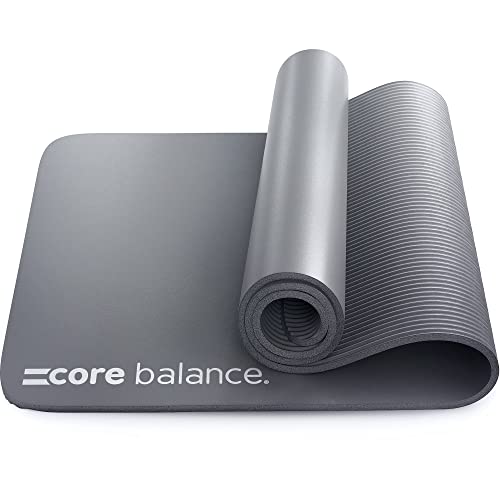
The 10mm Core Balance mat is designed around cushioning rather than close floor feedback. Its NBR foam construction and 180 × 60cm footprint suit Pilates, stretching, mobility work and poses where knees, elbows or hips spend time on the ground. At about 850g with a carry strap, it is much lighter than the rubber mats despite being thicker.
Ten millimetres can feel unstable in standing balances because the feet sink and shift slightly. The textured surface may provide acceptable traction for floor exercises, but it does not replicate the tackier feel of PU-coated rubber. Buyers who split their time evenly between Pilates and flowing yoga may prefer a 5–6mm TPE mat instead of this specialist cushioning choice.
- Buy it if: comfort during Pilates, stretching and kneeling work matters most.
- Skip it if: you practise demanding standing balances or fast transitions.
- Main compromise: generous cushioning reduces precise floor feedback.
4. Respire Fitness Foldable Mat — Best for Travel

Respire folds into a square roughly 35cm across and 7cm thick, which is easier to place in a suitcase or cupboard than a full-length roll. The mat is about 5mm thick and uses a three-layer PVC construction with a textured underside. At roughly 1.2kg it sits between an ultrathin travel sheet and a heavy studio mat.
The listed length converts to about 173cm, shorter than the 183cm standard of the other recommendations. Taller users should decide whether that is acceptable before ordering. Folding also creates panel lines, and PVC is not the right material for somebody whose priority is natural rubber or lower-impact material claims. Its strength is packing convenience, not premium studio feel.
- Buy it if: compact storage or suitcase packing matters more than maximum length.
- Skip it if: you are tall, want natural materials or dislike fold lines.
- Main compromise: far easier to pack, but shorter and less seamless than a rolled mat.
5. HAPBEAR Large Yoga Mat — Best Extra-Wide

HAPBEAR expands the working area to 183 × 91cm, giving 30cm more width than a standard mat. That space is useful for wider stances, mobility drills and mixed home workouts where hands and feet otherwise land beyond the edges. The 6mm TPE construction sits in the middle ground between a firm rubber mat and a 10mm Pilates pad.
The larger footprint needs measuring, particularly in a shared room. It may dominate a small studio space or overlap neighbouring mats in a busy class. The listing says it should not be used on carpet, so buyers planning a bedroom setup need to check the floor. Although it includes a bag and weighs about 1.2kg, the rolled bundle remains physically bulky.
- Buy it if: you train at home and regularly run out of width on a normal mat.
- Skip it if: storage is tight or you attend crowded classes.
- Main compromise: excellent movement space creates a larger roll and floor footprint.
6. Yogamatters Eco Rise — Best Eco-Led Option

Yogamatters specifies sustainably harvested natural tree rubber, recyclable and biodegradable material, and no toxic chemicals or dyes for the Eco Rise. Those are clearer material statements than vague “eco” branding, which is why it earns this category. The 183 × 61cm mat is only 3mm thick, giving strong floor feedback for experienced balance work.
The environmental claims come from the manufacturer and should not be treated as a full life-cycle assessment. At 2.3kg, this is heavy relative to its thickness, and 3mm offers limited cushioning on hard floors. Stock is currently scarce. Natural rubber also carries a characteristic smell and is not suitable for people with relevant latex sensitivity.
- Buy it if: documented natural-rubber material choices matter more than cushioning.
- Skip it if: you need knee comfort, low carrying weight or dependable immediate availability.
- Main compromise: a clear natural-material specification in a thin, heavy and scarce mat.
How to Choose Yoga-Mat Thickness
3–5mm for Most Yoga Practice
Three to five millimetres keeps the feet close enough to the floor for balance while taking the edge off a hard surface. The 4mm Core Balance and 4.5mm FITMIND mats sit in this range. A 3mm mat such as the Eco Rise feels firmer and packs into a slimmer roll, but knees and elbows receive less padding.
6mm for a Middle Ground
Six millimetres is useful when you want more cushioning without moving fully into Pilates-mat territory. HAPBEAR uses this thickness across a wider surface. Foam density matters: a dense 6mm mat can feel more stable than a soft 6mm mat, so millimetres should not be treated as a complete comfort score.
10mm for Floor Work
Ten millimetres suits Pilates, stretching and supported floor positions. It can be welcome for kneeling work, but “more cushioning” does not mean “better yoga”. The Core Balance Pilates mat may compress under the feet and make single-leg balance less precise. If one mat must cover everything, 4–6mm is usually the safer compromise.
Our separate guide to yoga-mat thickness, material and grip goes deeper into this decision. People starting at home can pair it with our beginner home-yoga setup.
Grip, Materials and Sweat
PU over Rubber for Damp Hands
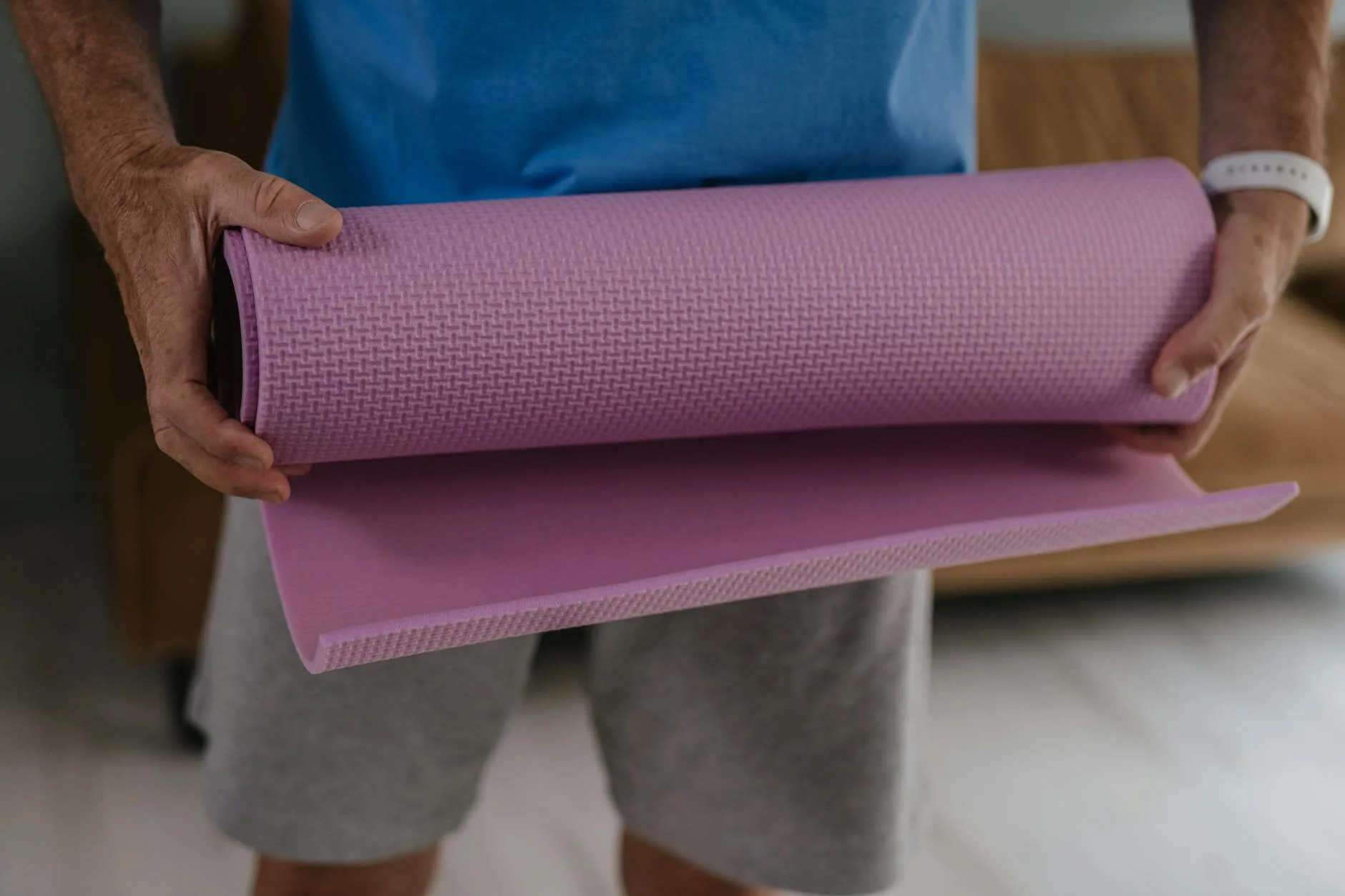
A PU surface can absorb some moisture and become more secure as hands warm, which is why FITMIND is the sweat-led recommendation. Open or absorbent surfaces need more careful hygiene than closed-cell foam. Do not assume every “non-slip” claim performs equally once wet; texture, pressure and cleaning residue all change the feel.
Natural Rubber for Floor Contact
Natural rubber adds weight and usually sits flat on smooth flooring. Core Balance and Yogamatters use it for that stable base. Rubber can smell when new, should be aired away from direct heat and may degrade if left in strong sunlight. People with latex sensitivity should choose another material and seek appropriate advice if unsure.
TPE and NBR for Lighter Cushioning
TPE is light and resilient, making it practical for wider or thicker mats such as HAPBEAR. NBR foam is softer and common in Pilates mats. These materials are easier to carry than dense rubber but can stretch, dent or provide less convincing wet grip. Material labels alone do not guarantee durability or environmental performance.
The British Wheel of Yoga provides UK yoga teaching and practice resources. A mat can support practice, but it cannot correct technique or replace qualified instruction where movement needs adapting.
Size, Weight and Portability
Standard Width versus Extra Width
A common mat is around 183 × 61cm. The Core Balance winner and FITMIND extend width to 68cm without requiring much more room. HAPBEAR reaches 91cm, a meaningful difference for broad movement patterns but one that should be measured against the room before buying. Length matters too: Respire is closer to 173cm, which may feel cramped for taller users.
A Light Mat Is Not Always a Travel Mat
A long rolled mat can be awkward even when it weighs less than 1kg. Respire solves volume by folding, while the rubber mats prioritise stability and weigh over 2kg. Think about the real route: cupboard to living room, car to studio, or public transport and stairs. The right answer changes with that journey.
For a permanent training area, our guides to home-gym space requirements and rubber, foam and puzzle flooring help separate a personal mat from the room surface beneath it.
Cleaning and Looking After Your Mat
Follow the Material, Not a Generic Cleaning Hack
Use the maker’s care instructions. A lightly damp cloth is a safer default than soaking, machine washing or applying essential oils. PU, natural rubber, TPE, NBR and PVC respond differently to detergents and moisture. Cleaning residue can also reduce grip, which defeats the point of washing the mat.
Air-Dry Completely before Rolling
Open the mat flat after cleaning and allow both sides to dry away from radiators and strong direct sunlight. Rolling a damp mat traps odour and moisture. Store it loosely enough that the edges do not remain sharply curled; fold Respire along its intended panels rather than forcing a different crease.
- After a light session: wipe visible marks and allow the mat to air.
- After sweaty practice: clean the contact surface promptly using the approved method.
- Before storage: check that both sides are dry.
- Replace it when: the surface peels, grip cannot be restored or deep compression stops recovering.
If recovery work is part of the same routine, see our comparisons of the best foam rollers and foam-rolling technique. Those tools serve a different role from mat cushioning.
The Bottom Line
The Core Balance Rubber Alignment Mat is the best yoga mat for most UK buyers. Its 4mm thickness, natural-rubber base, PU grip surface, alignment markings and 68cm width make it the most balanced choice for regular home or studio practice.
FITMIND is better for sweat-prone sessions; the 10mm Core Balance mat suits Pilates and floor comfort; Respire is the practical travel choice; HAPBEAR gives home users extra width; and Yogamatters Eco Rise has the clearest natural-material specification.
The biggest mistake is buying thickness in isolation. Decide whether your priority is standing stability, wet grip, floor cushioning, luggage space or movement area, then check material, dimensions and weight together.
Frequently Asked Questions
What thickness yoga mat is best for beginners?
A 4–6mm mat is a sensible starting range for most beginners because it balances cushioning with stable floor feedback. Very soft 10mm mats suit floor work better than standing balance.
Is a rubber yoga mat better than TPE?
Rubber usually feels denser, heavier and more stable, while TPE is lighter and often easier to carry. Grip depends on the surface finish as well as the base material.
What yoga mat is best for sweaty hands?
A moisture-absorbing PU-topped rubber mat such as FITMIND is the strongest fit among these choices. It still needs prompt gentle cleaning and full air-drying.
Can I use a 10mm mat for yoga?
Yes, particularly for restorative poses and floor exercises, but the extra softness can make standing balances less precise. It is closer to a Pilates mat than an all-purpose yoga mat.
How often should a yoga mat be cleaned?
Wipe it according to the maker’s instructions after use, especially after sweaty sessions. Let both sides dry completely before rolling or folding it.
Are eco yoga mats really better for the environment?
Material claims vary. Look for specific statements about source, dyes, recyclability and biodegradability rather than a vague eco label. Manufacturer claims are not the same as an independent life-cycle assessment.