The Amazon Basics Cast-Iron 16kg is the best kettlebell for most buyers who already know that 16kg suits their current ability. It is a simple one-piece fixed bell with a broad handle and flat base. If you need several training loads without a rack of weights, choose the ATIVAFIT Adjustable 20kg instead.
Weight comes before brand. A beautifully finished kettlebell that is too heavy for controlled presses or too light for useful swings is the wrong purchase. Beginners should learn technique with a qualified coach where possible and choose a load they can control without pain or loss of posture.
In This Guide
- The best kettlebells at a glance
- Our six kettlebell recommendations
- Fixed, adjustable or competition?
- How to choose kettlebell weight
- Handle shape, coating and floor care
- Building a useful home set
- The Bottom Line
- Frequently Asked Questions
The Best Kettlebells at a Glance
This table has no buying buttons so you can compare format, weight and compromise first. Selectable listings require an extra check that the chosen weight matches the review.
| Model | Best for | Type | Weight | Handle | Main compromise |
|---|---|---|---|---|---|
| Amazon Basics Cast-Iron 16kg | Best overall | Fixed cast iron | 16kg | Wide textured | Simple fixed weight |
| ATIVAFIT Adjustable 20kg | Best adjustable | Adjustable | 2–20kg | Aluminium | Larger body than fixed bell |
| NORTHERN Competition | Best competition style | Steel competition | Select variant | Uniform size | Variant must be checked |
| METIS Neoprene 24kg | Best heavy fixed bell | Cast iron coated | 24kg | Wide coated | Too heavy for many beginners |
| Phoenix Fitness Vinyl 8kg | Best beginner fixed bell | Cement-filled vinyl | 8kg | Wide | Bulkier than cast iron |
| BODYPOWER 6/8/10kg Set | Best starter set | Vinyl set | 6, 8 and 10kg | Comfort handle | Three bells need storage |
Our Six Kettlebell Recommendations
1. Amazon Basics Cast-Iron 16kg — Best Overall
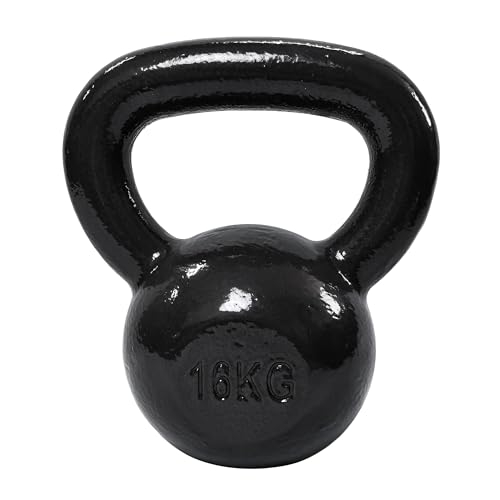
This is the uncomplicated option: a fixed 16kg cast-iron bell with no selector, plastic shell or weight plates to manage. The wide textured handle allows one- or two-handed work, while the flat bottom supports stable storage and floor-based exercises.
It suits swings, goblet squats, rows and carries when 16kg is appropriate. Painted handles can feel rougher than polished competition steel, and a single fixed bell offers no lighter setting for technical practice.
- Buy it if: you want a durable fixed bell and already know 16kg is suitable.
- Skip it if: you need progressive settings or a lighter first weight.
- Main compromise: one weight limits progression in both directions.
2. ATIVAFIT Adjustable 20kg — Best Adjustable

ATIVAFIT covers seven settings from 2kg to 20kg, making it useful in a compact home gym shared by people with different strength levels. The safety lock matters because loose plates would be unacceptable during ballistic movements.
Its changing weight reduces the need for several bells, but the body is bulkier than a fixed cast-iron design. Always confirm the selector is fully locked before lifting and avoid treating adjustment speed as more important than secure engagement.
- Buy it if: you want broad progression without storing several bells.
- Skip it if: you prefer the balance and compact body of a fixed bell.
- Main compromise: more mechanisms and a larger shell than simple cast iron.
3. NORTHERN Competition Kettlebell — Best Competition Style

Competition bells keep the same external dimensions across weights, so the rack position and swing arc remain more consistent as you progress. This NORTHERN range uses a steel shell and compact handle window intended for controlled single-hand technique.
The live product is a selectable range, so verify the weight before ordering. Competition handles can feel less forgiving for two-handed swings, particularly for buyers with large hands.
- Buy it if: you want uniform dimensions and technique consistency.
- Skip it if: you mainly use two-handed swings and want maximum handle room.
- Main compromise: the selected weight must be checked carefully.
4. METIS Neoprene 24kg — Best Heavy Fixed Bell

The exact METIS variant here is 24kg, giving experienced users a heavier fixed option for swings, deadlifts, carries and squats. Its cast-iron core is neoprene coated, which can reduce clatter and superficial floor marking.
A coating does not make dropping safe, and 24kg is not a sensible default starting point. The larger mass demands clear floor space and controlled technique.
- Buy it if: 24kg matches your current training and you want a coated fixed bell.
- Skip it if: you are learning basic movements or cannot test the load first.
- Main compromise: heavy, specialist weight with less exercise flexibility.
5. Phoenix Fitness Vinyl 8kg — Best Beginner Fixed Bell

This exact 8kg Phoenix bell is easier to manage for technique drills, controlled squats, rows and lighter presses. The broad handle gives room for two hands, while the vinyl exterior is easier on domestic floors than bare metal during careful placement.
The cement-filled construction is bulkier than cast iron at the same weight. An 8kg bell may soon become too light for lower-body swings even while remaining useful for overhead work.
- Buy it if: you need a manageable fixed weight for learning and lighter exercises.
- Skip it if: you already train comfortably with substantially heavier loads.
- Main compromise: bulkier construction and limited long-term progression.
6. BODYPOWER 6kg, 8kg and 10kg Set — Best Starter Set

Three fixed weights give a beginner room to use a lighter bell for presses, a middle weight for technique and a heavier one for squats or carries. The set avoids an adjustment mechanism and makes paired or circuit training easier.
The range stops at 10kg, so stronger users may outgrow it for swings. Three bells also occupy more floor space than one adjustable model.
- Buy it if: several people train at home or you want small weight steps.
- Skip it if: your main goal needs 12kg, 16kg or more.
- Main compromise: useful variety but a low maximum weight.
Fixed, Adjustable or Competition?
Fixed Cast Iron
Fixed bells are the simplest and most predictable. Their balance never changes, there is nothing to lock, and compact cast iron works well for swings and two-handed exercises. The drawback is obvious: progression requires another bell. Coated fixed bells protect the finish but still need a mat and controlled placement.
Adjustable
An adjustable kettlebell earns its space in a flat or small home gym. It is especially useful when one person needs different loads for presses, squats and swings. Check the minimum and maximum settings, size at lighter loads and locking method. Stop immediately if any plate shifts or rattles unexpectedly.
Competition
Competition kettlebells retain uniform dimensions across the range. That helps consistent technique and suits kettlebell sport, but the narrower handle window is not automatically better for general two-handed sessions. A standard cast-iron bell is often the more comfortable general-purpose purchase.
If dumbbell work is equally important, compare our best adjustable dumbbells. For barbell progression, see the Olympic weight plate guide.
How to Choose Kettlebell Weight
Choose by Movement, Not Gender
There is no universal starting weight for men or women. Training history, mobility, movement and technique matter more. A load suitable for a deadlift or swing may be too heavy for a strict press or Turkish get-up. If possible, try several weights with a coach and prioritise clean repetitions over a target number.
- Use a lighter bell when learning a new movement.
- Stop if pain, grip failure or loss of posture appears.
- Leave space around you and train on a stable, non-slip surface.
- Progress only when the current load remains controlled across the planned set.
Our guide to building a home gym helps plan flooring and storage before adding more weights.
Handle Shape, Coating and Floor Care
Handle Clearance
A handle must accommodate the exercises you plan. Two-handed swings need enough width; cleans and snatches need a shape that settles predictably against the forearm. Texture can improve grip, but an aggressive seam or rough paint may create hotspots during longer sets.
Coating Is Not Impact Protection
Vinyl and neoprene can reduce noise and cosmetic marks, but they do not protect flooring from a dropped 16kg or 24kg bell. Use suitable gym flooring, keep the area clear and place the bell down under control. Inspect adjustable locks and coated shells for damage.
Building a Useful Home Set
One correctly chosen bell is enough to start. Add weight only when a clear training gap appears. Many people eventually use a lighter bell for presses and technical work plus a heavier bell for swings, squats and carries. An adjustable model can cover that spread, while fixed bells offer faster transitions and simpler construction. Sport England research and data provides wider context on activity and participation rather than product-specific performance claims.
Store kettlebells low, dry and away from walkways. A flat base helps, but children should not have unsupervised access. The broader home cardio equipment guide also covers space planning for mixed training areas, while the weight bench guide helps plan a combined strength zone.
The Bottom Line
The Amazon Basics Cast-Iron 16kg is the best overall choice for buyers who know that weight fits their training. Choose the ATIVAFIT 20kg when space-saving progression matters, the NORTHERN model for competition-style consistency and METIS 24kg only for established heavier work.
For lighter entry points, Phoenix 8kg is the simplest single bell and the BODYPOWER 6/8/10kg set offers gradual steps. Weight suitability and handle comfort matter more than branding.
Frequently Asked Questions
What weight kettlebell should a beginner buy?
There is no universal beginner weight. Choose according to the exercise, training history and technique, and try several loads with qualified guidance where possible.
Is an adjustable kettlebell worth it?
Yes when storage is limited or you need different loads for presses, squats and swings. A fixed bell remains simpler and usually more compact.
Are competition kettlebells better?
They are better for consistent dimensions and kettlebell-sport technique, but not automatically better for general home workouts or two-handed swings.
Can kettlebells damage floors?
Yes. Even coated bells can dent or crack flooring if dropped. Use suitable gym flooring and place every bell down under control.
Is one kettlebell enough?
One suitable bell supports many exercises. A second weight becomes useful when overhead movements and lower-body exercises need very different loads.
Should I buy cast iron or vinyl?
Cast iron is compact and durable. Vinyl-coated or cement-filled bells can be quieter and gentler during careful placement but are often bulkier.