You started with push-ups three months ago and now you can do 30 without stopping. Great progress — except those 30 push-ups are not making you stronger any more. They are just getting easier, which means you are building endurance rather than strength. At the gym, you would add weight to the bar. At home with bodyweight only, you need a different approach: progression — making the same movement pattern harder without adding external load. For related guidance, see our Best Adjustable Dumbbells 2026: UK Home Gym Tested guide. For related guidance, see our How to Choose a Rowing Machine for Home guide. For related guidance, see our Peloton vs Echelon vs Wattbike: Indoor Bike Showdown guide.
In This Article
- Why Reps Alone Stop Working
- The Progression Principle
- Push-Up Progressions: From Beginner to Advanced
- Squat Progressions: Building Leg Strength
- Pull-Up Progressions: The Hardest Bodyweight Movement
- Core Progressions: Beyond the Basic Plank
- Programming: How to Structure Your Week
- Minimal Equipment That Unlocks More Progressions
- Frequently Asked Questions
Why Reps Alone Stop Working
Your muscles adapt to a specific demand. If that demand stays the same (20 push-ups, 3 sets, same depth, same speed), your body builds exactly enough capacity to handle it and no more. Adding reps beyond 15-20 per set trains muscular endurance — useful, but not the same stimulus as progressive overload for strength and muscle growth.
The Strength vs Endurance Threshold
Research consistently shows that sets of 5-12 reps at a challenging intensity build muscle and strength most efficiently. Once you exceed 15-20 comfortable reps, you are past the optimal zone for growth. The stimulus shifts from “build bigger, stronger fibres” to “make existing fibres more efficient at repeating the same effort.” Both matter, but if you want to get stronger or change your physique, you need to stay in the challenging zone — which means making the movement harder rather than doing more of the same.
How the Gym Solves This
A barbell makes progression simple: add 1.25kg each week. Your body continually faces a slightly harder demand and adapts by growing stronger. Bodyweight training lacks this simple progression path — you cannot add 1.25kg to yourself. Instead, you manipulate leverage, range of motion, stability, and tempo to increase difficulty.
The Progression Principle
Every bodyweight exercise exists on a spectrum from easy to extremely difficult. Progression means moving along that spectrum as you get stronger, always keeping the exercise challenging enough that 5-12 reps takes real effort.
The Four Ways to Progress
- Leverage changes — moving your weight distribution to put more load on the working muscles (incline push-ups → flat → decline → one-arm)
- Range of motion — increasing the distance through which you move (half squat → full squat → deficit squat)
- Stability reduction — removing support so stabilising muscles work harder (two legs → single leg, two arms → one arm)
- Tempo manipulation — slowing the eccentric (lowering) phase to increase time under tension (3 seconds down instead of 1)
When to Move to the Next Progression
Once you can complete 3 sets of 8-12 reps with good form and the last 2-3 reps of each set feel challenging but achievable, move to the next harder variation. If you can do 3 × 15 comfortably, you waited too long — that last 3-rep buffer means the exercise stopped being an effective strength stimulus weeks ago.
Push-Up Progressions: From Beginner to Advanced
Level 1: Wall Push-Ups
Stand arm’s length from a wall, hands at shoulder height. Lower your chest toward the wall, push back. Almost zero load on your chest and arms — a starting point for complete beginners or rehabilitation.
Level 2: Incline Push-Ups
Hands on a bench, step, or sturdy chair. The higher the surface, the easier. Progress by lowering the surface height: kitchen counter → dining chair → sofa arm → low step → floor.
Level 3: Standard Push-Ups
Hands on floor, body straight from head to heels, chest touches the ground (full range). The benchmark. Most people think they can do these but cheat the range — chest MUST touch or nearly touch the floor for each rep to count.
Level 4: Diamond Push-Ups
Hands together forming a diamond shape under your chest. Massively increases tricep and inner chest engagement. Harder than it looks — most people drop from 20 standard push-ups to 8-10 diamonds.
Level 5: Decline Push-Ups
Feet elevated on a chair or bench, hands on floor. Shifts more weight onto your upper chest and shoulders. The higher the feet, the harder (and the more it becomes a shoulder press rather than a chest press).
Level 6: Archer Push-Ups
Wide hand placement — as you lower, bend one arm while the other stays nearly straight. Each rep loads one side more than the other, approaching single-arm push-up difficulty while maintaining some assistance from the straight arm.
Level 7: One-Arm Push-Up
The gold standard. Requires exceptional chest, shoulder, tricep, and core strength. Most recreational trainees never reach this, and that is fine — archer push-ups provide a similar training effect with less injury risk.
Squat Progressions: Building Leg Strength
Level 1: Assisted Squat
Hold onto a doorframe or sturdy furniture for balance. Squat as deep as comfortable. For people with knee issues, mobility limitations, or zero training history.
Level 2: Bodyweight Squat
Feet shoulder-width, squat until thighs are parallel to floor (minimum) or deeper if mobility allows. Arms forward for counterbalance. The standard — master this with perfect form before progressing.
Level 3: Pause Squats
Standard squat but pause for 3 seconds at the bottom position. Eliminates the stretch-shortening reflex (the “bounce” out of the hole), making your muscles do all the work. Brutally effective with zero equipment.
Level 4: Bulgarian Split Squats
Rear foot elevated on a chair behind you. Squat on the front leg only. This is where bodyweight leg training gets serious — the single-leg loading provides enough challenge for most people to train productively for months. If your front thigh is not burning by rep 8, elevate the rear foot higher or hold a backpack for weight.
Level 5: Pistol Squats
Single-leg squat with the non-working leg extended forward. Requires strength, balance, and ankle mobility simultaneously. Many strong people cannot do these due to mobility rather than strength — warm up properly and work on ankle flexibility alongside the strength progression.
Level 6: Shrimp Squats
Single-leg squat with the non-working leg held behind you (grabbing your ankle). Deeper knee flexion than a pistol squat and less hamstring flexibility required. Arguably harder than pistols for pure quad strength.
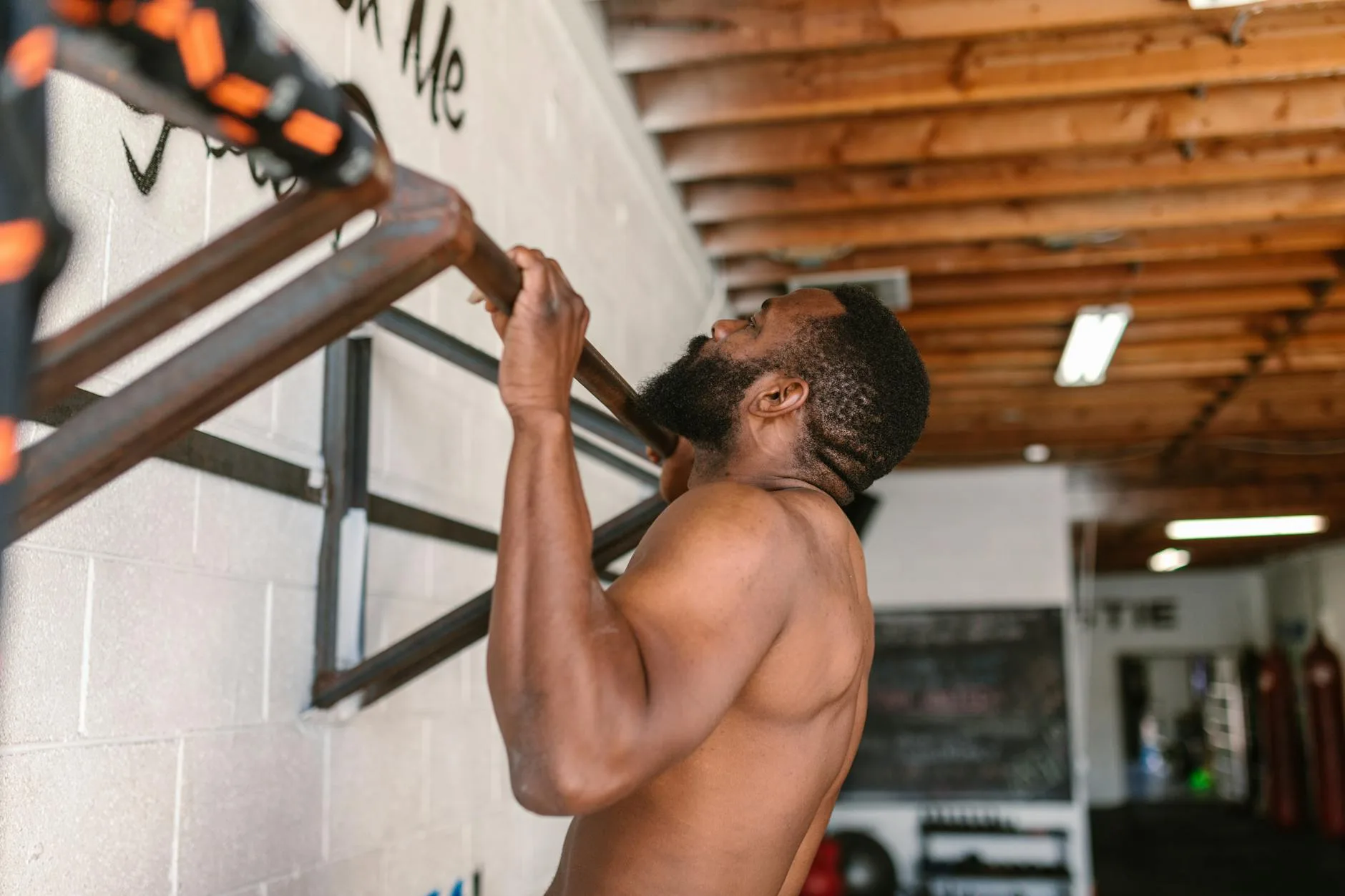
Pull-Up Progressions: The Hardest Bodyweight Movement
Pull-ups are where most home trainees stall — they require significant back and bicep strength, and there is no easy regression that uses identical muscles. A doorway pull-up bar (£15-25) is the minimum equipment needed.
Level 1: Dead Hangs
Grip the bar and hang with straight arms for 20-60 seconds. Builds grip strength and scapular stability — prerequisites for pulling. If you cannot hang for 15 seconds, you are not ready for any pulling progression.
Level 2: Scapular Pulls
From a dead hang, pull your shoulder blades down and together without bending your elbows. Your body rises 5-8cm through scapular retraction alone. Teaches the back engagement pattern that initiates a proper pull-up.
Level 3: Negative Pull-Ups
Jump or step to the top position (chin above bar). Lower yourself as slowly as possible — aim for 5 seconds from top to bottom. The eccentric phase builds strength faster than you think. 3 sets of 5 slow negatives twice per week transitions most people to full pull-ups within 4-8 weeks.
Level 4: Band-Assisted Pull-Ups
Loop a resistance band over the bar, put one knee in the loop. The band assists at the bottom (where you are weakest) and reduces assistance at the top. Progress by using thinner bands until the lightest band adds minimal help.
Level 5: Full Pull-Up
Dead hang to chin above bar, controlled descent back to full extension. The standard pull-up. One clean rep with full range is worth more than five half-reps where your chin never clears the bar.
Level 6: Weighted Pull-Ups / L-Sit Pull-Ups
Hold a dumbbell between your feet, wear a loaded backpack, or extend legs to L-position while pulling. Once you reach 3 × 10 unweighted pull-ups, adding load is the most effective progression — a home gym setup with a pull-up bar and a weight vest opens serious training potential.
Core Progressions: Beyond the Basic Plank
Level 1: Dead Bug
Lie face up, arms pointing to ceiling, knees at 90 degrees. Extend opposite arm and leg simultaneously while keeping your lower back pressed flat. The safest starting point for core training — zero spinal compression.
Level 2: Plank (30-60 seconds)
Once you hold a plank for 60 seconds comfortably, stop adding time. Longer planks train endurance, not strength. Move to the next level instead.
Level 3: Body Saw Plank
From plank position, rock your body forward and backward using your forearms. The further forward you reach, the longer the lever arm and the harder your core works. Small movements create enormous challenge.
Level 4: Ab Wheel Rollout (or Furniture Slider Rollout)
Kneel and roll out a wheel (or slide your hands on furniture sliders) as far as you can control without your lower back arching. The anti-extension demand is far beyond any plank variation. Progress from kneeling to standing rollouts over months — standing rollouts are elite-level core strength.
Level 5: Dragon Flag
Lie on a bench, grip behind your head, and raise your entire body (stiff as a board) to vertical, then lower with control. Made famous by Bruce Lee. Requires extraordinary core strength and months of progression through partial ranges. The ultimate bodyweight core exercise.
Programming: How to Structure Your Week
The Simple Template
- Day 1: Push-up progression + squat progression + core
- Day 2: Rest or light cardio
- Day 3: Pull-up progression + single-leg work + core
- Day 4: Rest
- Day 5: Full body (all progressions, slightly lighter)
- Days 6-7: Rest or active recovery
Sets and Reps
3-4 sets of 5-12 reps at your current progression level. Rest 90-120 seconds between sets. If you hit 3 × 12 with good form and control, advance to the next progression next session. If you cannot manage 3 × 5, drop back one level and add slow eccentrics.
Tracking Progress
Write down your reps. Seriously. Without a log, you forget what you did last week and end up doing the same thing for months. A notebook or phone app recording “Diamond push-ups: 8, 7, 6” tells you exactly where you are and when to progress. The British Association of Sport and Exercise Sciences emphasises progressive overload tracking as essential for continued adaptation.
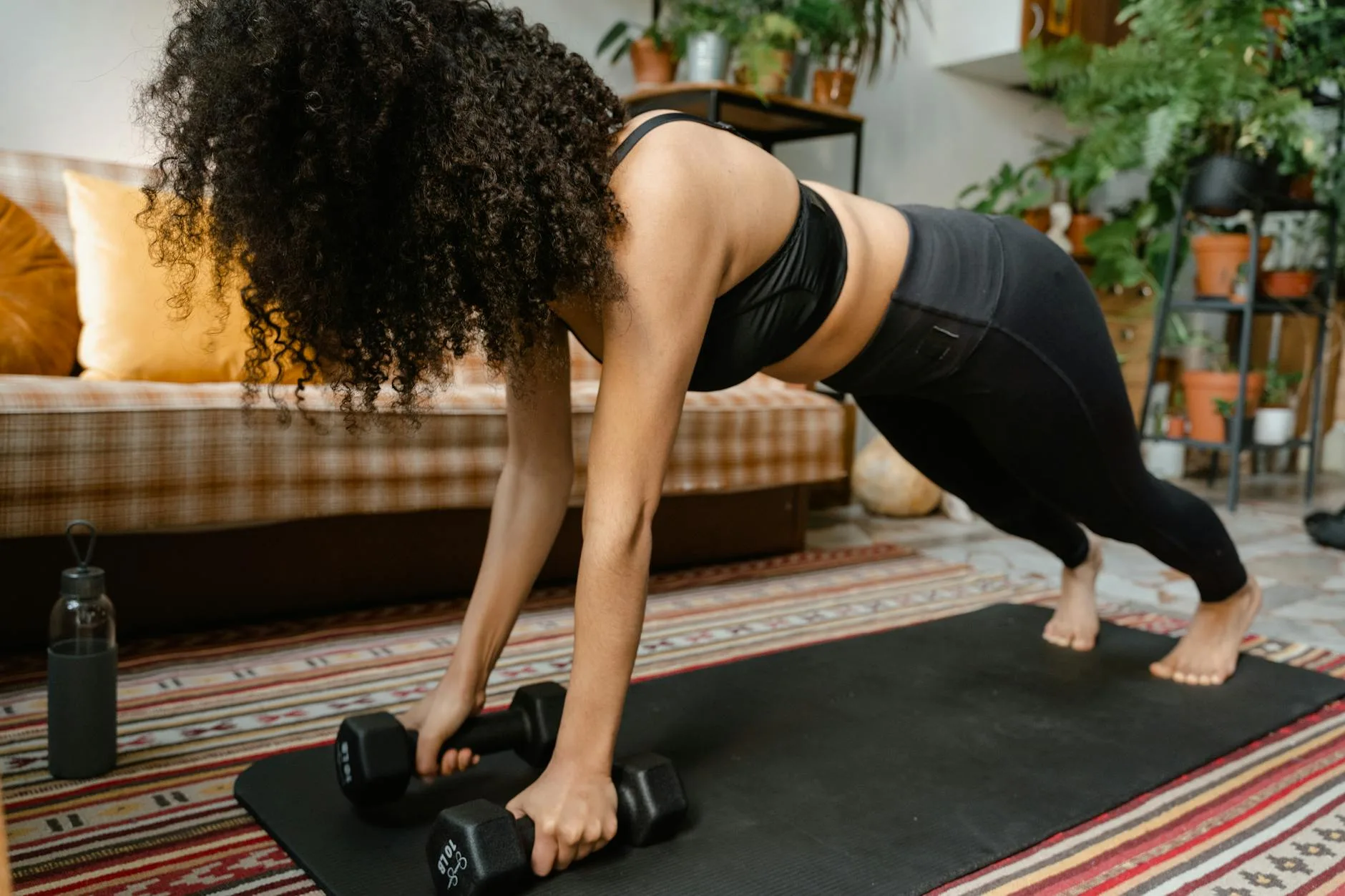
Minimal Equipment That Unlocks More Progressions
Pull-Up Bar (£15-25)
Transforms upper body training from “limited” to “comprehensive.” Without it, back training at home is nearly impossible. A doorway bar requires no drilling and fits most UK door frames (63-100cm width).
Gymnastic Rings (£25-40)
Hang from your pull-up bar or a tree branch. Rings make every upper body exercise harder through instability — ring push-ups, ring rows, ring dips, muscle-ups. The single most versatile piece of home training equipment per pound spent. A pair of wooden rings with adjustable straps covers years of progression.
Resistance Bands (£15-30 for a set)
Assist pull-ups, add resistance to squats and hip thrusts, and enable dozens of exercises impossible with bodyweight alone. A set of 3-5 bands in different resistances covers everything from rehab-light to heavy supplemental loading.
Weight Vest (£40-80)
Once bodyweight progressions plateau and you can do 3 × 12 of the hardest variations, a 10-20kg weight vest restarts the overload cycle. Wear it for push-ups, pull-ups, squats, and dips — every exercise becomes immediately harder without changing technique. The most direct equivalent to adding plates at the gym.
Frequently Asked Questions
Can you build real muscle with bodyweight only? Yes — provided you progressively overload. Gymnasts build exceptional physiques using predominantly bodyweight exercises. The key is staying in the 5-12 rep range by advancing progressions rather than grinding out 50 easy reps. If the exercise is challenging enough that you fail by rep 12, your muscles receive the same growth signal as lifting weights.
How fast will I progress? Beginners progress weekly — adding reps or advancing a level every 1-2 weeks. Intermediate trainees progress monthly. Advanced practitioners may spend 3-6 months working toward a single new progression (first muscle-up, first pistol squat, first one-arm push-up). The rate slows as you advance, just like weight training.
Do I need rest days with bodyweight training? Yes. Muscles grow during recovery, not during training. Training the same movement pattern daily without rest leads to overuse injuries (tendinitis, joint inflammation) and stalled progress. Minimum 48 hours between sessions targeting the same muscle group — which the 3-day template above provides.
What if I plateau and cannot progress to the next level? Use intermediate steps: slow eccentrics of the harder variation (negative-only reps), partial range of motion at the harder level, or add a resistance band for assistance. Plateaus lasting more than 3-4 weeks usually indicate insufficient recovery (sleep, nutrition) rather than a training problem.
Is bodyweight training enough for legs? Up to a point. Bulgarian split squats and pistol squats challenge most people for months or years. However, once you comfortably do 3 × 12 weighted pistol squats, bodyweight alone struggles to provide enough leg stimulus — legs are strong muscles designed to carry your entire body weight daily. A heavy backpack, weight vest, or a single dumbbell extends leg training potential at home considerably.