You’ve got space for one piece of cardio equipment in your spare room, the budget for one machine, and two tabs open: a rowing machine and an exercise bike. Both promise fat loss, improved fitness, and better cardiovascular health. Both come in at similar price points. The question everyone asks first — which one burns more calories? — has a clear answer. But it’s not the whole story.
In This Article
- Calorie Burn: The Direct Comparison
- Why Calorie Numbers Are Misleading
- Muscles Worked: Rowing Machine
- Muscles Worked: Exercise Bike
- Joint Impact and Injury Risk
- Which Is Better for Weight Loss
- HIIT Potential: Rower vs Bike
- Space, Noise, and Practicality
- How to Measure Your Actual Calorie Burn
- What the Research Says
- Which Should You Buy
- Our Recommendations
- Frequently Asked Questions
Calorie Burn: The Direct Comparison
At matched intensity, the rowing machine burns more calories than the exercise bike. That’s the headline figure, and it holds up consistently across research and real-world testing.
The Numbers
For a 75kg person exercising at moderate intensity for 30 minutes:
- Rowing machine: approximately 250-310 calories
- Exercise bike: approximately 200-260 calories
- Difference: roughly 50-80 calories per session, or about 20-25% more for rowing
At vigorous intensity for 30 minutes:
- Rowing machine: approximately 350-420 calories
- Exercise bike: approximately 300-370 calories
These numbers come from metabolic equivalent (MET) values published in research compendiums. Rowing at moderate effort scores about 7.0 METs. Cycling at moderate effort scores about 5.5-6.5 METs. The gap narrows at higher intensities but rowing maintains the edge.
Why Rowing Burns More
The answer is simple: rowing uses more muscle groups simultaneously. A rowing stroke engages your legs, core, back, arms, and shoulders in a coordinated chain. Cycling primarily uses your legs with some core engagement. More active muscle mass means higher oxygen demand, which means more calories burned per minute.
The NHS recommends 150 minutes of moderate aerobic activity per week for adults — and both machines comfortably deliver that. The calorie difference between them matters less than whether you actually use the machine consistently.
Why Calorie Numbers Are Misleading
Before you rush to buy a rower based on those numbers alone, there are important caveats:
Machine Displays Are Inaccurate
The calorie counter on your rowing machine or exercise bike is an estimate based on your weight, resistance level, and workout duration. Studies show these built-in counters overestimate calorie burn by 15-30% on average. The cheaper the machine, the less accurate the reading.
Intensity Matters More Than Machine Type
A high-intensity session on an exercise bike burns more than a leisurely row. If you pedal at 80% of your max heart rate, you’ll outburn someone rowing at 50%. The machine is less important than how hard you push yourself on it.
Afterburn Effect (EPOC)
Both machines trigger excess post-exercise oxygen consumption (EPOC) — the “afterburn” where your metabolism stays elevated after you stop. High-intensity rowing tends to generate slightly more EPOC because of the full-body engagement, but the difference is modest and only relevant if you’re training at high intensity.
Consistency Trumps Everything
The best calorie-burning machine is the one you actually use. If you love cycling and hate rowing, the bike will burn far more calories over a year because you’ll use it five times a week instead of letting the rower collect dust after January.
Muscles Worked: Rowing Machine
Rowing is one of the few exercises that qualifies as genuinely full-body. Each stroke breaks into four phases, each engaging different muscle groups:
The Drive (Push Phase)
- Legs: quadriceps, hamstrings, and glutes power the initial push. About 60% of the stroke’s force comes from the legs
- Core: rectus abdominis and obliques stabilise your torso as you push back
- Lower back: erector spinae muscles maintain posture throughout the drive
The Pull (Finish Phase)
- Back: latissimus dorsi, rhomboids, and rear deltoids pull the handle to your lower chest
- Arms: biceps and forearms complete the pull
- Shoulders: rear deltoids and rotator cuff stabilise the movement
Why This Matters for Calorie Burn
More muscles working simultaneously means higher metabolic demand. A rowing stroke activates roughly 86% of your body’s major muscle groups — legs, core, back, arms, and shoulders all working in sequence. No other seated cardio machine comes close to that level of full-body engagement.
After months of alternating between a rower and bike, the difference in post-workout fatigue is noticeable. Rowing leaves your entire body feeling worked — not just your legs.
Muscles Worked: Exercise Bike
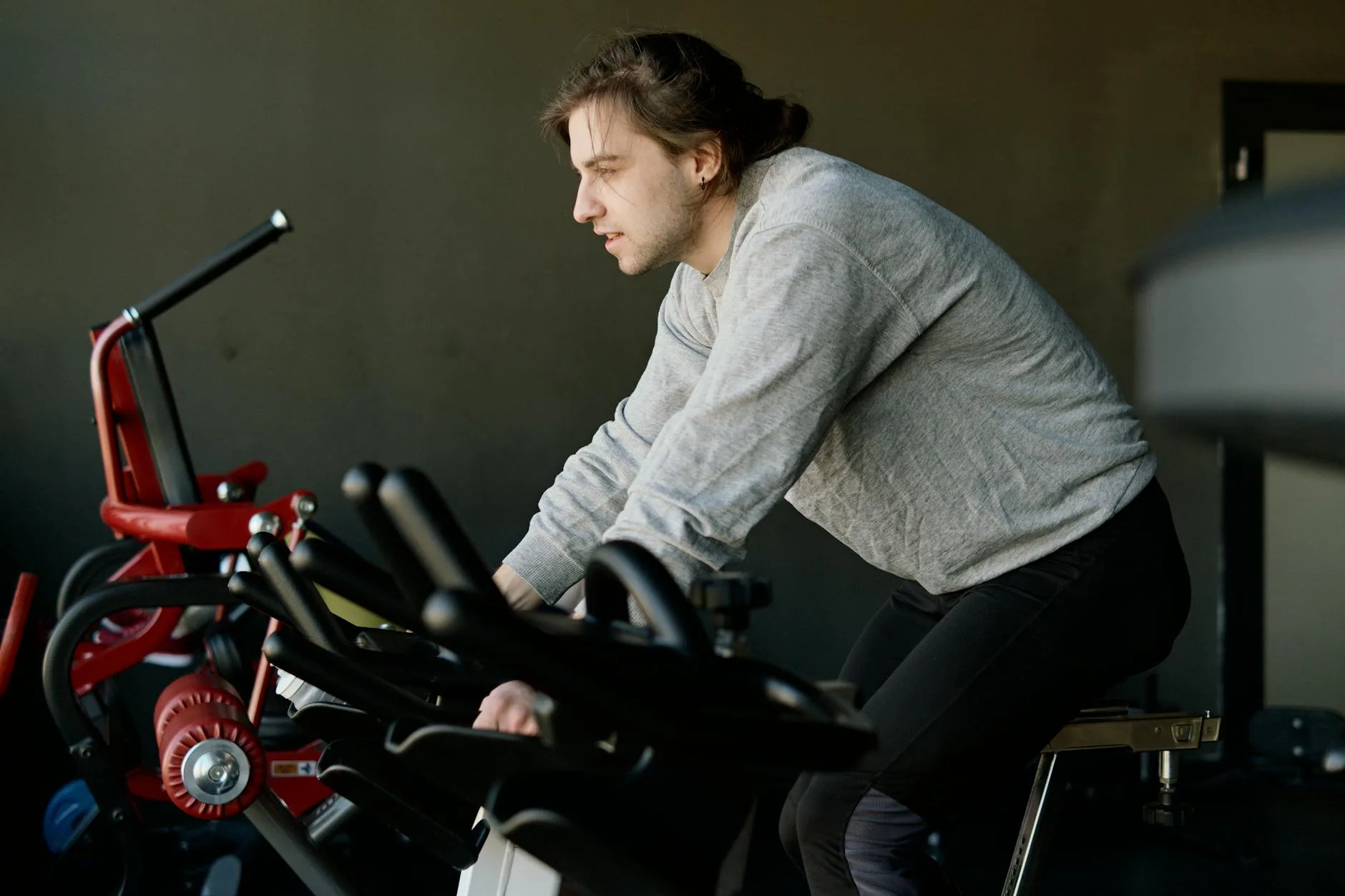
Cycling is predominantly a lower-body exercise. That’s not a criticism — for targeted leg work, it’s excellent.
Primary Muscles
- Quadriceps: the main driver on the downstroke. Cycling builds impressive quad endurance
- Hamstrings: engaged on the upstroke, particularly if you use clip-in pedals
- Glutes: activated at the top and bottom of the pedal stroke
- Calves: stabilise through the entire revolution
Secondary Muscles
- Core: engaged to maintain posture, especially at higher intensities or when standing on the pedals
- Hip flexors: pull the pedal through the top of the stroke
What’s Missing
- Upper body: arms, shoulders, and back are largely passive during cycling. They hold you in position but don’t generate force
- Back: minimal engagement compared to rowing
This isn’t a flaw — it’s a characteristic. If your goal is lower-body endurance without taxing your upper body (perhaps because you do upper-body strength training separately), the bike is actually preferable.
Joint Impact and Injury Risk
Rowing Machine
Rowing is low-impact — there’s no ground contact, no jarring, and no weight-bearing stress on your joints. However, the repetitive hinge pattern at the hips and lower back creates a specific injury risk:
- Lower back strain — the most common rowing injury. Usually caused by rounding the back during the drive phase. Proper form eliminates this, but many beginners don’t learn proper form before building intensity
- Wrist strain — from gripping the handle too tightly. Relax your hands
- Knee tracking — driving with your feet turned outward can stress the knee joint. Keep feet parallel
Exercise Bike
Cycling is also low-impact, with even lower injury risk than rowing:
- Knee pain — usually from incorrect seat height. Too low and your knees over-flex; too high and they hyperextend
- Saddle soreness — a real issue for longer sessions. A padded seat cover or proper cycling shorts help
- Back/neck stiffness — from hunching over the handlebars for extended periods
The Verdict on Safety
Both machines are among the safest cardio options available. If you have existing lower back issues, the exercise bike is the safer choice — it doesn’t load the lumbar spine the way rowing does. If you have knee problems, both work but make sure the bike seat height is correct.
Which Is Better for Weight Loss
Weight loss comes down to calorie deficit — burning more calories than you consume. Both machines can create that deficit, but they approach it differently:
Rowing for Weight Loss
- Higher calorie burn per session — about 20-25% more than cycling at matched intensity
- Full-body toning — builds lean muscle across more body parts, which increases resting metabolism over time
- Efficient workouts — a 20-minute rowing session delivers a full-body workout that would take 40 minutes to replicate with separate cardio and upper-body exercises
- Appetite increase — full-body exercise can make you hungrier post-workout, which can offset the calorie benefit if you’re not tracking intake
Cycling for Weight Loss
- Lower per-session calorie burn but easier to sustain for longer sessions — 45-60 minutes on a bike is comfortable; 45 minutes of rowing is exhausting
- Less post-workout appetite — lower-body exercise tends to suppress appetite more than full-body work
- Easier to do daily — less overall fatigue means quicker recovery between sessions
- Zone 2 training — exercise bikes are ideal for long, steady-state fat-burning sessions in heart rate zone 2
For pure weight loss, the exercise bike’s sustainability advantage often outweighs the rower’s per-session calorie advantage. The rower burns more per session, but if cycling lets you exercise six days a week instead of four, the weekly calorie total favours the bike.
HIIT Potential: Rower vs Bike
Both machines are excellent for high-intensity interval training, but with different characteristics.
Rowing HIIT
- Transition speed: instant. Pull hard, rest, pull hard again
- Full-body intensity: every interval engages your whole body, making for a brutally effective session
- Form risk: technique degrades when fatigued, increasing lower back risk during HIIT. If your form breaks down, stop
- Typical session: 30 seconds hard, 30 seconds easy, repeat 8-12 times. Total: 8-12 minutes plus warm-up
Our HIIT rowing guide covers beginner-friendly intervals if you’re new to this.
Cycling HIIT
- Transition speed: instant — change resistance and pedal speed
- Lower-body focus: legs do all the work, which means they fatigue faster but your form stays intact
- Safety: almost zero injury risk during HIIT on a bike, even when exhausted
- Typical session: 20 seconds all-out, 40 seconds easy, repeat 8-10 times. Total: 8-10 minutes plus warm-up
Both produce comparable EPOC afterburn effects. The rower is more demanding, the bike is safer during high-fatigue intervals. For structured HIIT, see our exercise bike workout guide.
Space, Noise, and Practicality
Space Requirements
- Rowing machine: about 250×60cm (most folding models reduce to about 130×60cm when stored upright). The slide length means you need clear floor space behind you as well
- Exercise bike: about 120×60cm for a standard upright bike, 150×60cm for a spin bike. No additional space needed — the footprint is the full footprint
If space is tight — a small flat, a corner of the living room — the exercise bike wins hands down. It fits where a rowing machine can’t.
Noise
- Rowing machine (air resistance): the loudest option. A Concept2 at high intensity sounds like a small fan heater. Not ideal for upstairs flats or early morning sessions
- Rowing machine (magnetic/water): much quieter. Water rowers have a pleasant swooshing sound. Magnetic rowers are near-silent
- Exercise bike (magnetic): almost silent. You could use one during a video call without anyone noticing
- Spin bike (friction): moderate noise from the brake pad on the flywheel. Quieter than an air rower but louder than magnetic
Portability
Most exercise bikes have transport wheels — tilt and roll to move them. Rowing machines are longer and more awkward, even folding ones. If you need to move the machine between rooms regularly, bikes are easier.
How to Measure Your Actual Calorie Burn
The built-in machine displays are estimates at best. Here’s how to get closer to your real number:
Heart Rate Monitoring
A chest strap heart rate monitor (Polar H10, about £65, or Garmin HRM-Pro, about £80) synced to your machine or phone app gives a much more accurate calorie estimate than the machine alone. Heart rate correlates directly with oxygen consumption, which correlates with calorie burn.
The Formula Approach
If you want a rough manual calculation:
- Moderate rowing: body weight in kg × 0.07 × minutes = approximate calories
- Moderate cycling: body weight in kg × 0.05 × minutes = approximate calories
For a 75kg person doing 30 minutes: rowing ≈ 157 calories, cycling ≈ 112 calories. These are conservative estimates — actual figures are higher due to EPOC and intensity variations.
Fitness Trackers
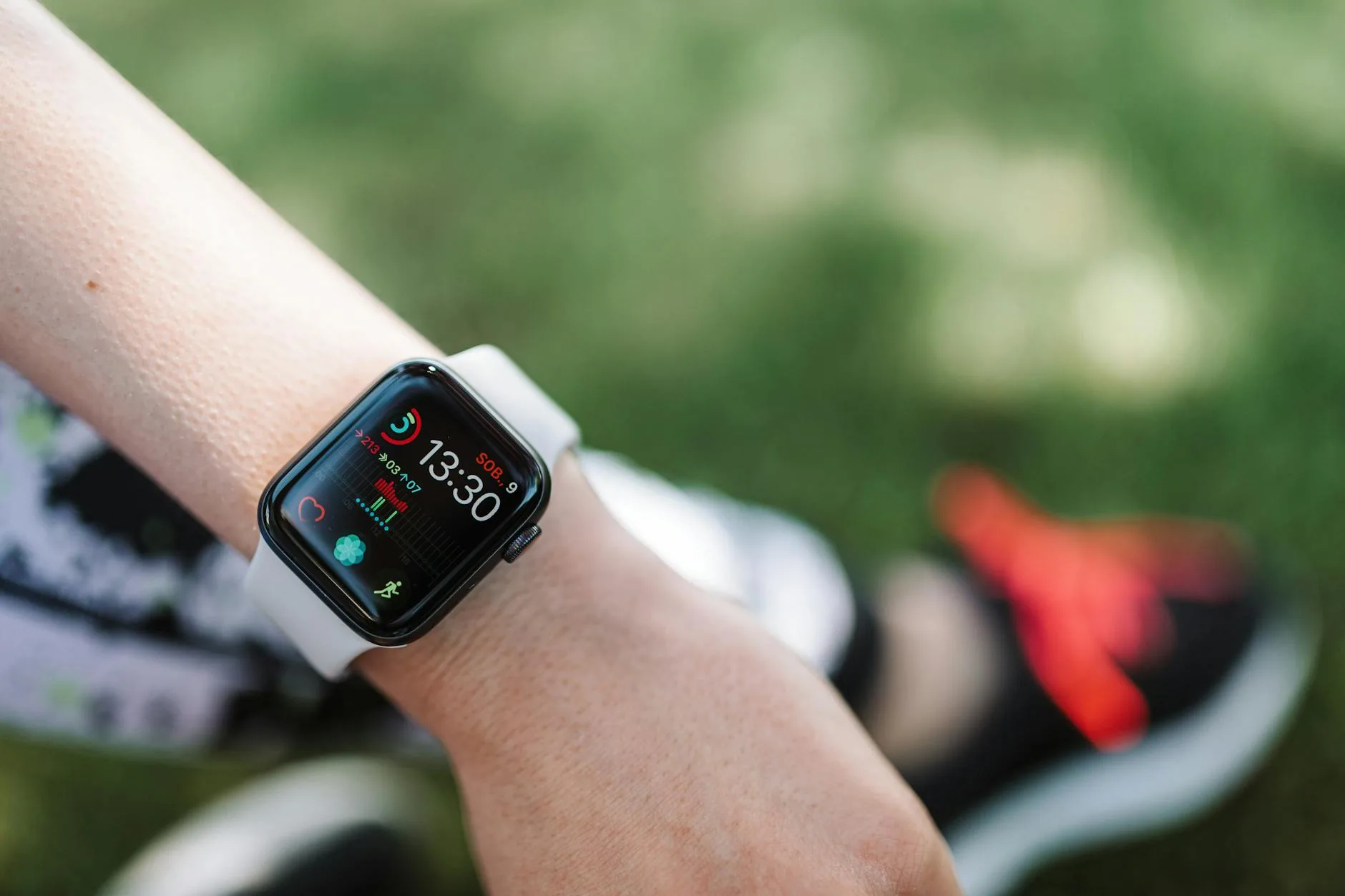
Wrist-based trackers (Garmin, Apple Watch, Fitbit) estimate calories using heart rate and movement data. They’re more accurate than machine displays but less accurate than chest straps. Expect 10-20% error margins. Our guide to choosing a fitness tracker covers accuracy differences between brands.
What the Research Says
Several studies have compared rowing and cycling directly:
Key Findings
- A 2020 study in the Journal of Strength and Conditioning Research found that rowing at 70% VO2max burned approximately 12.5 kcal/minute versus 9.8 kcal/minute for cycling at matched relative intensity
- Research published in Medicine & Science in Sports & Exercise showed that rowing produced higher EPOC values than cycling at matched intensity, suggesting greater afterburn
- A 2019 comparative study found that perceived exertion was higher during rowing despite matched heart rates, meaning rowing “feels harder” even when the cardiovascular demand is the same
The Practical Takeaway
Research consistently shows rowing burns more calories at matched intensity. But research also consistently shows that exercise adherence — actually doing the workout regularly — is the strongest predictor of long-term fitness outcomes. The “best” machine is the one you’ll use consistently for years, not the one that wins a calorie burn comparison on paper.
Which Should You Buy
Buy a Rowing Machine If
- You want maximum calorie burn per minute and are willing to learn proper form
- You want full-body conditioning — building both cardiovascular fitness and muscular endurance across your whole body
- You’re time-poor — a 20-minute rowing session delivers a complete workout
- You have the space — at least 250×60cm plus room to move around the machine
- You enjoy the movement — rowing has a satisfying rhythm once you get it right
Buy an Exercise Bike If
- You prefer lower-body focused cardio or do separate upper-body strength training
- Space is limited — the compact footprint fits almost anywhere
- You have joint concerns — cycling has the lowest injury risk of any cardio machine
- You want to multitask — you can read, watch TV, or take calls while cycling. Try that on a rower
- You prefer longer, steady sessions — 45-60 minutes on a bike is comfortable and sustainable
The Both Option
If budget and space allow, having both is ideal. Use the rower for short, intense sessions (15-20 minutes, 2-3 times per week) and the bike for longer, steady-state sessions (30-45 minutes, 2-3 times per week). This combination covers every fitness base.
Our Recommendations
Best Rowing Machine: Concept2 Model D
- Price: about £850-950 from Rogue Fitness or direct
- Why: the industry standard. Used in every CrossFit box, rowing club, and serious home gym in the country. Air resistance feels natural, the PM5 monitor is excellent, and it folds in half for storage. Nothing else comes close at this price point. We’ve used one for over two years and it still feels brand new
Best Budget Rowing Machine: JTX Freedom Air
- Price: about £300-350 from jtxfitness.com
- Why: air resistance, foldable, decent monitor. Not a Concept2, but respectable for the price
Best Exercise Bike: Keiser M3i
- Price: about £1,200-1,400 from Keiser UK dealers
- Why: magnetic resistance, whisper-quiet, near-indestructible build quality. Used in commercial spin studios worldwide. The rear-mounted flywheel design is safer and more compact than traditional spin bikes
Best Budget Exercise Bike: JLL IC300 Pro
- Price: about £250-300 from Amazon UK or JLL Fitness
- Why: solid build, magnetic resistance, quiet enough for flats. The best value spin-style bike under £300 in the UK
For more options, see our budget exercise bike roundup and smart rowing machine guide.
Frequently Asked Questions
Does a rowing machine burn more calories than an exercise bike? Yes, at matched intensity and duration. Rowing burns approximately 20-25% more calories because it engages more muscle groups — legs, core, back, arms, and shoulders versus primarily legs on a bike. For a 75kg person doing 30 minutes at moderate intensity, expect about 280 calories rowing versus 230 calories cycling.
Is rowing or cycling better for belly fat? You cannot spot-reduce fat from your belly with any exercise. Both machines help create a calorie deficit that leads to overall fat loss, which includes belly fat. Rowing does engage the core more directly than cycling, which builds abdominal muscle definition — but the fat layer on top reduces through overall calorie deficit, not targeted exercise.
Can I use a rowing machine every day? You can, but most people benefit from rest days. Rowing at moderate intensity 4-5 times per week with 1-2 rest days allows muscle recovery and prevents overuse injuries. Daily rowing at low intensity (20 minutes, easy pace) is fine for most people. Daily high-intensity rowing is not recommended.
Which is quieter, a rowing machine or exercise bike? A magnetic exercise bike is almost silent. Air rowing machines (like the Concept2) are noticeably loud at high intensity. Water rowers produce a pleasant swooshing sound. Magnetic rowers are quiet but not as silent as magnetic bikes. For flats or shared houses, a magnetic bike is the quietest option.
How long should I row or cycle to see results? For cardiovascular improvement, 20-30 minutes three to four times per week shows measurable results within 4-6 weeks. For weight loss, aim for 150+ minutes per week combined with a calorie-controlled diet. Most people notice improved energy and mood within the first 2 weeks regardless of machine choice.