You’ve bought a set of dumbbells — probably adjustable ones that are currently sitting in the corner of your spare room looking decorative. Maybe you’ve watched a few YouTube workouts and felt overwhelmed by the endless exercise variations, or you’ve tried following a bodybuilder’s routine that assumed you already knew what a Romanian deadlift was. Here’s the thing: you don’t need 47 different exercises to build real strength with dumbbells. You need about 8 good ones, done properly, three times a week. For related guidance, see our Exercise Bike Workouts for Beginners guide. For related guidance, see our HIIT on a Rowing Machine: A Beginner’s Workout guide. For related guidance, see our Kettlebell Training for Beginners: Basic Moves & Technique guide.
In This Article
- Why Dumbbells Are the Best Starting Point
- Choosing the Right Weight
- The Beginner Dumbbell Workout
- Upper Body Exercises
- Lower Body Exercises
- Core Exercises
- Weekly Schedule and Split
- Warming Up Properly
- Progression: When to Increase Weight
- Common Mistakes to Avoid
- Equipment You Actually Need
- Frequently Asked Questions
Why Dumbbells Are the Best Starting Point
Muscle Balance From Day One
Unlike barbells or machines, dumbbells force each arm to work independently. Your stronger side can’t compensate for your weaker one — which is exactly what happens when most beginners start on a barbell bench press. After six months of dumbbell training, you’ll have a much more balanced physique than someone who went straight to barbell work.
Space and Cost Efficiency
A pair of adjustable dumbbells takes up about half a square metre of floor space. Compare that to a full barbell setup (rack, bar, plates, bench) that needs a dedicated room. For UK homes — where the “home gym” is usually a corner of the garage or the space between the bed and the wardrobe — dumbbells are the practical choice.
Safer Solo Training
You can fail a dumbbell exercise safely by simply dropping the weights. Try that with a barbell across your chest during a bench press and you’re in trouble. For anyone training at home without a spotter, this matters enormously.
The NHS recommends strength training exercises at least twice a week for all major muscle groups — and dumbbells are one of the most accessible ways to meet that guideline from home.
Choosing the Right Weight
Starting Weights for Men
- Upper body pressing (shoulder press, bench press) — start with 8-12kg per hand
- Upper body pulling (rows, curls) — start with 6-10kg per hand
- Lower body (goblet squats, lunges) — start with 10-16kg
- Core work (farmer carries, Russian twists) — start with 6-8kg per hand
Starting Weights for Women
- Upper body pressing — start with 4-8kg per hand
- Upper body pulling — start with 4-6kg per hand
- Lower body — start with 8-12kg
- Core work — start with 3-5kg per hand
The Right Weight Test
Here’s the simplest test: pick a weight and do 12 repetitions of the exercise. If you can’t get to 8 with decent form, it’s too heavy. If you get to 15 without any real effort, it’s too light. You should feel the last 2-3 reps of each set — that’s where the muscle-building stimulus happens.
Adjustable vs Fixed Dumbbells
For beginners, adjustable dumbbells are the best investment. A pair of Bowflex SelectTech or PowerBlock adjustables (about £200-350) replaces an entire rack of fixed dumbbells and covers you from 2kg to 24kg+. Fixed dumbbells look great on a rack but you’ll need to buy new ones every time you get stronger, which adds up fast.
The Beginner Dumbbell Workout
Programme Overview
This is a full-body routine designed to be done 3 times per week with at least one rest day between sessions. Each session takes about 40-50 minutes including warm-up.
- Frequency — 3 sessions per week (e.g. Monday, Wednesday, Friday)
- Sets per exercise — 3
- Reps per set — 8-12 (adjust weight to stay in this range)
- Rest between sets — 60-90 seconds
- Rest between exercises — 90-120 seconds
Session Structure
Each workout follows this order:
- Warm-up (5-10 minutes)
- Compound lower body exercise
- Compound upper body push
- Compound upper body pull
- Isolation upper body exercise
- Lower body isolation exercise
- Core finisher
The compound exercises (multiple joints working together) go first while you’re freshest. Isolation work and core come last. This isn’t random — it’s how every decent strength programme is structured, because compound movements are harder and benefit most from your full energy.
Upper Body Exercises
Dumbbell Floor Press
If you don’t have a bench (and most beginners don’t), the floor press is your chest exercise. Lie on your back with knees bent, hold a dumbbell in each hand at chest level, and press upward until your arms are extended. Lower until your elbows touch the floor — that’s the bottom of the rep. The floor limits your range of motion slightly, which actually makes it safer for shoulders.
- Muscles worked — chest, front shoulders, triceps
- Sets/reps — 3 × 8-12
- Common mistake — flaring elbows out to 90 degrees. Keep them at about 45 degrees from your body
Dumbbell Overhead Press
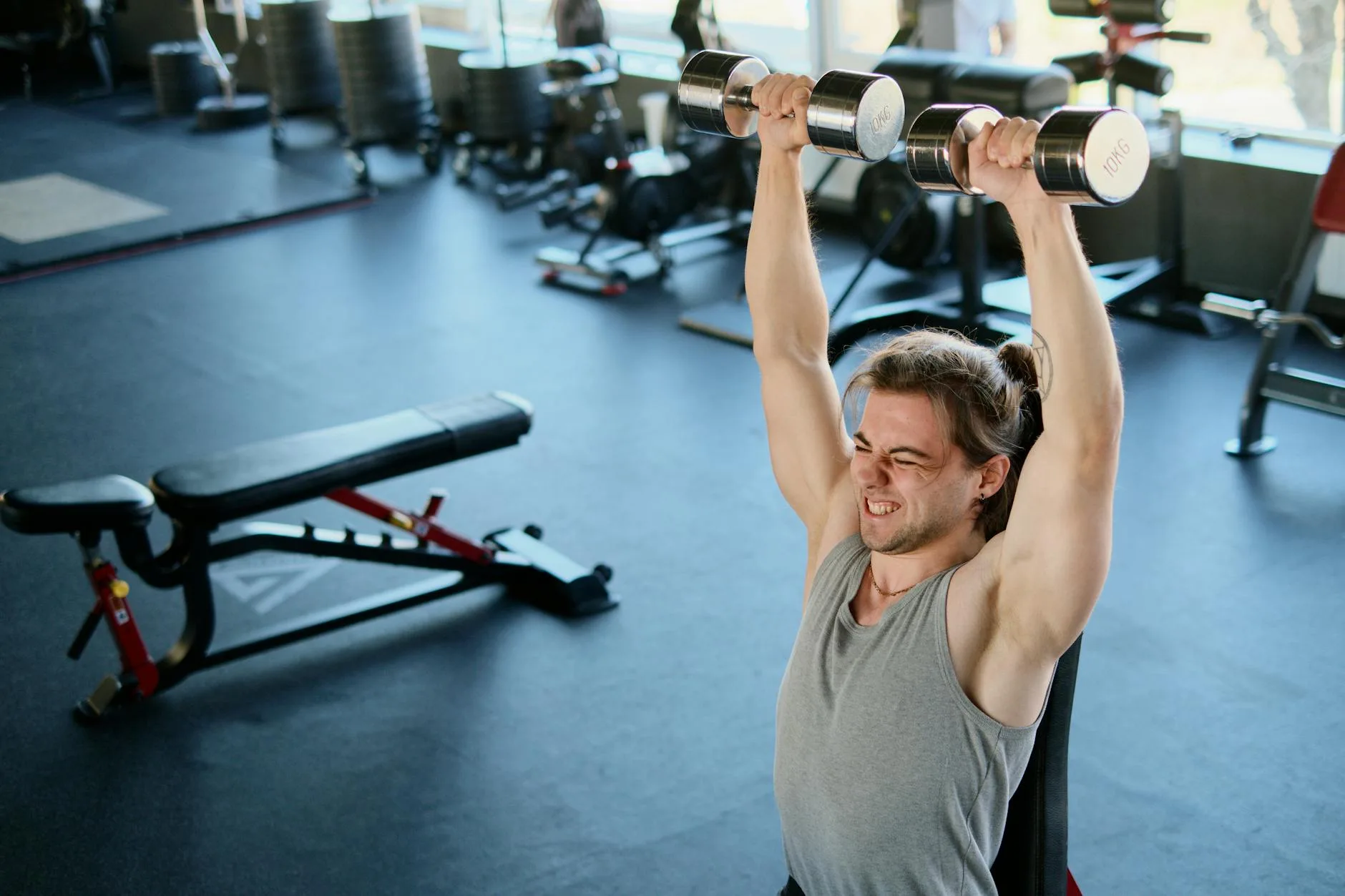
Stand or sit with a dumbbell in each hand at shoulder height, palms facing forward. Press straight up until your arms lock out overhead, then lower under control. This is the single best exercise for building shoulder strength and size. Keep your core braced throughout — if you need to lean back excessively, the weight is too heavy.
- Muscles worked — shoulders, upper chest, triceps
- Sets/reps — 3 × 8-12
- Common mistake — using momentum by bouncing your knees. Strict press builds more muscle
Dumbbell Row
Place one hand and knee on a bench (or a sturdy chair), hold a dumbbell in the other hand hanging straight down. Pull the dumbbell toward your hip, squeezing your shoulder blade back at the top. Lower until your arm is fully extended. We’ve found this is the exercise that most beginners get wrong by pulling toward their armpit instead of their hip — the hip path engages more of the lat muscle.
- Muscles worked — upper back, lats, biceps, rear shoulders
- Sets/reps — 3 × 8-12 each side
- Common mistake — twisting your torso to swing the weight up. Keep your shoulders square
Dumbbell Curl
The exercise everyone already knows. Stand with dumbbells at your sides, palms forward, curl the weight up by bending at the elbow. The key most people miss: lower the weight slowly. The lowering (eccentric) phase builds more muscle than the lifting phase. Three seconds on the way down, one second on the way up.
- Muscles worked — biceps, forearms
- Sets/reps — 3 × 10-12
- Common mistake — swinging the whole body to lift heavier. Drop the ego, drop the weight, keep strict form
Lower Body Exercises
Goblet Squat
Hold a single dumbbell vertically against your chest with both hands, feet shoulder-width apart, toes slightly out. Squat down until your thighs are parallel to the floor (or as deep as you can go with good form), then drive back up through your heels. The weight at the front naturally keeps your torso upright, which makes this far easier to learn than a barbell squat.
- Muscles worked — quads, glutes, core, upper back (from holding the weight)
- Sets/reps — 3 × 10-12
- Common mistake — knees caving inward. Push your knees out in line with your toes
Dumbbell Romanian Deadlift
Stand holding dumbbells in front of your thighs, feet hip-width apart. Push your hips back while keeping a slight bend in your knees, lowering the dumbbells along your shins until you feel a strong stretch in your hamstrings. Drive your hips forward to return to standing. This isn’t a squat — think of it as a hip hinge. Your back stays flat throughout.
- Muscles worked — hamstrings, glutes, lower back
- Sets/reps — 3 × 8-10
- Common mistake — rounding your lower back. If you can’t reach below your knees without rounding, reduce the range — flexibility will improve over time
Dumbbell Reverse Lunge
Hold a dumbbell in each hand at your sides. Step backward with one foot, lowering your back knee toward the floor until both legs form 90-degree angles. Push through your front heel to return to standing. Reverse lunges are easier on the knees than forward lunges because there’s less forward knee travel — that makes them the better choice for beginners.
- Muscles worked — quads, glutes, hamstrings, calves, core (for balance)
- Sets/reps — 3 × 10-12 each leg
- Common mistake — too narrow a stance. Your feet should be hip-width apart laterally, not on a tightrope
Core Exercises
Dumbbell Farmer’s Carry
Pick up a heavy dumbbell in each hand (heavier than your other exercises — go for it) and walk 20-30 metres with good posture: chest up, shoulders back and down, core braced. If you don’t have space, walk laps of your living room. This exercise looks simple but it smokes your grip, core, traps, and general stability. After your first session, you’ll feel it in muscles you didn’t know you had.
- Muscles worked — core, grip, traps, shoulders, everything really
- Sets — 3 carries of 20-30 metres (or 30-45 seconds)
- Common mistake — leaning to one side. Stay upright even if one hand is slightly weaker
Dumbbell Dead Bug
Lie on your back, hold a light dumbbell in both hands with arms straight above your chest. Extend one leg straight out (hovering above the floor) while keeping your lower back pressed into the ground. Return, then switch legs. This is harder than it sounds — if your lower back arches off the floor, the weight is too heavy or your core isn’t bracing properly.
- Muscles worked — deep core stabilisers, hip flexors
- Sets/reps — 3 × 8-10 each side
- Common mistake — letting your lower back arch. Press it flat into the floor and hold it there
Weekly Schedule and Split
Full Body, Three Days Per Week
For the first 8-12 weeks, a full-body routine three times per week is optimal for beginners. You hit every muscle group three times per week, which is ideal for motor learning (teaching your nervous system the movement patterns) and building a strength base.
Sample Week:
- Monday — Full body workout (all exercises above)
- Tuesday — Rest or light cardio (walk, cycle, swim)
- Wednesday — Full body workout
- Thursday — Rest or light cardio
- Friday — Full body workout
- Saturday — Active recovery (longer walk, yoga, stretching)
- Sunday — Full rest
When to Switch to a Split
After 8-12 weeks of consistent full-body training, you might find sessions are getting long as you add exercises and weight. That’s when you move to an upper/lower split:
- Monday — Upper body (floor press, overhead press, rows, curls, lateral raises)
- Tuesday — Lower body (goblet squats, RDLs, lunges, farmer carries, dead bugs)
- Wednesday — Rest
- Thursday — Upper body
- Friday — Lower body
- Weekend — Rest and recovery
This doubles the volume per muscle group while keeping sessions under 45 minutes.
Warming Up Properly
Why It Matters More Than You Think
Walking into your spare room and immediately pressing dumbbells overhead with cold shoulders is a recipe for impingement injuries. Five minutes of warming up increases blood flow to the muscles, lubricates joints with synovial fluid, and mentally prepares you for the work ahead. We skipped warm-ups for years and paid for it with a nagging shoulder issue that took months to resolve.
Before you start your main workout, make sure you’re properly prepared. Our guide to warming up before lifting covers the full routine, but here’s the essential minimum:
The Five-Minute Warm-Up
- 2 minutes light cardio — jogging on the spot, star jumps, skipping rope. Get your heart rate up slightly
- Arm circles — 10 forwards, 10 backwards. Start small, gradually increase the size
- Bodyweight squats — 15 reps. Full depth, controlled
- Shoulder pass-throughs — 10 reps with a broomstick or resistance band. Opens up the shoulder joint
- Light set of your first exercise — 1 set of 12-15 reps at 50% of your working weight
Warm-Up Sets
Before each compound exercise (floor press, overhead press, goblet squat), do one warm-up set at roughly half the weight you’ll use for your working sets. This primes the specific movement pattern and gives your muscles and tendons a gradual loading introduction.
Progression: When to Increase Weight
The Double Progression Method
This is the simplest and most effective progression system for beginners:
- Start with a weight that lets you do 3 sets of 8 reps with good form
- Each session, try to add 1 rep to each set
- When you can do 3 sets of 12 reps with good form, increase the weight by 1-2kg
- You’ll drop back to 3 sets of 8 at the new weight — and start the cycle again
Expected Rate of Progress
As a genuine beginner, expect to increase weight on most exercises every 2-4 weeks for the first 3-6 months. This is the “newbie gains” phase where your nervous system is learning to recruit existing muscle fibres more efficiently. Enjoy it — it doesn’t last.
After 6 months, progress slows to monthly or even less frequent jumps. That’s normal, not a sign your programme isn’t working.
Tracking Your Workouts
Buy a cheap notebook or use the notes app on your phone. Write down every session: exercise, weight, sets, reps. Without this, you’ll forget what you lifted last time and end up guessing — which means you’re not systematically progressing. Every person who’s ever built noticeable muscle tracked their workouts. It takes 30 seconds per exercise.
Common Mistakes to Avoid
Ego Lifting
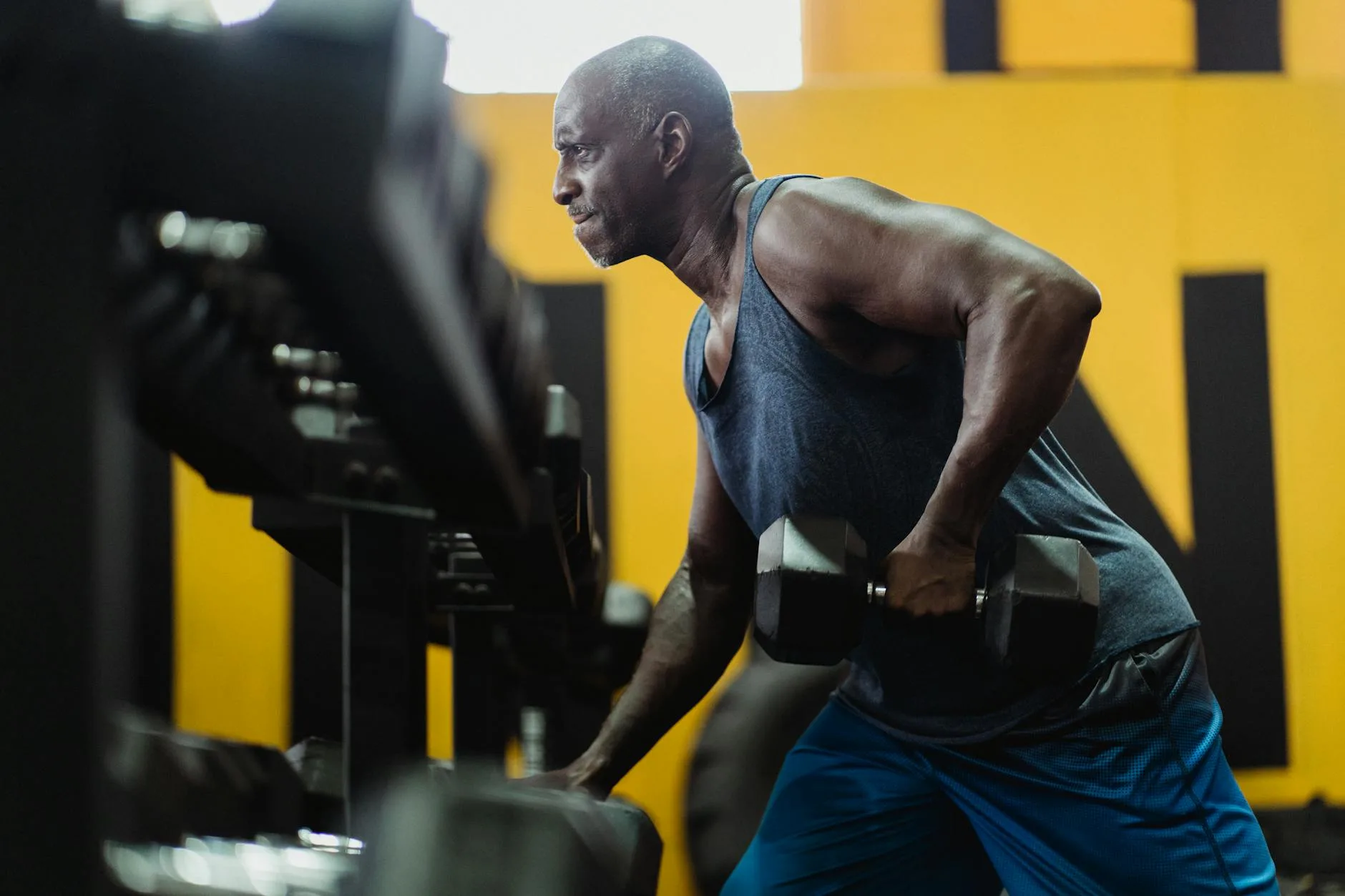
The number one mistake. Using too much weight with terrible form because the bloke next to you (or the version of you in your head) is lifting more. Nobody at the gym cares what weight you’re using. Drop the weight 20%, nail the form, and you’ll grow faster. We’ve seen it happen over and over — the person doing strict 10kg curls outpaces the one swinging 16kg curls within three months.
Skipping Legs
Half the dumbbells-at-home crowd trains chest and biceps exclusively. Your legs contain the largest muscle groups in your body. Training them releases more growth hormone, burns more calories, and prevents you from developing the dreaded “lollipop” physique (big upper body, chicken legs). Goblet squats, lunges, and RDLs are non-negotiable.
Not Eating Enough Protein
You can have the perfect dumbbell routine, but without adequate protein your muscles won’t grow. Aim for about 1.6-2g of protein per kilogram of bodyweight daily. For an 80kg person, that’s 128-160g of protein — roughly equivalent to:
- Chicken breast — 31g per 100g
- Eggs — 6g each
- Greek yoghurt — 10g per 100g
- Whey protein shake — 20-25g per scoop
Changing Programmes Too Often
“Programme hopping” is a modern epidemic. You find a routine, follow it for two weeks, see a different one on Instagram, and switch. Repeat until you’ve made zero progress over six months. Stick with this routine for 12 weeks minimum before considering changes. Consistency beats optimisation every single time.
Training Through Pain
Muscle soreness after training (DOMS) is normal, especially in the first few weeks. Sharp pain during an exercise is not. If a movement hurts your joints rather than your muscles, stop immediately, reduce the weight, or swap for an alternative exercise. Pushing through joint pain turns minor issues into chronic ones.
Equipment You Actually Need
Essential
- Adjustable dumbbells — Bowflex SelectTech (about £300), PowerBlock Sport (about £250), or budget spinlock dumbbells with plates (about £80-120). The spinlocks are annoying to change but work fine
- Exercise mat — for floor work. About £15-25 from Argos or Amazon UK
Nice to Have
- Flat bench — opens up bench press, incline work, and supported rows. Basic flat benches start at about £50 from Argos
- Pull-up bar — a doorframe bar (about £20) adds a brilliant compound back exercise that dumbbells can’t fully replicate
- Resistance bands — for warm-ups, face pulls, and adding variety. A set of 5 costs about £10-15
Don’t Need Yet
- Wrist wraps — not until you’re pressing over 25kg per hand
- Lifting belt — not relevant for dumbbell work at beginner level
- Gloves — they look cool but reduce grip strength development. Use chalk if your hands are sweaty
- Pre-workout supplements — a cup of coffee does the same job for free
Frequently Asked Questions
How heavy should my first dumbbells be? For most beginners, adjustable dumbbells that go from 2.5kg to 20-24kg per hand cover everything you’ll need for at least 12 months. Men typically start pressing 8-12kg per hand, women 4-8kg. You’ll progress quickly in the first few months, so having room to grow is essential.
Can I build muscle with just dumbbells? Yes. Dumbbells provide enough stimulus to build significant muscle for years — not just months. Many experienced lifters use dumbbells as their primary training tool throughout their entire training career. The only exercise they can’t fully replicate is a heavy squat or deadlift pattern at very advanced levels.
How long before I see results? Strength gains come first — you’ll notice exercises getting easier within 2-3 weeks. Visible muscle changes typically appear after 6-8 weeks of consistent training, and noticeable physique changes after 3-4 months. Progress photos every 4 weeks are more reliable than the mirror.
Should I train if I’m still sore from last session? Mild soreness is fine — it usually goes away after your warm-up sets. If you’re so sore that basic movements are painful, take an extra rest day. Soreness drops noticeably after the first 2-3 weeks as your body adapts to the training stimulus.
Do I need a bench for dumbbell training? Not at first. The floor press, overhead press, goblet squat, and every lower body exercise work without a bench. After a few months, a flat bench (about £50-80) opens up incline pressing and supported rows, which add useful variety.