The best battle rope for most UK home gyms is a 38mm rope in 12m or 15m length, not the thickest one you can find. For the best battle rope UK length, match the rope to your room first: 12m for many single garages, 15m for longer clear spaces. A 50mm rope looks tougher, but it is usually the wrong first buy unless you have big hands, strong grip and enough floor space to swing it hard without clipping a wall, bike or freezer.
In This Article
- Best Battle Rope UK Length: Quick Answer
- How Much Space You Need
- 38mm vs 50mm Thickness
- Best Battle Ropes to Buy in the UK
- Anchors, Flooring and Noise
- How to Choose for Your Training Goal
- Mistakes That Make Battle Ropes Feel Awful
- Frequently Asked Questions
Best Battle Rope UK Length: Quick Answer
If I were buying one rope for a UK garage gym in 2026, I would buy a 38mm x 15m rope if space allows, or a 38mm x 12m rope if the room is tight. That gives enough weight for conditioning work without turning every set into a grip contest.
Best overall: the Mirafit 38mm Black and Orange Battle Rope, from about £49.95, because it has sensible UK sizing, decent end protection and enough durability for normal garage-gym use. Budget pick: the Rival 38mm rope, especially the 15m option around £49.99. Premium pick: Jordan Battle Ropes, but mainly for studios or high-end setups because the price rises fast.
The best battle rope UK length depends on how far you can stand from the anchor. A 15m rope folds in half around the anchor, so you need roughly 7.5m from your feet to the anchor before you even think about clearance behind you. That is fine in a long garage or garden studio, but it is too much for many spare rooms. A 12m rope needs roughly 6m of working length. A 9m rope needs about 4.5m, which is why it suits small rooms and short interval sessions.
My default recommendation
For most people, start here:
- Small room or narrow garage: 9m or 12m x 38mm.
- Single garage with clear floor: 12m x 38mm.
- Double garage, studio or garden gym: 15m x 38mm.
- Grip-focused advanced work: 12m or 15m x 50mm, but only if you know why you want it.
The mistake is buying a 50mm rope because it sounds more serious. It is heavier, harder to hold and easier to hate after two sessions. A rope you actually use twice a week beats a monster rope that lives curled up in the corner next to the paint tins.
What battle ropes are good for
Battle ropes are best for short conditioning blocks, upper-body endurance, trunk stiffness and low-skill intervals. They are not magic fat-loss kit, and they will not replace proper strength training. The NHS still frames adult fitness around regular aerobic activity plus strengthening work on at least two days a week, which is a useful way to view ropes: they are a conditioning tool that can sit alongside lifting, rowing, cycling or running, not a whole programme by themselves. See the NHS adult physical activity guidance if you want the broader baseline.
How Much Space You Need
The length printed on the rope is the total rope length, not the distance you stand from the anchor. A 15m rope gives two working strands of roughly 7.5m once looped around an anchor. You also need room behind and around you for your stance, body movement and rope waves.
The practical space test
Before buying, mark the anchor position with tape and pace out the working length. Then add about 1m behind your heels. If you cannot stand comfortably without the rope hitting storage shelves, a car bumper or a wall, go shorter.
Use these rough UK home-gym measurements:
- 9m rope: needs about 4.5m from anchor to user, plus stance space.
- 12m rope: needs about 6m from anchor to user.
- 15m rope: needs about 7.5m from anchor to user.
In a standard single garage, a 12m rope is often the safer call once you account for bikes, shelving and the fact that most garages are not empty CrossFit boxes. If you train with the door open and anchor near the back wall, a 15m rope may work, but measure first. I have seen people buy 15m ropes, then end up standing half outside the garage in January. It builds character, but it is not a good buying strategy.
Rope length changes the feel
A longer rope feels heavier because more material is moving. It also gives smoother, more satisfying waves. A short 9m rope can feel snappy and awkward if you expect big rolling waves, but it is useful for fast intervals and beginners who need less total load.
For most home users, the order is:
- Fit the room first. A too-long rope is more annoying than a slightly shorter one.
- Choose 38mm unless you have a reason not to. It works for more people.
- Add an anchor or use a safe heavy fixing. Do not loop the rope around sharp metal.
If your room is marginal, buy 12m. You can always make intervals harder by increasing pace, adding squats or reducing rest. You cannot make a 15m rope shorter without wasting half the point of buying it.
38mm vs 50mm Thickness
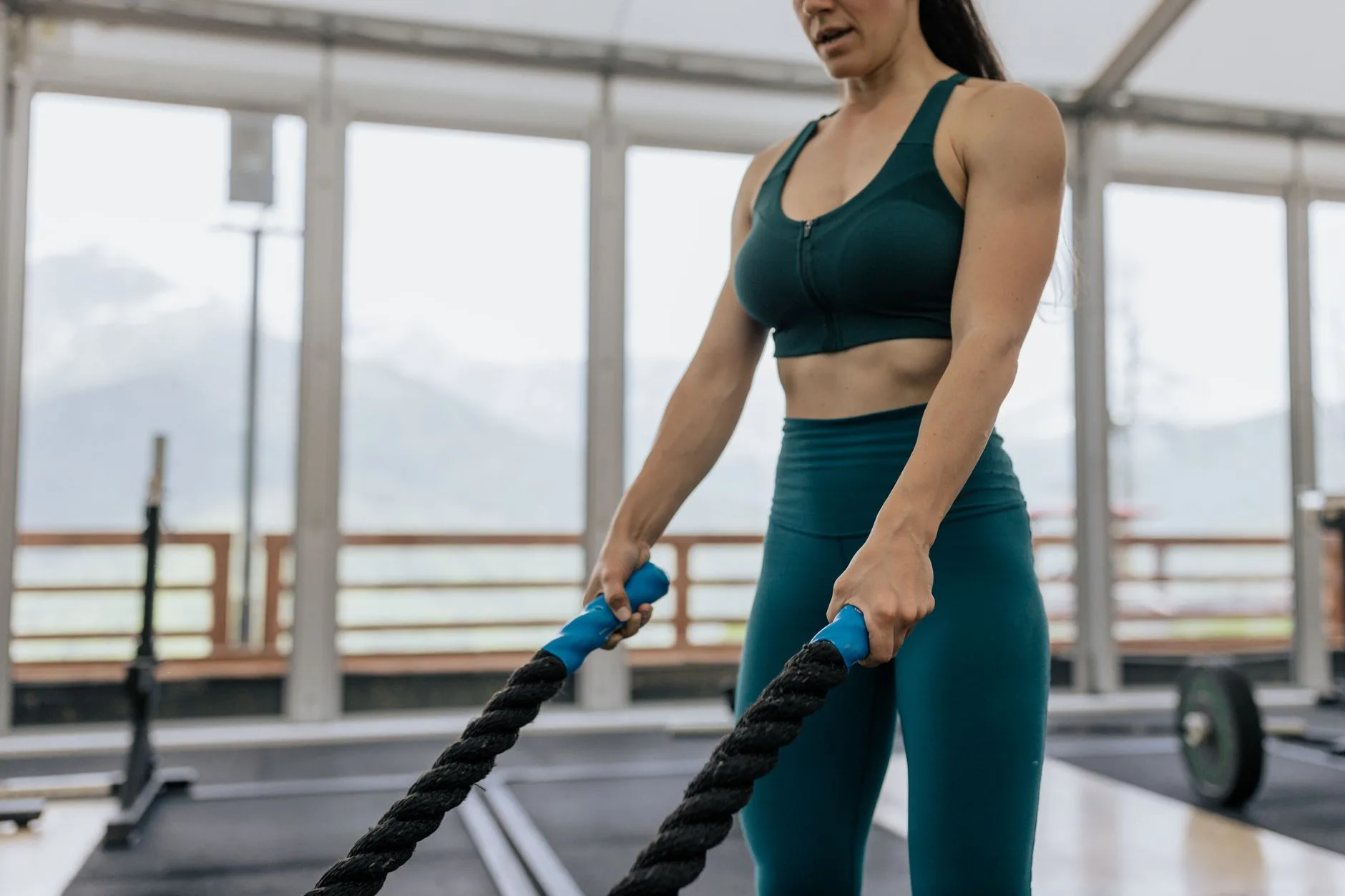
Thickness decides grip demand more than anything else. A 38mm battle rope is the all-rounder. A 50mm rope is a grip and forearm challenge first, conditioning tool second.
38mm battle ropes
A 38mm rope suits beginners, general home gyms and most HIIT sessions. It is thick enough to feel substantial but not so thick that your forearms fail before your lungs and shoulders get useful work.
Choose 38mm if:
- You are new to battle ropes. Technique matters more than rope punishment.
- You want conditioning intervals. Waves, slams and alternating arms are easier to sustain.
- More than one person will use it. Partners, older teens and visitors are less likely to bounce off it.
- Your grip is not the main training target. Sensible for most people.
Based on owner feedback across UK home-gym forums and retailer reviews, 38mm ropes get used more often. That is not because they are soft. It is because they let you train hard without every set becoming a forearm cramp test.
50mm battle ropes
A 50mm rope can be brilliant for strong users, commercial gyms and short power intervals. It is also easier to overbuy. The thicker grip changes the session. You may find your hands open before your shoulders or lungs are properly taxed.
Choose 50mm if:
- You already train grip-heavy work. Farmers carries, deadlifts and pull-ups should feel familiar.
- You want short, brutal sets. Think 10-20 seconds, not long circuits.
- You have a robust anchor and floor. Heavy rope movement is less forgiving.
For most home gyms, I would rather see a good 38mm rope used properly than a 50mm rope bought for bragging rights. Your floor will probably agree.
Best Battle Ropes to Buy in the UK
Prices move around, especially with gym-equipment sales, so treat these as live-market guide prices rather than fixed RRPs. I checked current UK retailer pages while preparing this guide.
Best overall: Mirafit 38mm Black and Orange Battle Rope
The Mirafit 38mm Black and Orange Battle Rope is the one I would buy for most home gyms. It is available in 9m, 12m and 15m, has anti-fray end caps and starts at about £49.95, depending on length and stock.
The appeal is boring in the right way: clear sizing, sensible price, easy UK availability and enough durability for normal garage-gym use. Pair the 12m or 15m version with a proper anchor and rubber flooring and you have a setup that should handle regular conditioning blocks.
Pros: good value, clear length options, home-gym friendly. Cons: the basic rope is not sleeved, so outdoor concrete use will shorten its life.
Best budget option: Rival Battle Ropes 38mm
Rival Strength sells 38mm battle ropes in 9m, 12m and 15m lengths, with the 15m rope listed around £49.99 at the time of checking. That is strong value if you want a full-length rope and do not need a premium commercial finish.
The 15m version is listed at about 12kg, which is enough for serious intervals. I would buy it for a garage where the rope will live indoors and be used on rubber tiles rather than dragged across rough paving.
Pros: low price for 15m, simple sizing, good home-user value. Cons: not the polished commercial choice for high-traffic gyms.
Best sale buy: Again Faster 38mm x 15m
Again Faster had its 38mm x 15m battle rope listed at about £54.60 in a sale, down from £78, when checked. That makes it a smart mid-range pick if the sale is still live. The brand also lists 50mm options for users who want a harder grip challenge.
I would choose the 38mm x 15m version for a double garage or garden gym where you want proper wave length without spending commercial-money. It is a good example of why checking current prices matters; a mid-range rope can drop into budget territory during sales.
Pros: strong 15m value during promotions, 38mm and 50mm options. Cons: less tempting if the sale ends and the price returns to full RRP.
Best protected rope: Mirafit Sleeve Battle Rope
If your rope may touch rough flooring, outdoor slabs or a wall anchor with a little friction, the Mirafit Sleeve Battle Rope is worth considering. It starts around £59.95 and adds a protective sleeve over the rope, which helps reduce wear where the rope rubs.
This is the one I would consider for a garage with mixed flooring or a user who knows they will train hard and occasionally drag the rope outside. It costs a bit more than the basic Mirafit rope, but replacing a frayed rope is more annoying.
Pros: better protection, still sensibly priced, good home-gym choice. Cons: more than you need if the rope only lives on clean rubber flooring.
Best premium/commercial option: Jordan Battle Ropes
Jordan battle ropes are much more expensive, with UK listings ranging from about £138.60 for a 10m 38mm rope to around £216 for a 15m 38mm rope and £270 for a 15m 50mm rope. That pricing makes more sense for PT studios, small group training spaces and commercial setups than for a casual home gym.
The build and brand reputation are the draw. For most home users, I would not start here unless you are fitting out a higher-end gym space and want kit that feels consistent with the rest of the room.
Pros: commercial feel, multiple sizes, strong brand presence. Cons: too expensive for many home gyms, especially when good 38mm options sit under £70.

Anchors, Flooring and Noise
A battle rope is only as good as the setup around it. A cheap rope on a good floor with a safe anchor usually beats an expensive rope looped around a sharp post.
Anchors
You can anchor a rope to a wall bracket, floor anchor, heavy sled, power rack upright or another secure fixing. The key word is secure. The rope should slide without being cut, pinched or forced across a sharp edge.
Mirafit sells a wall/floor battle rope anchor for about £13.95 and a circular strap anchor for about £14.95. Those are small costs compared with the rope itself. If you already have a heavy rack, you may be able to loop around a low upright, but protect both the rope and the rack finish.
Flooring
Battle ropes do not need fancy flooring, but they do need forgiving flooring. Bare concrete chews ropes. Thin carpet can move around and bunch up. Rubber gym tiles are the best home option because they dampen noise, protect the rope and give your feet a stable surface.
If you are building a wider garage gym, this links neatly with rubber vs foam vs puzzle gym flooring. Foam tiles can be fine for light work, but battle ropes are rougher than they look. Dense rubber handles slams and dragging far better.
Noise
Ropes are quieter than dropping weights, but they are not silent. Slams, waves and rope friction can travel through a garage floor, especially in attached houses. If noise is a concern, avoid late-night slam sessions and use smoother alternating waves instead.
For shared houses or garages under bedrooms, the most neighbour-friendly setup is a 38mm rope on rubber flooring, with waves rather than repeated overhead slams. Nobody needs to discover your new conditioning phase at 6am through the wall.
How to Choose for Your Training Goal
The right rope changes with the job. Do not buy for the hardest workout you can imagine on a brave Sunday evening. Buy for the sessions you will repeat when work is busy and the garage is cold.
For beginners
Buy a 9m or 12m x 38mm rope. Keep the first sessions short: 6-10 rounds of 15-20 seconds with enough rest to keep form tidy. If your shoulders rise to your ears or your lower back starts joining in, stop the set.
This is where a battle rope fits well into a simple home gym on a budget. It takes little storage, costs less than most cardio machines and can make a short session feel worthwhile.
For fat-loss conditioning
Pick 12m or 15m x 38mm and train it like intervals, not punishment. Ropes work well after strength training or as a short standalone conditioning block. A good session might be:
- Warm up for 5 minutes. Shoulders, wrists, hips and easy waves.
- Work for 20 seconds. Alternating waves, double waves or low slams.
- Rest for 40-60 seconds. Keep quality high.
- Repeat for 8-12 rounds. Stop before technique falls apart.
That gives enough stimulus without turning the rope into a form disaster. If you already have rowing or cycling kit, compare where ropes fit against rowing machine vs exercise bike calories; ropes are more upper-body dominant and usually harder to sustain for long periods.
For strength and grip
Use a 50mm rope only if grip is part of the goal. Keep the sets shorter and accept that your forearms may be the limiting factor. For most lifters, the rope should support the bigger plan, not wreck grip before deadlifts or pull-ups.
If you are also building the strength side of your home gym, start with the bigger equipment decisions in how to choose the right home gym equipment. A rope is a useful add-on, but racks, dumbbells, benches and flooring usually deserve the first chunk of the budget.
For garage gyms
For a garage, my favourite setup is a 12m or 15m x 38mm rope, a low wall/floor anchor and dense rubber flooring. If the garage doubles as storage, 12m is often less irritating. If it is a dedicated training space, 15m feels better.
This also sits well with a wider garage gym setup. Put the rope anchor where it does not fight with the rack, bench path, door swing or car space. Most rope regrets are layout regrets in disguise.
Mistakes That Make Battle Ropes Feel Awful
Battle ropes are simple kit, which makes the mistakes more obvious once you know them.
Buying too thick
Mistake: choosing 50mm because it sounds more advanced. Fix: choose 38mm unless grip training is the point. You will get more useful conditioning and better technique.
Buying too long
Mistake: ordering 15m because it is the full-size option, then training in a room that only really fits 9m. Fix: measure from anchor to stance before buying. If in doubt, go shorter and train harder.
Using the wrong floor
Mistake: dragging the rope on rough concrete or outdoor paving. Fix: use rubber flooring, a protective sleeve or a smoother training area. Rope fibres do not enjoy being sandpapered.
Skipping the warm-up
Mistake: going straight into hard slams with cold shoulders. Fix: warm up with easy waves, band pull-aparts, shoulder circles and light squats. Battle ropes feel low-skill, but your shoulders still need time to wake up.
Turning every set into a max effort
Mistake: treating ropes like a test of suffering. Fix: keep wave height, posture and breathing under control. If the waves die after eight seconds, the rope is too heavy, the set is too hard or both.
Forgetting storage
A wet rope left in a cold garage will not thank you. Coil it loosely, keep it off damp concrete and check the handles for splits. If you use it outside, let it dry before storing. That is not glamorous advice, but neither is discovering mildew on gym kit.
The bottom line: buy a 38mm rope that fits your room. For most UK home gyms, that means a 12m or 15m rope from Mirafit, Rival or Again Faster, plus a small anchor and decent flooring. Spend the money you save on making the setup pleasant enough to use twice a week.
Frequently Asked Questions
What is the best battle rope UK length for beginners? Most beginners should choose a 9m or 12m rope in 38mm thickness. A 12m rope is the better all-rounder if you have about 6m from anchor to stance.
Is a 38mm or 50mm battle rope better? A 38mm rope is better for most people because it gives useful conditioning without excessive grip fatigue. A 50mm rope suits stronger users who specifically want a harder forearm and grip challenge.
Can I use a battle rope in a UK garage? Yes, if you have enough clear length, a safe anchor and suitable flooring. Measure first: a 15m rope needs roughly 7.5m from anchor to user, plus stance space.
How much should I spend on a battle rope? Good UK home-gym ropes start around £40-£70. Premium commercial ropes can cost £140-£270, but most home users do not need to spend that much.
Do battle ropes damage floors? They can mark or wear poor surfaces, especially rough concrete, soft foam or loose carpet. Dense rubber gym tiles are the safest home option.
Are battle ropes good for weight loss? They can help as part of a wider training plan because they make short conditioning intervals hard work. They are not a standalone weight-loss fix; consistency, strength work, aerobic activity and food intake still matter.