A rowing machine is arguably the single best piece of home gym equipment you can buy. It works 86% of your muscles in one movement — legs, back, arms, core, shoulders — while delivering serious cardiovascular training. Tracking your heart rate zones during rowing sessions helps you get the most out of each workout. Nothing else in the home gym space offers that combination of full-body strength and cardio in one compact machine.
But the range of rowing machines available in the UK is vast, from £150 budget models to £2,000+ commercial-grade units, and the differences between resistance types genuinely affect how the machine feels, sounds, and performs. Choosing wrong means you end up with an expensive clothes hanger. After testing models across all four resistance types over several months, we’ve learned what works and what doesn’t for UK home use.
Here’s how to pick the right one for your space, budget, and fitness goals. The NHS recommends at least 150 minutes of moderate-intensity activity per week — a rowing machine makes hitting that target simple.
Resistance Types: The Most Important Decision
The resistance mechanism defines everything about how a rowing machine feels. There are four types, and they’re fundamentally different experiences.
Air Resistance
Air rowers use a flywheel with fan blades — the harder you pull, the more air resistance the fan generates. This creates a natural, adaptive resistance that matches your effort perfectly.
How it feels: Smooth and progressive. Light at the start of each stroke, building resistance as you accelerate. Closely mimics the feel of rowing on water, which is why every Olympic rowing team and CrossFit gym uses them.
The standard: The Concept2 Model D (around £900) is the benchmark. It’s in every gym, every rowing club, and every CrossFit box in the UK. The performance monitor tracks everything — distance, pace, calories, stroke rate — and connects to online logbooks and competitions.
Pros: – Most natural rowing feel – Resistance scales automatically with effort — beginners and athletes use the same machine – Extremely durable (Concept2 machines last 15-20 years with minimal maintenance) – Universal performance standard — your times are comparable to anyone else’s worldwide
Cons: – Noisy — the fan generates a distinctive whooshing sound. Not ideal for 6am sessions in a terraced house – Not compact — the Concept2 is about 2.4m long (though it separates into two pieces for storage) – Can feel harsh at very high stroke rates for beginners
Best air rowers in the UK: – Concept2 Model D (£900-950) — the gold standard. Buy this if you can afford it – Concept2 Model E (£1,100-1,200) — same mechanism, higher seat (easier for people with mobility issues) – JTX Freedom Air (£400-500) — decent budget alternative, though the monitor isn’t in the same league
Water Resistance
Water rowers use paddles spinning in an enclosed tank of water. The resistance comes from the water itself — again, harder pulls create more resistance naturally.
How it feels: Arguably the most pleasant rowing experience. The resistance is incredibly smooth with no dead spots, and the swooshing sound of water is really relaxing rather than annoying. It’s the closest thing to actually rowing a boat.
The standard: WaterRower (from about £900-1,400 depending on material). The original water resistance rowing machine, made from solid wood, and as much a piece of furniture as exercise equipment.
Pros: – Beautiful sound — rhythmic water swoosh instead of fan noise – Very smooth, natural resistance – WaterRower models are truly attractive (solid wood construction) – Relatively quiet compared to air rowers – Self-regulating resistance like air rowers
Cons: – The water tank needs occasional treatment (purification tablets, supplied) to prevent algae – Heavier than air rowers — the water adds significant weight – Performance monitors are generally less sophisticated than Concept2’s PM5 – More expensive for equivalent build quality – Resistance range is somewhat limited compared to air or magnetic
Best water rowers in the UK: – WaterRower Natural (£900-1,000) — ash wood, classic design – WaterRower Oak (£1,200-1,400) — premium wood, stunning to look at – WaterRower A1 (£650-750) — aluminium frame, more affordable entry point
Magnetic Resistance
Magnetic rowers use magnets positioned near a flywheel — adjusting the distance between magnet and flywheel changes the resistance level. You set the resistance manually via a dial or digitally.
How it feels: Consistent and controlled. Unlike air and water rowers, magnetic resistance doesn’t change with your effort — level 5 feels the same whether you’re pulling gently or explosively. This is either a pro or con depending on your preference.
Pros: – Very quiet — essentially silent operation. Perfect for flats, early mornings, or rooms above bedrooms – Compact — many magnetic rowers fold for storage – Affordable — good models start around £200-400 – Adjustable resistance levels let you precisely control workout intensity
Cons: – Doesn’t feel like real rowing — the fixed resistance at each level lacks the natural, adaptive quality of air and water – Cheaper models can feel jerky or unnatural in the stroke – Limited resistance range on budget models – No universal performance standard (your “level 8” means nothing on a different brand’s machine)
Best magnetic rowers in the UK: – NordicTrack RW900 (£1,200-1,500) — premium with a large screen for interactive workouts (iFit subscription required) – JTX Ignite Air (£350-450) — hybrid air/magnetic, good compromise – Bodymax R60 (£250-350) — solid budget option – Decathlon Domyos 500 (£300-400) — surprisingly good for the price
Hydraulic Resistance
Hydraulic rowers use pistons (like a bike pump) attached to the handles. The cheapest type of rowing machine.
How it feels: Choppy, restricted, and nothing like actual rowing. The arms move independently (which real rowing doesn’t), the stroke length is limited, and the resistance is inconsistent throughout the pull.
Pros: – Cheapest option (£80-200) – Very compact — some fold to virtually nothing – Quiet
Cons: – Poor rowing simulation — the movement pattern is compromised – Pistons heat up during extended use, changing the resistance – Limited durability — pistons often fail within 1-2 years of regular use – Can’t track meaningful performance metrics
Verdict: Avoid unless your budget is actually under £150 and space is extremely limited. Even then, consider a second-hand magnetic rower instead.
Space Requirements
This catches people out. Rowing machines need more floor space than you’d expect because the rail extends behind you when your legs straighten.
Typical footprints: – In use: 2.4m long × 0.6m wide (minimum) — that’s nearly the length of a single bed – Stored (Concept2, separated): 1.2m × 0.6m leaning against a wall – Stored (folding magnetic): 0.6m × 0.5m × 1.3m tall – Ceiling height: You need at least 30cm above your head when seated. Standard UK ceiling height (2.4m) is fine. Low loft conversions might not be For related guidance, see our How to Use a Rowing Machine with Proper Form guide.
Storage solutions: – Concept2 separates into two pieces in about 10 seconds — lean it against a wall – WaterRower stores upright (on its end) — takes up about 0.5m × 0.5m floor space – Many magnetic rowers fold in half with wheels for rolling into a corner
If space is your primary constraint, a folding magnetic rower is the practical choice. If you have a dedicated gym space or garage, get the best Concept2 or WaterRower you can afford.
What to Look For
Seat Comfort
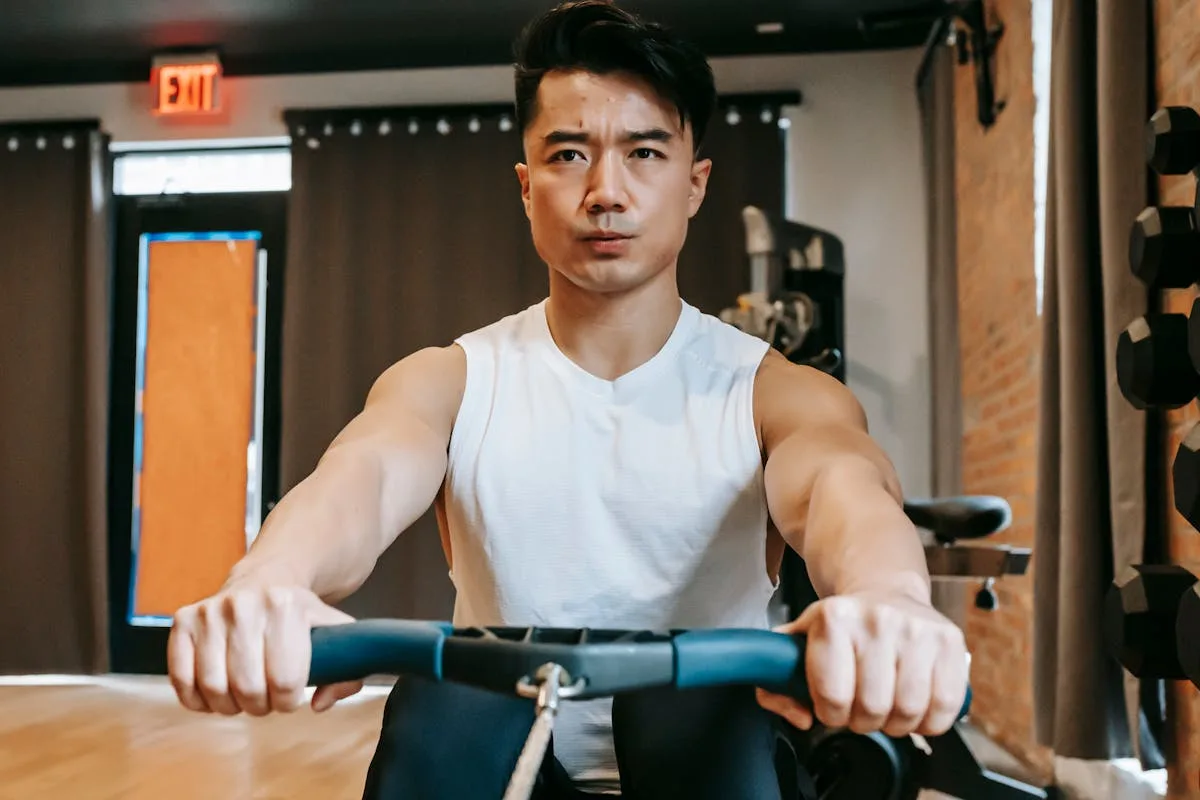
You’ll spend 20-45 minutes sitting on this thing. A hard, narrow seat becomes painful after 10 minutes. Look for: – Contoured, padded seat (not flat) – Smooth rail with quality bearings (the seat should glide, not stick) – A seat height that’s easy to get on and off (especially important for older users — the Concept2 Model E has a higher seat for this reason)
Foot Plates
Adjustable foot plates with secure straps are essential. Your feet drive the stroke — loose foot plates mean lost power and an uncomfortable, slipping feeling. Look for: – Pivoting foot plates (they tilt slightly with your natural ankle movement) – Quick-adjust straps – Textured surface for grip
Handle
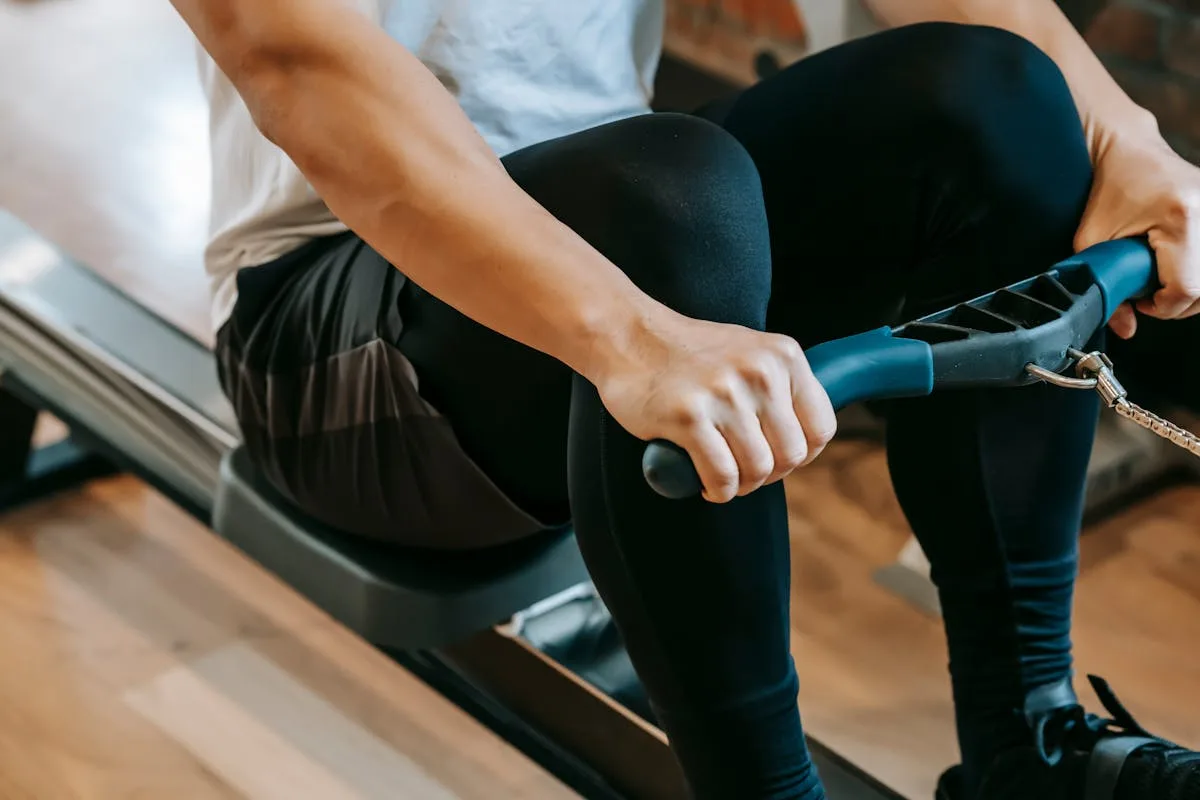
The handle should be comfortable for extended sessions: – Slightly angled handles reduce wrist strain – Cushioned grip prevents blisters – The chain or strap connecting handle to flywheel should feel smooth with no jerks
Performance Monitor
A good monitor transforms your training from “rowing aimlessly” to structured, measurable workouts.
Essential metrics: – Time and distance — basic tracking – Pace (split time) — time per 500m, the standard measure of rowing intensity – Stroke rate — strokes per minute, crucial for pacing – Calories — useful for general fitness goals
Nice to have: – Heart rate connectivity (Bluetooth chest strap) – Pre-programmed workouts (intervals, distance targets, time trials) – Connectivity to apps (Concept2 Logbook, ErgData, Strava) For related guidance, see our Rowing Machine vs Exercise Bike: Which Burns More Calories? guide.
The Concept2 PM5 monitor is the gold standard — accurate, thorough, and connects to everything. Budget rower monitors often show generic data that isn’t particularly accurate. If data-driven training matters to you, this alone might justify the Concept2’s price.
Build Quality
Pull the handle hard 5,000 times in a 30-minute session, multiple times per week, for years. The machine needs to handle that.
Check: – Maximum user weight (120kg+ for most adults, 150kg for larger users) – Frame material (steel or aluminium, not plastic joints) – Rail smoothness (sit on it in the shop and row 10 strokes) – Warranty (2+ years on frame, 1+ year on moving parts)
Budget Guide
Under £300
Magnetic rowers only. Functional for light-to-moderate use (2-3 sessions per week). Won’t last under heavy daily use. The Bodymax R60 and Decathlon Domyos 500 are reasonable options.
£300-600
Good magnetic rowers and entry-level air rowers. The JTX Freedom Air and JTX Ignite offer decent build quality. Adequate for regular home use.
£600-1,000
This is the sweet spot. The Concept2 Model D (£900) lives here, and it’s the best value rowing machine in the world — full stop. The WaterRower A1 (£650-750) is also excellent if you prefer water resistance and quieter operation.
£1,000+
Premium territory. Concept2 Model E, WaterRower Oak, NordicTrack RW900. Marginal gains over the £600-1,000 bracket — you’re paying for aesthetics, screen size, or specific ergonomic features. For related guidance, see our HIIT on a Rowing Machine: A Beginner’s Workout guide.
The honest recommendation: If you can stretch to £900, buy a Concept2 Model D. It will outlast every other machine in its price range, hold its resale value (used Concept2s sell for £600-700), and give you the most accurate, comparable workout data available. If noise is a dealbreaker, spend the same on a WaterRower.
Where to Buy in the UK
- Concept2 — direct from concept2.co.uk (free delivery, sometimes stock issues)
- WaterRower — direct from waterrower.co.uk or John Lewis
- Decathlon — good budget options in-store and online
- Amazon — wide range, check reviews carefully (lots of poorly reviewed budget options)
- Argos — mid-range options with click-and-collect convenience
- Fitness Superstore — specialist retailer, good range, can try before buying
- Sweatband.com — competitive prices on branded equipment
Buying used: Rowing machines (especially Concept2) hold value well and are often barely used. Facebook Marketplace, Gumtree, and eBay are worth checking — a 3-year-old Concept2 for £500-600 is a bargain.
Getting Started
A rowing machine sitting unused is the most expensive way to dry towels. Actually using it requires:
Learn Proper Technique First
Bad rowing technique is common and causes lower back pain. The stroke sequence is:
- Legs first — push with your legs (this is 60% of the power)
- Back second — lean back slightly from the hips
- Arms last — pull the handle to your lower chest
Recovery is the reverse: arms away, body forward, then legs bend. Most beginners make the mistake of pulling with their arms first — this is inefficient and strains the shoulders.
Watch Concept2’s official technique videos on YouTube. Five minutes of learning saves months of bad habits.
Start Easy
- Week 1-2: 10-15 minutes at a comfortable pace, focus on technique
- Week 3-4: 20 minutes, start adding short bursts of harder effort
- Week 5+: 20-30 minutes, introduce interval training (1 minute hard, 2 minutes easy)
The standard fitness benchmark is a 2,000m time trial. Beginners typically row 2K in 8:30-10:00. Getting under 8:00 takes months of training. Under 7:00 is really fit. Under 6:30 and you should consider competitive rowing.
The Bottom Line
A rowing machine gives you the most efficient full-body workout available at home. The right one depends on three things: your budget, your noise tolerance, and your available space.
If you want the best training tool, get a Concept2. If you want the best experience, get a WaterRower. If you need quiet and compact, get a quality magnetic rower. And if you’re tempted by a £100 hydraulic rower on Amazon — save your money and buy a skipping rope instead. It’ll give you a better workout and last longer.
Frequently Asked Questions
What cardio machine is best for a home gym? The best choice is the one you will use consistently. Rowers give a full-body workout, exercise bikes are joint-friendly, and treadmills suit runners who need weatherproof training.
How much space do I need around cardio equipment? Leave at least 60 cm around the sides and rear where possible. Treadmills need extra rear clearance for safety, while folding bikes and rowers can work in tighter spaces.
Is home cardio equipment worth it? Yes if you train several times a week. It removes travel time, avoids bad weather and makes short sessions easier to fit around work and family life.
What should I check first with How to Choose a Rowing Machine for Home? Start with the real use case, then check size, compatibility, running costs and maintenance. A product that looks good on paper can still be the wrong fit if it does not suit the room, routine or budget.
How do I avoid wasting money on How to Choose a Rowing Machine for Home? Avoid buying on one headline feature alone. Compare the practical details, read the warranty or returns terms, and choose the option that solves your main problem rather than the one with the longest specification list.