Creating a home recovery routine is about making the next workout feel better, not turning your living room into a physio clinic. This home recovery routine guide keeps it short, repeatable and matched to how you train: a few minutes of mobility, a little soft-tissue work where it helps, enough sleep, and a clear rule for when rest beats another session.
In This Article
- What a Home Recovery Routine Should Do
- Home Recovery Routine Guide: The Simple Weekly Structure
- Mobility, Stretching and Yoga
- Foam Rolling, Massage and Compression
- Sleep, Food and Hydration
- Recovery Setup by Budget
- Common Recovery Routine Mistakes
- Frequently Asked Questions
What a Home Recovery Routine Should Do
A good home recovery routine has three jobs. It should calm your body down after training, keep useful range of motion, and help you notice when fatigue is building before it turns into a niggle. It does not need to be long. In most homes, 10-20 minutes done often beats a heroic 60-minute session you only manage once a fortnight.
The mistake is treating recovery as punishment for training hard. If the routine hurts, needs loads of kit, or takes longer than the workout, you will drop it. The routine should feel like the easy part of the week.
Use these markers to decide what belongs:
- After hard strength sessions: gentle movement, breathing, light stretching and a normal meal.
- After running, cycling or rowing: calves, hips, quads, glutes and upper back usually need attention.
- On rest days: walking, mobility and sleep matter more than another intense circuit.
- When sore: reduce intensity first; do not try to smash soreness out with a massage gun.
The NHS exercise hub is a useful sanity check here because recovery sits inside a broader active lifestyle, not separate from it. The NHS exercise guidance covers activity types and general movement advice, which is a better foundation than chasing every recovery trend on social media.
Home Recovery Routine Guide: The Simple Weekly Structure
The easiest routine is built around training days, not calendar perfection. If you train three times a week, you need three short post-workout resets and one longer recovery slot. If you train five times a week, you need more low-intensity days and less ego.
After every workout: 8-12 minutes
Keep this boring. Boring is good. The job is to downshift.
- Walk or move gently for 2-3 minutes: let your breathing settle before you collapse onto the sofa.
- Stretch the main areas you used: pick three positions and hold each for 30-45 seconds.
- Use one recovery tool only: foam roller, massage ball or stretching strap. Not all three every time.
- Drink and eat normally: water first, then a meal or snack with protein and carbohydrate if the session was hard.
That is enough for most sessions. After testing longer routines, the point where people drift is usually minute 18. The phone comes out, the roller gets abandoned, and it stops being a routine.
Once or twice a week: 20-30 minutes
Use the longer slot for the areas that keep cropping up. For lifters, that might be hips, ankles, thoracic spine and shoulders. For runners, calves, hip flexors and glutes usually deserve more time. For rowing machine users, add upper back and hamstrings.
This is where a yoga mat and foam roller earn their space. If you already follow the GymGearUK guide on how to choose the right yoga and recovery kit, this routine is the practical use case: a few pieces of kit, used consistently.
Every four weeks: review the pattern
Recovery routines fail when they never change. Every four weeks, ask:
- What feels better? Keep the exercises that clearly help.
- What never gets done? Remove it or make it shorter.
- What keeps getting sore? Reduce training load or get qualified advice if it persists.
- What is the sleep trend? If sleep is poor, more stretching will not fix everything.
Mobility, Stretching and Yoga
Mobility work is movement you can control. Stretching is holding a position to ease tightness or improve range. Yoga can include both, but it can also become a full workout if you pick a hard flow. For recovery, choose the easy end.
The useful post-workout stretch menu
Pick three to five, not twelve. The aim is consistency.
- Hip flexor stretch: useful after sitting, running and cycling.
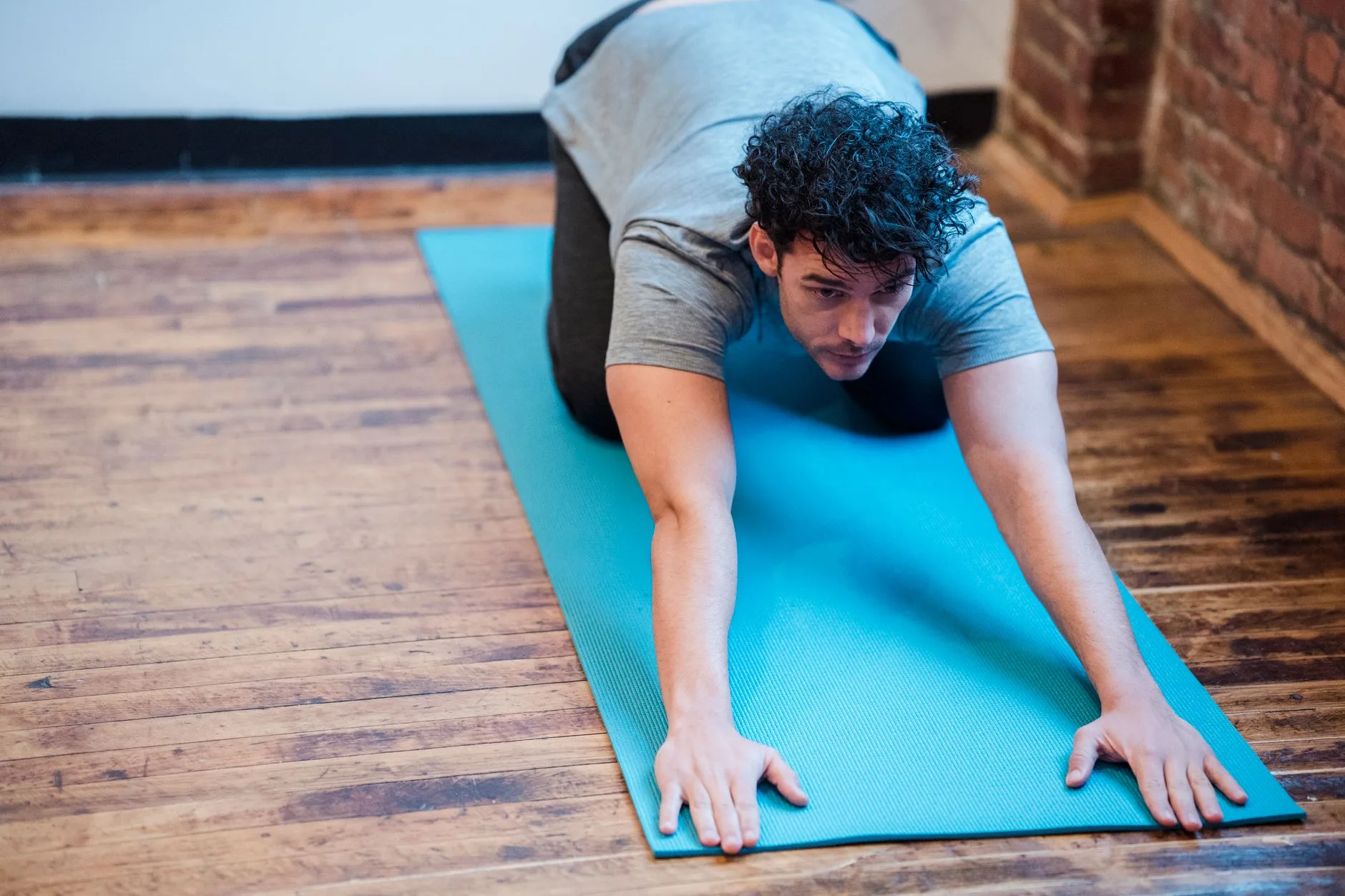
- Child’s pose with side reach: easy way to calm the back and shoulders.
- Calf stretch: worth doing after running, skipping and incline treadmill work.
- Figure-four glute stretch: good after squats, lunges and long drives.
- Doorway chest stretch: helpful if pressing or desk work leaves shoulders forward.
The NHS has a dedicated page on how to stretch after exercising, and it is a good place to point beginners because it keeps the advice simple. Hold positions, breathe, and avoid bouncing or forcing painful ranges.
Where yoga fits
Yoga works well as a recovery tool if you treat it as low intensity. Ten minutes of simple poses can be enough: child’s pose, cat-cow, low lunge, seated forward fold and legs-up-the-wall. If your “recovery yoga” leaves you sweating and shaking, it is another workout.
GymGearUK already has a beginner-friendly piece on yoga poses for flexibility and a separate yoga mat buying guide. For recovery, I would prioritise grip and cushioning over fancy alignment markings. A decent 6mm mat from Decathlon, Argos or Amazon UK costs about £18-£35 and is fine for most homes.
How hard should it feel?
Use a simple 3 out of 10 rule. A stretch can feel mildly uncomfortable, but it should not feel sharp, nervy or aggressive. If you are holding your breath or bracing your jaw, back off. Recovery is not a toughness test.
Foam Rolling, Massage and Compression
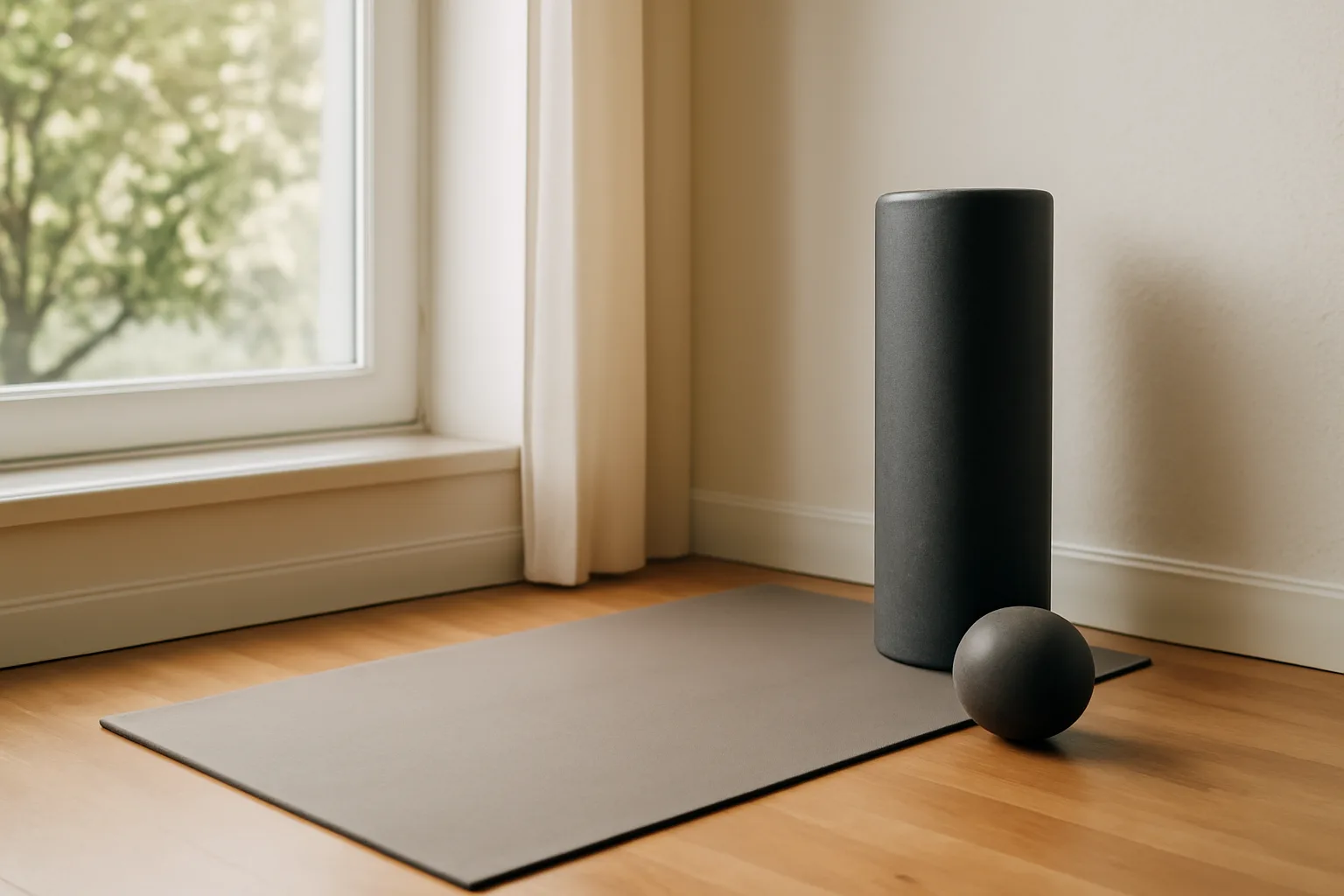
Recovery tools can help, but they are easy to overbuy. A £15 foam roller used three times a week is better than a £300 massage gun that lives in a drawer.
Foam rollers
A smooth foam roller is the safest starting point. Grid rollers feel more intense, but more intense is not always better. Use slow passes over the muscle, avoid joints, and spend 30-60 seconds per area.
Typical UK prices:
- Basic smooth roller: about £10-£18 from Decathlon, Argos or Amazon UK.
- Grid-style roller: about £18-£35 from Gymshark, TriggerPoint or Amazon UK.
- Long 90cm roller: about £20-£40, useful for upper-back work and Pilates-style mobility.
The GymGearUK foam roller guide covers the options in more detail. For a home recovery routine, I would start with a medium-density smooth roller. It is less dramatic, but you will actually use it.
Massage balls
A massage ball is better than a roller for feet, glutes and small shoulder areas. You can buy a lacrosse-style ball for £5-£10. Start against a wall rather than lying your full body weight on it. That gives you more control and fewer regrets.
Massage guns
Massage guns are useful for some people, especially if they hate foam rolling, but they are not magic. Entry-level models start around £45-£80. Better mid-range options from Recovapro, Therabody or Hyperice often sit around £120-£250. Premium models can push past £300.
If you already own one, use the soft head, keep it moving, and avoid bony areas, neck/front throat, bruises and sharp pain. If you are buying from scratch, read the Theragun vs Hyperice vs Recovapro comparison before spending premium money.
Compression and heat
Compression socks, heat packs and cold packs can be useful, but keep expectations realistic. Compression socks are usually £8-£25 a pair. Reusable hot/cold packs are £6-£15. They can help comfort and routine, but they do not replace sleep, sensible training load or basic mobility.
Sleep, Food and Hydration
Recovery is mostly invisible. The mat and roller are easy to photograph; sleep and food do the quieter work.
Sleep is the main recovery tool
If your sleep is poor, start there. The NHS sleep and tiredness guidance is a good reference because it focuses on practical habits rather than biohacking. Keep wake times steady where possible, reduce late caffeine, and avoid turning recovery into another screen-heavy task at 11pm.
Fitness watches can help spot patterns, but do not treat sleep scores as law. GymGearUK has already covered fitness watch sleep tracking accuracy. Use the trend, not one bad night, to guide training.
Eat like someone who wants to train again
You do not need specialist recovery powders after every home workout. For most people, a normal meal within a couple of hours is fine: protein, carbohydrate, vegetables and some salt if you sweated heavily.
Easy UK examples:
- After strength training: eggs on toast, Greek yoghurt with oats, chicken rice bowl, tofu stir-fry.
- After cardio: jacket potato with tuna or beans, pasta with lean mince, porridge with milk and banana.
- Light session: normal meal timing is enough; do not invent a recovery shake for a 20-minute mobility session.
Protein powders can be convenient, not compulsory. A basic whey or vegan protein from Myprotein, Bulk or Holland & Barrett is often £15-£30 per kg when on offer. Buy it for convenience, not because recovery falls apart without it.
Hydration without fuss
Water is enough for most sessions under an hour. Electrolyte tablets can help if you sweat heavily or train in a hot garage gym, but many people overuse them. A tube from SIS, High5 or Decathlon is usually £4-£8. Check the caffeine content if you train late.
Recovery Setup by Budget
You can build a useful home recovery routine cheaply. Spend money where it removes friction.
Under £25
Buy a basic foam roller for £10-£18 and a massage ball for £5-£8. Use a towel or existing rug if you do not want a mat yet. This is enough for calves, quads, glutes, upper back and feet.
The trade-off is comfort. Hard floors make stretching less appealing, and if the routine feels annoying, you will skip it.
Around £50
This is the best value setup for most people:
- 6mm exercise mat: £18-£35 from Decathlon, Argos or Amazon UK.
- Smooth foam roller: £10-£18.
- Massage ball or peanut ball: £5-£12.
- Stretching strap or resistance band: £6-£12.
That setup covers the routine in this guide without turning recovery into a shopping project.
£100-£200
Add a better mat, a long roller, a firmer ball and maybe an entry-level massage gun. This tier makes sense if you train four or five times a week, lift heavy, run regularly, or share the kit with someone else at home.
I would still buy the boring basics before the massage gun. The boring basics work even when they are not exciting.
£250+
Premium recovery kit is easy to justify and hard to need. A Theragun, Hyperice, compression boots or infrared blanket can feel good, but the return drops quickly if sleep, training load and food are messy.
If you have £250 to spend, my order would be: good mat, good roller, massage ball, comfortable shoes for recovery walks, then a massage gun only if you know you will use it twice a week.
Common Recovery Routine Mistakes
The weak routines usually fail for the same reasons.
Making it too long
Start with 10 minutes. If you can do that for three weeks, add more. A realistic routine beats an ideal one written in a notebook.
Going too hard on sore muscles
Soreness is not a knot you have to crush. Gentle movement, light rolling and sleep usually beat aggressive pressure. If pain is sharp, one-sided, worsening or linked to swelling, do not self-treat it with tools.
Copying someone else’s routine
A powerlifter, runner and new parent training twice a week do not need the same recovery plan. Match the routine to your actual training, schedule and weak spots.
Ignoring training load
No recovery routine can rescue a badly planned week forever. If every session is hard, your recovery work becomes damage control. Build easier sessions into the plan. GymGearUK’s guide to creating a home gym workout plan is useful if the training side needs structure too.
The practical verdict: start with a mat, smooth foam roller and massage ball, then build a 10-minute post-workout routine you can repeat without thinking. Add yoga, massage guns or premium kit later only if the basic routine is already happening.
Frequently Asked Questions
How long should a home recovery routine take? Most people need 10-20 minutes after training and one longer 20-30 minute session each week. Longer is only better if you will actually do it.
What equipment do I need for a home recovery routine? Start with a yoga mat, smooth foam roller and massage ball. That usually costs around £35-£60 in the UK and covers most recovery work.
Should I stretch before or after training? Use dynamic movement before training and calmer static stretching after training. For recovery, hold gentle stretches and avoid bouncing.
Are massage guns worth it for recovery? They can be useful if you use them consistently, but they are not essential. A £15 foam roller and £8 massage ball are better value for most beginners.
Can I do recovery work every day? Yes, if it is gentle. Daily walking, mobility and light stretching are fine for most people, but hard rolling or intense yoga every day can become extra training.
When should I skip recovery tools and rest instead? Rest if you have sharp pain, swelling, unusual fatigue or soreness that worsens rather than eases. Recovery tools should not be used to push through injury warning signs.