Your first pull-up is not a willpower test. It is a strength skill, and the fastest route is to train the pieces in the right order: hanging, shoulder control, rows, assisted reps, slow negatives, then one clean rep. These pull up progressions beginners can follow work far better than jumping at the bar twice a week and hoping the rep appears.
In This Article
- Pull Up Progressions for Beginners: The Short Version
- What Counts as Your First Proper Pull-Up
- Build the Base Before You Try to Pull
- The Progression Ladder
- How to Use Bands Without Getting Stuck
- A Simple Weekly Plan
- Home Equipment and UK Prices
- Frequently Asked Questions
Pull Up Progressions for Beginners: The Short Version
If you cannot do a pull-up yet, stop maxing out every session. Test attempts are not training. You need enough weekly pulling volume to build your back, biceps, grip and shoulder control without battering your elbows.
The basic route is:
- Dead hang: hold the bar for 20-40 seconds with relaxed legs and active shoulders.
- Scapular pull-up: move your shoulders down and back without bending your elbows.
- Inverted row: pull your chest towards a low bar or suspension trainer.
- Band-assisted pull-up: practise the full pattern with enough help to keep form clean.
- Negative pull-up: jump or step to the top, then lower for 3-5 seconds.
- First strict rep: pull from a still dead hang with no kick, swing or neck crane.
Most people need 6-12 weeks if they train consistently. Some get there faster, especially if they already lift weights or are lighter relative to their upper-body strength. Others take longer. That is normal. Bodyweight skills are brutally honest.
The mistake I see most
The common mistake is using a huge resistance band forever. It feels good because you can do sets of eight, but the bottom of the movement never gets strong. Use bands as a bridge, not a sofa.
For a home setup, a pull-up bar plus one medium and one heavy band is enough. You do not need a full garage gym. Our broader guide to progressing bodyweight exercises at home is useful once you want dips, push-ups and single-leg work too.
What Counts as Your First Proper Pull-Up
A proper first pull-up starts from a dead hang, finishes with your chin clearly over the bar, and uses control rather than a leg kick. It does not need to be pretty. It does need to be honest.
Use this standard:
- Start: arms straight, feet off the floor, body still.
- Grip: hands just wider than shoulder width, palms facing away for a pull-up.
- Pull: elbows drive down, chest rises, ribs stay controlled.
- Finish: chin over the bar without reaching your neck forward.
- Lower: controlled descent back to straight arms.
A chin-up, with palms facing you, is usually easier because the biceps help more. It is a fine milestone, but it is not quite the same as your first overhand pull-up. If your goal is just to get above the bar, chin-ups are a good stepping stone. If the title on your training note says pull-up, keep some overhand work in the plan.
Pain is not a badge
Mild muscle fatigue is fine. Sharp elbow, shoulder or wrist pain is not. The NHS strength exercises guidance is a sensible reminder that strength work should be controlled and appropriate to your current ability. If the bar work keeps irritating a joint, swap to rows and lighter band work for a week rather than forcing more reps.
Build the Base Before You Try to Pull
The first phase is not glamorous, but it is where the rep is built. You need grip strength, shoulder-blade control and enough pulling volume. Without those, full pull-up attempts turn into shrugging and kicking.
Dead hangs
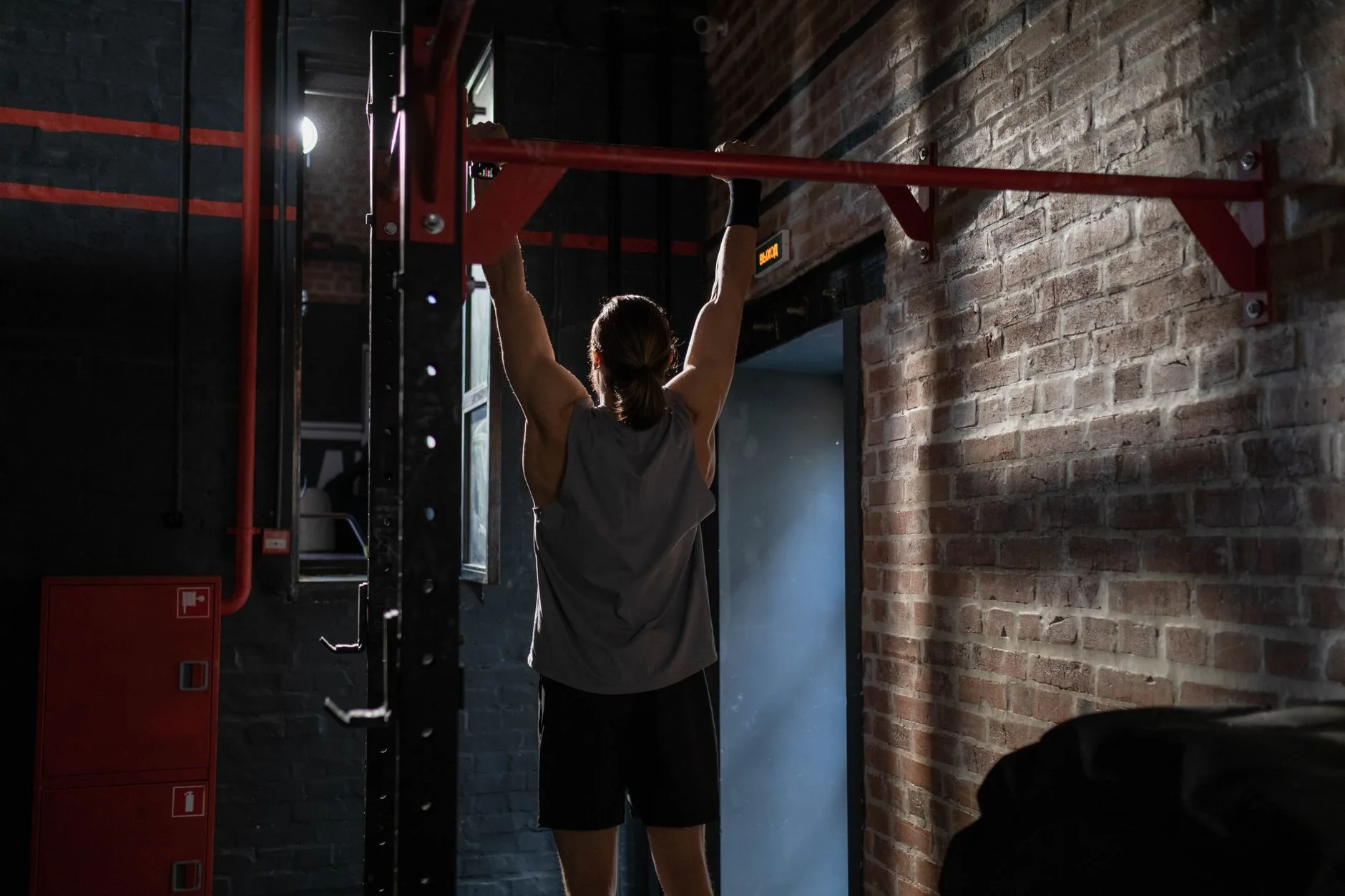
Start with dead hangs. Hang from the bar with your arms straight, then gently draw the shoulders away from your ears. Do not overdo it. Three sets of 15-30 seconds is enough for most beginners.
If you cannot hang for 10 seconds, use your feet on a box to take some weight. That still trains the grip and shoulder position. I like this version for people training at home because it lets them build confidence without dropping off the bar every set.
Scapular pull-ups
Scapular pull-ups teach the first few centimetres of the rep. Hang with straight arms, pull your shoulder blades down, lift your body slightly, then return with control. Your elbows should barely bend.
This drill feels tiny, but it fixes a lot. If your shoulders shoot up to your ears during every pull-up attempt, you are leaking strength before the rep has started.
Rows
Rows let you train the same broad pulling muscles with less bodyweight. Use a low bar, rings, a suspension trainer or even a sturdy table if it is solid enough for the job. Keep your body straight and pull your chest towards the handles.
Rows also give you volume. You might manage only one slow negative on the bar, but you can usually do three sets of eight rows. That volume is what nudges the first pull-up closer.
The Progression Ladder
Do not rush this ladder. Move up when the current step feels controlled, not when you are bored. The aim is to make each harder step feel almost inevitable.
Step 1: Assisted hangs and active hangs
Use a chair, box or low bar so your feet can help. Practise 3-4 sets of 20 seconds. Then add active hangs: pull the shoulders down, pause for two seconds, relax slightly, and repeat.
Step 2: Inverted rows
Aim for 3 sets of 8-12 reps. Make them harder by walking your feet forward or lowering the bar. Make them easier by standing more upright. If you train in a small spare room, a suspension trainer over a closed door can work, but check the anchor properly.
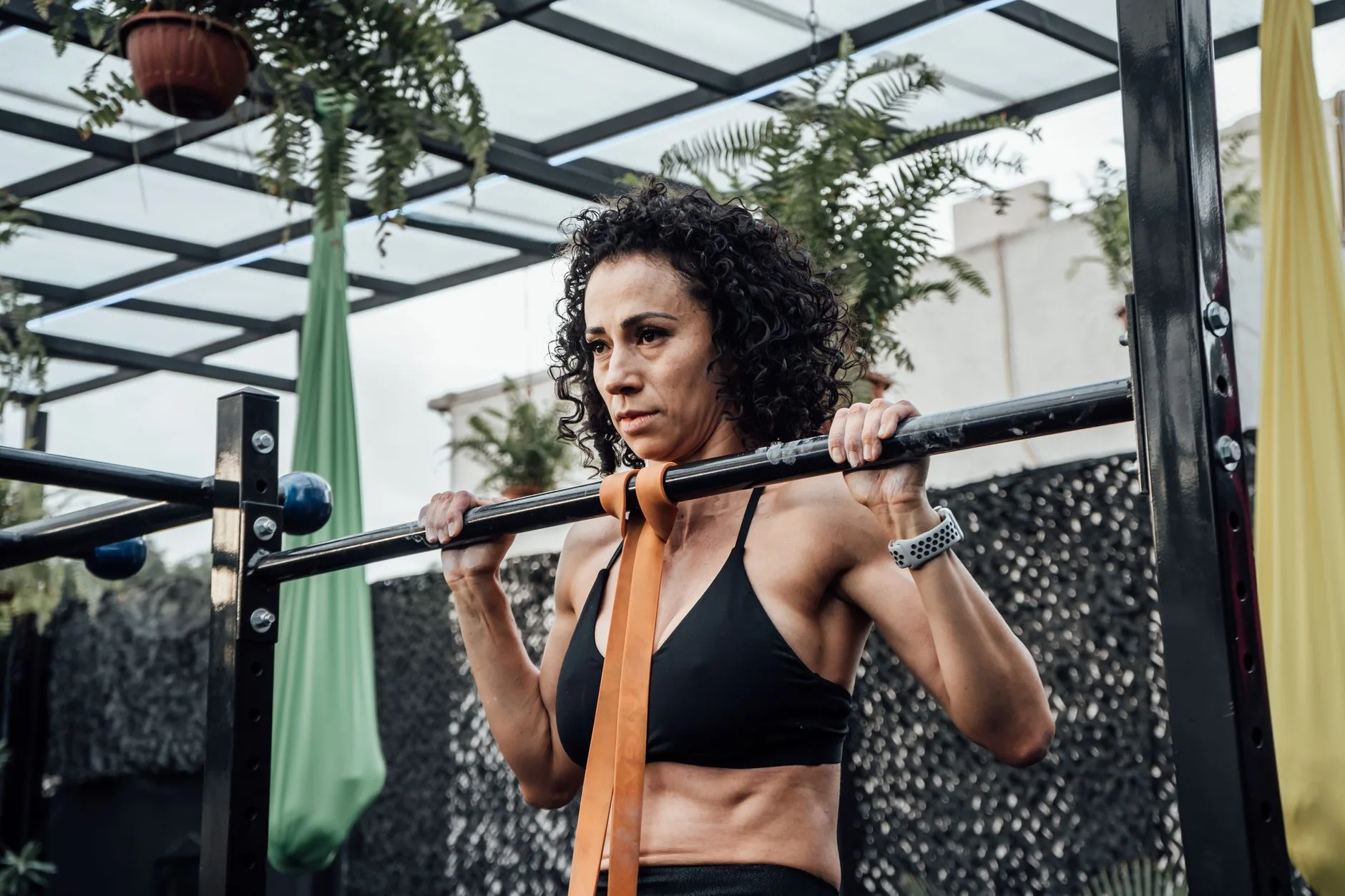
Step 3: Band-assisted pull-ups
Loop a band over the bar and place one knee or foot in it. Start with enough assistance to do 4-6 clean reps. If the band fires you up like a trampoline, it is too strong for skill practice.
Keep the first rep strict. Start still, squeeze the bar, pull the elbows down, and finish tall. If the final two reps turn into swinging, stop the set there.
Step 4: Negative pull-ups
Use a box to step to the top position, then lower slowly. Three seconds is fine at first. Five seconds is plenty. If you drop during the final third, you are not ready for lots of negatives yet.
Two or three sets of 2-4 negatives is enough. More is not better if your elbows are sore for three days afterwards. Ask me how I know.
Step 5: Cluster attempts
Once you can do band-assisted reps with a light band and controlled negatives, try cluster attempts. Do one strict attempt, rest 60-90 seconds, then do another. Stop after three to five attempts.
This keeps quality high. Grinding ugly singles when you are tired just teaches your body to kick and twist.
How to Use Bands Without Getting Stuck
Bands are brilliant until they become the whole plan. The band helps most at the bottom, which is exactly where many people are weakest. That means you can appear stronger than you are if you never reduce the assistance.
Choose the right band
For most adults, one medium and one heavy loop band is enough. At Decathlon UK, pull-up assistance bands and weight-training bands often sit around £7.99-£19.99 each, with band sets around £29.99-£34.99. Amazon UK has similar long-loop bands from about £10-£25, though quality varies.
Use the lightest band that lets you complete clean reps. If you weigh more or are right at the start, a heavy band is fine. Just plan your exit.
Progress the band work
Use one of these progressions:
- Reduce band thickness: move from heavy to medium to light assistance.
- Reduce reps: go from 8 easy band reps to 4 harder band reps with cleaner tension.
- Add pauses: pause for one second at the top and halfway down.
- Mix with negatives: do band reps first, then 2 controlled negatives.
Do not chase soreness. The British Heart Foundation’s home strength exercise advice makes the useful point that strength training can be simple and progressive. Pull-up work follows the same idea: repeatable beats heroic.
A Simple Weekly Plan
Train pull-up progressions two or three times a week. Leave at least one rest day between sessions. Your elbows and shoulders will thank you.
Two-day plan
Use this if you also run, cycle, lift or play sport:
- Day 1: dead hangs 3 x 20-30 seconds, inverted rows 3 x 8-12, band-assisted pull-ups 4 x 4-6.
- Day 2: active hangs 3 x 6, inverted rows 3 x 8-12, negative pull-ups 3 x 2-3.
Three-day plan
Use this if the pull-up is your main goal:
- Day 1: band-assisted pull-ups, rows, dead hangs.
- Day 2: rows, active hangs, light biceps or band work.
- Day 3: strict attempts or negatives, then easy rows.
Warm up first. A few minutes of brisk movement, shoulder circles, band pull-aparts and easy rows makes bar work feel much better. If you already lift, slot pull-up work near the start of an upper-body session, not after your grip is ruined. Our guide to warming up before lifting weights covers the general pattern.
When to test
Test your first rep every two weeks, not every session. Warm up, do one or two easy band sets, rest, then try one strict pull-up. If it does not move, no drama. Go back to the plan.
The first real rep often appears when the bottom third finally improves. You will feel the difference: instead of hanging and going nowhere, the shoulders set, the elbows start moving, and the bar suddenly looks closer.
Home Equipment and UK Prices
You can train pull-up progressions at home, but the bar has to be safe. A wobbly doorway bar is not character-building. It is a plaster repair waiting to happen.
Pull-up bars
Here is the rough UK price spread:
- Basic telescopic doorway bar: about £12-£20 from Argos or Amazon UK. Cheap, but only suitable if fitted correctly and used within the limit.
- Hook-over doorway bar: about £25-£45 from Amazon UK, Decathlon or Argos. Better for renters because it usually avoids screws, but it needs a compatible frame.
- Wall-mounted bar: about £40-£80 from Decathlon, Mirafit or Amazon UK. Stronger, but you need suitable brick/block and proper fixings.
- Power rack or squat rack bar: usually £180-£500+ from Mirafit, Fitness Superstore or Decathlon. Best if you are building a full setup.
Decathlon’s locking door-mount bar is often around £19.99, with heavier door or wall options around £39.99-£49.99. Argos has basic Opti-style bars from around £12 and multi-grip doorway bars often around the £20-£35 mark. Prices move, but those bands are realistic for a UK home gym.
If you are building more than a pull-up corner, read our home gym equipment guide and under-£500 home gym plan before buying twice.
Renter-friendly setup notes
If you rent, avoid drilling into walls unless your tenancy agreement and landlord allow it. A hook-over doorway bar is usually the least messy option, but it needs a strong frame with enough trim for the bar to catch securely. Test it with partial bodyweight first, then a short hang, before trusting it for negatives.
For new-build flats with narrow or shallow doorframes, a freestanding power tower can be safer than forcing the wrong doorway bar to fit. Budget roughly £90-£180 for a basic tower from Amazon UK, Decathlon Marketplace or Mirafit. It takes more floor space, but it removes the doorframe worry.
Bands, flooring and small extras
Budget £20-£40 for bands. A single Decathlon pull-up assistance band at £19.99 may be enough, but two resistance levels are better. Chalk is optional and costs about £5-£10. Gym flooring is not essential for pull-ups, but it helps if you are also doing rows, kettlebells or dumbbell work; see our UK gym flooring guide if the room is multi-use.
If money is tight, buy the bar first and add bands later. If confidence is low, buy one medium band with the bar. That combination gives most beginners enough support to practise without turning every session into failed singles.
Frequently Asked Questions
How long does it take to get your first pull-up? Most beginners need 6-12 weeks of consistent practice, but bodyweight, training history, grip strength and recovery all matter.
Are band-assisted pull-ups good for beginners? Yes, as long as the band is not so strong that it hides the hard bottom part of the rep. Use bands with rows, hangs and negatives.
Should I train pull-ups every day? Usually no. Two or three focused sessions a week works better for most beginners because grip, elbows and shoulders need recovery.
Are chin-ups easier than pull-ups? Yes for most people. Chin-ups use more biceps and can be a useful stepping stone, but keep some overhand work if your goal is a pull-up.
What equipment do I need for pull-up progressions? A secure pull-up bar is the main item. A medium or heavy resistance band helps, and a box or chair is useful for negatives.
Why am I stuck at zero pull-ups? Usually because you are testing instead of training. Build hangs, rows, band-assisted reps and negatives for several weeks before retesting.