Most GPS watch features only matter if they change a run, ride, hike or gym session you actually do. GPS watch features explained properly should start there, because a £180 watch can be the right buy for one runner while a £600 flagship is wasted on another. If I were buying today, I would pay for dependable GPS, real buttons, battery life in the mode I use, chest strap support and an app I do not hate opening after every session.
In This Article
- GPS Watch Features Explained: The Short Version
- GPS Accuracy Is the First Filter
- Dual-Band GPS Is Useful, But Not Magic
- Battery Life: Look at the Mode, Not the Headline
- Maps, Navigation and the Phone Question
- Heart Rate Features: Where Watches Still Struggle
- Training Load, Recovery and VO2 Max
- The App Matters More Than the Spec Sheet Suggests
- Features I Would Not Pay Extra For
- What I Would Buy at Each Budget
- The Final Buying Check
- Frequently Asked Questions
GPS Watch Features Explained: The Short Version
The best GPS watch is not the one with the longest feature list. It is the one that records your sessions reliably, lasts long enough, gives you useful feedback, and stays comfortable enough that you keep wearing it.
For most UK runners and general fitness users, the sweet spot is now roughly £180-£350. That buys a bright screen, accurate enough GPS, proper workout modes, wrist heart rate, Bluetooth chest strap pairing and a decent app. A Garmin Forerunner 165 around £180-£200, a Coros Pace 3 around £199, or a Garmin Forerunner 265 around £350-£370 covers the needs of far more people than the flagship marketing suggests.
The Five Features That Matter Most
- Reliable GPS: Not perfect lines on Strava, but distance and pace you can trust across your normal routes.
- Battery life in GPS mode: Smartwatch battery claims are less useful than knowing how long it lasts while tracking.
- Physical buttons: Touchscreens are fine in the kitchen. Wet sleeves, winter gloves and sweaty intervals are better with buttons.
- Chest strap support: If you train by heart rate, pairing a proper strap matters more than a newer watch face.
- A good app ecosystem: Garmin Connect, Coros, Polar and Suunto all shape how useful the watch feels after the workout.
The features that sound most exciting are often the ones I would treat with suspicion: blood oxygen readings, animated workouts, music storage, contactless payments and recovery scores dressed up as coaching. Some are nice. Few should decide the purchase.
GPS Accuracy Is the First Filter
GPS accuracy matters because it feeds the numbers you actually care about: distance, pace, route shape and elevation. If the GPS trace cuts corners through houses or wanders across the road, your 5k pace and training history become a bit suspect.
That does not mean everyone needs the most expensive satellite setup. A newer mid-range watch is usually fine for open parks, canal paths, seafront runs and suburban loops. The difference shows up when the signal gets messy: tall buildings in London or Manchester, heavy tree cover, steep valleys, or twisty routes where the watch has to make lots of small corrections.
Garmin says its watches and cycling computers are typically accurate to around 3 metres with a clear GPS signal, which is a sensible reminder that GPS is never pinpoint-perfect on the wrist. The practical question is not “is this flawless?” It is “will this be consistent enough for how I train?”
GPS Only vs Multi-GNSS
Older and cheaper watches may offer GPS only. Better models can use several satellite systems, often shown as multi-GNSS, all systems, GPS + Galileo, GPS + GLONASS or similar wording. In plain English, the watch has more satellites to work with, so it has a better chance of holding a decent track when the view of the sky is not perfect.
For UK buyers, I would not buy a serious running watch in 2026 that lacks decent multi-GNSS support unless it is heavily discounted and you only want casual tracking. If you are comparing fitness bands and proper running watches, this is one of the reasons the running watch still wins. Our guide to choosing the right fitness wearable covers that broader trade-off.
Dual-Band GPS Is Useful, But Not Magic
Dual-band GPS, sometimes called multi-band or dual-frequency GPS, lets the watch use more than one signal band from supported satellites. Garmin describes multi-band GPS as a way to get more consistent track logs and improved positioning, particularly where signals are reflected or blocked.
In real use, dual-band is most valuable for people whose routes make normal GPS look bad. City runners weaving between tall buildings, trail runners under tree cover, fell runners in steep terrain, and cyclists on lanes with repeated sharp turns are the obvious candidates.
When I Would Pay for Dual-Band
- You train in dense cities: If your Strava map often zigzags between buildings, dual-band can help.
- You run wooded trails: Heavy summer tree cover can make cheaper watches look worse than they are in winter.
- You use GPS pace for workouts: If pace accuracy affects intervals or tempo runs, cleaner GPS has value.
- You keep watches for years: Paying extra makes more sense if you will not replace it in 18 months.
When would I skip it? Parkrun, gym work, road running in open suburbs, walking the dog, or casual cycling with a phone in your pocket. In those cases, dual-band is nice to have, not worth blowing the budget for.
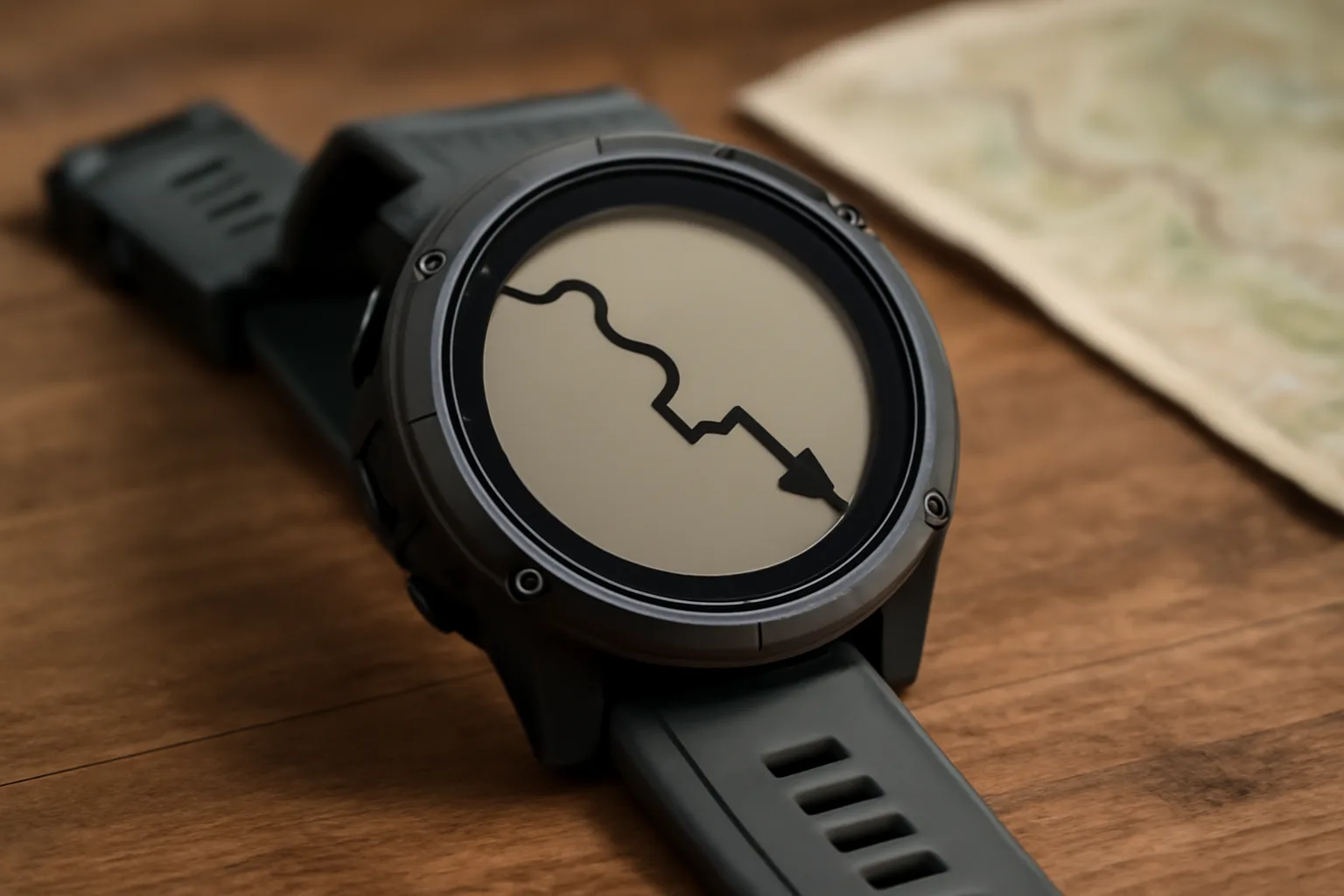
Battery Life: Look at the Mode, Not the Headline
Battery life claims are where watch marketing gets slippery. “Up to 14 days” might mean normal watch mode with no GPS. “Up to 40 hours” might mean a lower accuracy tracking mode that you would not choose for a race or route you care about.
Look for battery life in the mode you will actually use. For runners, that usually means all-systems GPS or the default GPS tracking mode with wrist heart rate on. For hikers, it may mean navigation active. For music users, it means GPS plus music, which can burn through charge much faster.
How Much Battery You Really Need
- 5k to half marathon training: 10-20 hours of GPS battery is already enough for most people.
- Marathon blocks: 20-30 hours gives useful breathing room for long runs, races and missed charges.
- Trail running and hiking: 30-50 hours is where battery starts to feel properly useful.
- Ultras and multi-day routes: Now you are in specialist territory, where Coros, Garmin Enduro/Fenix/Epix and Suunto models make more sense.
I would rather have a watch that gives me a dependable 20 hours in accurate GPS mode than a cheaper model shouting about weeks of standby time. Standby time is convenient. GPS time is the one that saves your session. For a deeper look at the numbers, see our guide to fitness tracker battery life.
Maps, Navigation and the Phone Question
Full maps are brilliant when you need them and dead money when you do not. A colour map on a Garmin Fenix, Epix or Forerunner 965 can be a real help on unfamiliar trails, but it is also one of the features that pushes the price up fast.
Breadcrumb navigation is different. It shows a line to follow, alerts you when you drift off route, and usually gets you back to the start. For many runners and cyclists, breadcrumb navigation is the better value feature. It gives enough direction without pretending your watch is a full mapping device.
Ask Whether Your Phone Is Coming Anyway
If you always carry your phone, full wrist maps matter less. Your phone is better for checking a detailed route, reading street names and zooming around a map. The watch’s job is to keep you on track without making you stop every five minutes.
If you deliberately leave your phone at home, run in unfamiliar areas, or hike where signal and battery are not guaranteed, maps become more tempting. I would still want a paper or offline phone backup for serious hills. A watch is useful navigation. It is not a licence to wander into bad weather underprepared.
Heart Rate Features: Where Watches Still Struggle
Wrist heart rate is good enough for easy runs, gym warm-ups, daily tracking and spotting broad trends. It is not the best tool for intervals, hard cycling, rowing, kettlebell sessions or cold-weather runs where blood flow at the wrist is poor.
This is why chest strap compatibility is one of the most underrated GPS watch features. A Polar H10, Garmin HRM-Dual or Wahoo Tickr usually costs far less than upgrading to the next watch model, and it can make heart-rate-based training far more trustworthy.
When a Chest Strap Is Worth It
- Intervals: Wrist sensors often lag when effort changes quickly.
- Zone 2 training: If you are trying to stay under a ceiling, cleaner data helps.
- Cycling: Bent wrists and vibration can upset optical sensors.
- Strength circuits: Grip, sweat and wrist movement can all interfere.
If you are already reading our heart rate zones explainer, buy a watch that pairs easily with Bluetooth or ANT+ sensors. Our separate guide to choosing a chest strap heart rate monitor goes into the strap side in more detail.
Training Load, Recovery and VO2 Max
Training load, recovery time, readiness scores and VO2 max estimates can be useful, but only if you treat them as prompts rather than orders. They are calculated from imperfect inputs: wrist heart rate, your workout history, sleep estimates and whatever activities you remembered to record.
The NHS recommends adults do strengthening activities at least two days a week and either 150 minutes of moderate activity or 75 minutes of vigorous activity each week. A watch can help you build that habit, but it cannot know how your knees feel walking downstairs, whether work stress is hammering you, or whether yesterday’s “easy” five-a-side was actually chaos.
How to Use Training Metrics Without Being Ruled by Them
Use the trend, not the single number. If your watch says your load has jumped for three weeks and your legs feel flat, listen. If it says you need 72 hours of recovery but you feel fine for an easy walk or light spin, use common sense.
Sleep tracking has the same problem. It can spot rough patterns, but it is not a lab test. Our piece on fitness watch sleep tracking accuracy is worth reading before you let a recovery score ruin your morning.
The App Matters More Than the Spec Sheet Suggests
The app decides whether the watch feels useful after the workout. This is where Garmin still has a strong advantage for many UK users. Garmin Connect is busy, and not always elegant, but it handles routes, workouts, sensors, health data, training history and third-party syncing well.
Coros is cleaner and battery-focused. Polar Flow is good for structured training and beginners. Suunto has improved a lot for outdoor use. Apple and Samsung are stronger if you want a smartwatch first and a sports watch second.
Check Your Existing Services
- Strava: Most serious watches sync well, but check before buying an obscure model.
- Komoot: Useful for routes if you hike, cycle or trail run.
- Apple Health or Google Fit: Important if your phone is your main health hub.
- Zwift or smart trainers: Relevant if indoor cycling or treadmill work is part of your week.
If you use several devices, read how to sync a fitness tracker with multiple devices before you commit to a brand. Sync friction is boring, but it is exactly the sort of boring that makes people stop using good kit.

Features I Would Not Pay Extra For
Some GPS watch features are pleasant extras. That is not the same as being worth another £150.
- Music storage: Useful if you run phone-free, but fiddly enough that plenty of people stop bothering.
- Contactless payments: Handy at a cafe after a long run, but UK bank support varies and most people carry a phone.
- Pulse oximetry: Interesting at altitude, weak as a buying reason for normal UK training.
- ECG: Potentially useful for some health concerns, but not something most sports watch buyers should chase.
- Animated workouts: Fine for beginners, rarely a long-term reason to buy one model over another.
- Huge sport mode counts: If the watch has running, cycling, strength, indoor training, walking and swimming, you probably have the basics covered.
The feature I would be most careful with is “readiness”. It sounds authoritative, but it can turn normal tiredness into a dashboard problem. If the watch helps you train more consistently, good. If it makes you second-guess every session, it is getting in the way.
What I Would Buy at Each Budget
Prices move constantly, especially on Amazon UK, Argos, Decathlon, John Lewis and specialist running shops, so treat these as sensible price bands rather than fixed deals.
Under £200: First Serious Running Watch
The Garmin Forerunner 165 is the obvious pick when it drops below £200. It gives you a bright AMOLED screen, proper running features, Garmin Coach, decent battery life and the Garmin ecosystem without flagship pricing. The Coros Pace 3 is the other one I would shortlist if battery life, low weight and clean training data matter more than smartwatch polish.
£250-£400: The Best Value Band
This is where many people should buy. The Garmin Forerunner 265 is still a strong all-rounder when discounted, especially for runners who want better training metrics and a sharper screen. If you care less about Garmin’s ecosystem, Coros and Suunto alternatives can give better battery value.
I would rather buy in this band and add a £60-£90 chest strap than buy a flagship and rely only on wrist heart rate. That is the sort of trade-off that improves training rather than just improving the spec sheet.
£500 Plus: For Maps, Hills and Long Days
Spend this much if you know why. Full maps, tougher build, longer battery, sapphire glass, solar options and deeper outdoor features can be worth it for trail runners, hikers, triathletes and anyone doing very long days outside. For a three-runs-a-week road runner, it is usually overkill.
The Final Buying Check
Before buying, ignore the brand’s feature grid for two minutes and answer these questions.
- Where do I train most? Open parks need less GPS tech than city streets, woodland or hills.
- What is my longest real session? Buy battery for that, not for a fantasy ultra.
- Do I train by heart rate? If yes, budget for strap support and maybe the strap itself.
- Will I carry my phone? If yes, maps, music and payments matter less.
- Which app will I open every week? The watch is only half the product.
- What would annoy me daily? A bulky case, poor buttons, weak battery or messy syncing will matter more than one extra sensor.
My final answer is simple: buy the cheapest watch that does your real training well. For most people, that means a good mid-range GPS watch, not a flagship. Spend the saved money on shoes, a chest strap, a race entry or kit you will actually use.
Frequently Asked Questions
Which GPS watch features matter most? Reliable GPS, useful battery life, physical buttons, chest strap support and a good app ecosystem matter most for most people. Maps, music, payments and advanced recovery scores are more dependent on how you train.
Do I need dual-band GPS for running? Not always. Dual-band GPS is worth paying for if you run in dense cities, woodland, valleys or places where your current watch gives messy route traces. For open parks and normal road running, standard multi-GNSS is usually enough.
Is a Garmin better than a Coros GPS watch? Garmin usually has the stronger app ecosystem and broader feature set. Coros often gives excellent battery life and simple training tools for the money. The better choice depends on whether you value ecosystem depth or battery-focused simplicity.
Should I buy a GPS watch or use my phone? A phone is fine for casual tracking, but a GPS watch is better for comfort, pacing, heart rate, buttons, structured workouts and battery life. If you run or train several times a week, the watch is worth it.
Are wrist heart rate sensors accurate enough? They are good enough for easy sessions and broad trends. For intervals, cycling, rowing, cold-weather runs or serious zone training, a chest strap is still the better tool.
How much should I spend on a GPS watch? Most UK buyers should start around £180-£350. Below that, compromises get more obvious. Above that, make sure you are paying for features you will use, such as maps, longer battery or advanced outdoor tools.