Starting yoga at home is mostly about making the first session small enough that you will actually repeat it. You do not need incense, a £90 mat or an hour of free time; you need a quiet patch of floor, a few beginner-friendly movements and a way to stop before your body starts arguing back.
In This Article
- Start With the Right Expectation
- What You Need Before Your First Session
- A Simple 20-Minute Beginner Routine
- The First Poses to Learn
- How to Practise Safely at Home
- How Often Beginners Should Do Yoga
- Common Beginner Mistakes That Slow Progress
- What to Spend and What to Skip
- Frequently Asked Questions
Start With the Right Expectation
A good yoga beginners home guide should not make your first week feel like a performance. The aim is not to look bendy. The aim is to learn how to move, breathe and hold positions without rushing through them.
For most people, the best starting point is 15-20 minutes, three times a week. That is enough to build familiarity without turning yoga into another ambitious fitness plan that collapses by Thursday. If you already lift weights, run or use home cardio kit, yoga fits well on rest days or after an easy session.
Yoga can help with strength, balance and flexibility, but it is not magic. The NHS physical activity guidance for adults still recommends regular moderate activity and strengthening work across the week. Think of beginner yoga as one useful piece of that week, not the whole fitness picture.
What counts as a good first month
Your first month is working if:
- You know the names of a few basic poses: enough that you are not staring at the screen every second.
- Your breathing slows down: especially in standing poses and forward folds.
- You can repeat a short routine: without hunting for a new video every time.
- You finish feeling better than when you started: not flattened, sore or annoyed.
That last point matters. A beginner session should leave you with a bit more space through your back, hips and shoulders. If it feels like a punishment workout, you have picked the wrong style or gone too hard.
Home yoga is different from a class
At home, nobody is checking your alignment. That is convenient, but it also means you need to be stricter about pace. Avoid advanced flows, fast vinyasa classes and anything with headstands or deep backbends while you are learning.
I would start with slow hatha-style or beginner mobility sessions. They give you time to notice what your knees, wrists and lower back are doing. Once you know the basics, you can move into stronger flows if that suits you.
What You Need Before Your First Session
You can begin on carpet, but a mat makes home yoga safer and less irritating. Slipping in downward dog is a quick way to lose enthusiasm. A basic setup is cheaper than most home gym purchases and takes less space than a foam roller.
The simple kit list
For a first home setup, buy these in order. If you want the mat choice broken down properly, our guide to choosing a yoga mat by thickness, material and grip covers the detail.
- Yoga mat: £10-£25 for a basic Argos, Decathlon or Amazon UK mat; £35-£60 for a better grippy mat if you practise often.
- Two yoga blocks: usually £7-£15 for a pair from Decathlon, Amazon UK or Sports Direct.
- Yoga strap: around £5-£12, useful if hamstrings are tight or you cannot comfortably reach your feet.
- Small towel: free if you already own one; helpful under knees or wrists.
- Phone stand or laptop position: £0-£15, depending on whether you already have a holder.
If I were buying from scratch, I would spend about £30-£45 total: a grippy mid-range mat, two foam blocks and a cheap strap. The blocks are not a sign you are bad at yoga. They are how you make the pose fit your current body.
Mat thickness and grip
For beginners, a 6-8 mm mat is the safest bet for home use. A thin 3-4 mm travel mat can feel harsh on knees and wrists, especially on laminate or tile. A very thick 12 mm exercise mat feels comfortable for kneeling work but can be wobbly for standing balance.
Decathlon often has beginner-friendly mats around £12.99-£24.99, while Argos Opti mats can sit around £10-£15 when on offer. Premium rubber mats from brands such as Liforme or Manduka can cost £70-£120. They are lovely, but they are not a sensible first purchase unless you already know you will practise regularly.
Setting up the room
You need enough space to lie down with arms out and step one foot forward without kicking a coffee table. In most UK homes, that means moving a chair, rolling the mat beside the sofa or using a bedroom floor.
Keep the room warm enough that you are not bracing against the cold. Around 18-21°C is comfortable for slow beginner yoga. If the floor is cold, wear socks for the opening breathing work, then take them off for standing poses so your feet grip properly.
A Simple 20-Minute Beginner Routine
The easiest way to start is to repeat the same short routine for two weeks. Variety can wait. Repetition helps you learn where your hands and feet go, and it removes the faff of choosing a new class every time.
This beginner routine is gentle, but it is not pointless. It wakes up your spine, opens your hips, builds a little shoulder strength and gives you a proper cooldown.
The routine
- Two minutes of breathing: sit cross-legged, kneel or sit on a cushion. Breathe through your nose if comfortable and let your shoulders drop.
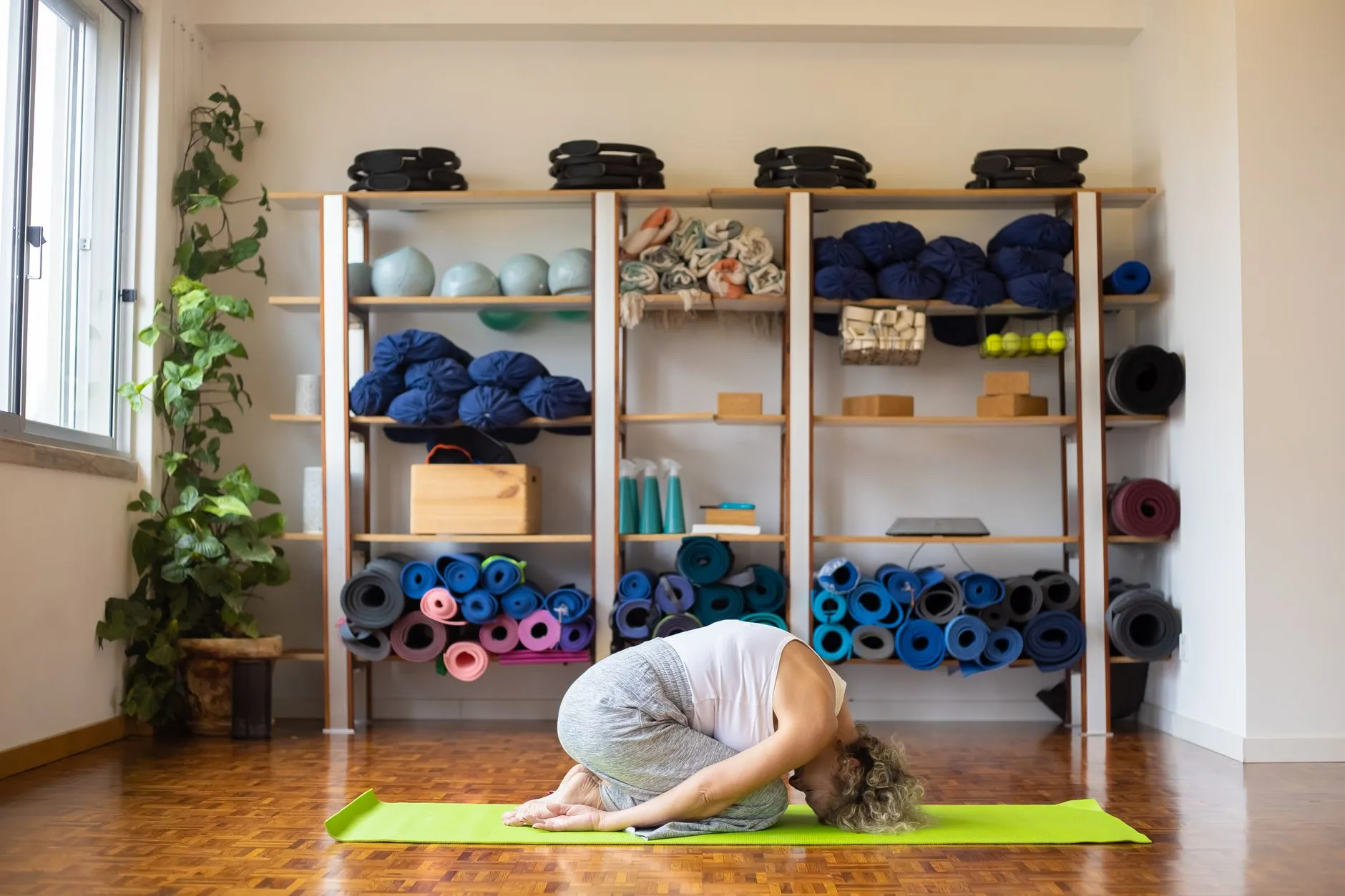
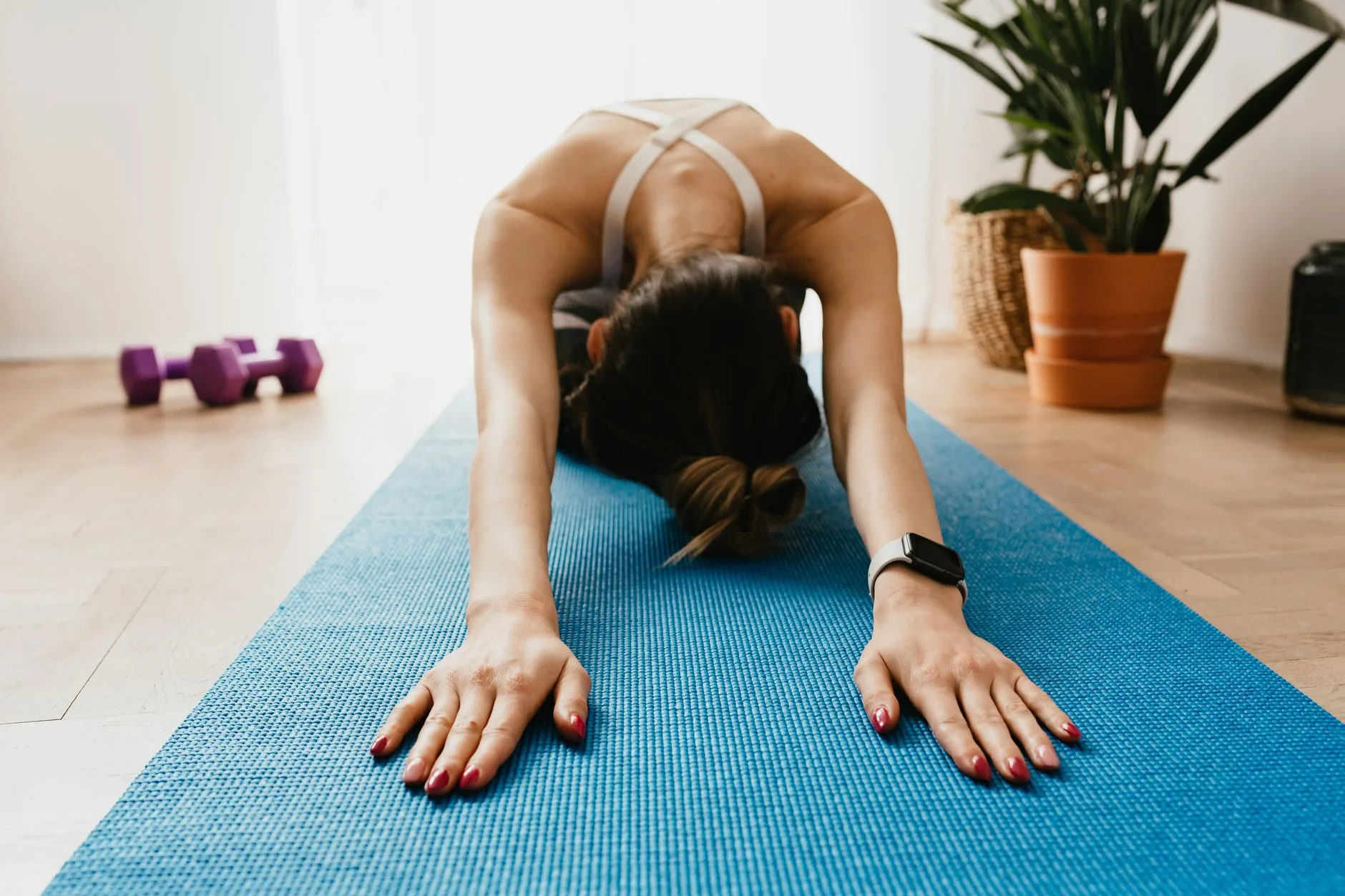
- Three minutes of cat-cow and child’s pose: move slowly between rounded and extended spine, then rest hips back toward heels.
- Four minutes of low lunge work: step one foot forward, pad the back knee with a towel and switch sides after a few breaths.
- Four minutes of standing poses: practise mountain pose, chair pose and a short warrior II hold on each side.
- Three minutes of downward dog practice: bend your knees, keep the spine long and do not worry about heels touching the mat.
- Two minutes of seated forward fold: sit on a cushion if your back rounds heavily, and use a strap around the feet if needed.
- Two minutes of lying rest: lie on your back with knees bent or legs long, breathing normally.
That is plenty. If you finish and think, “I could do a bit more”, stop there anyway for the first few sessions. Ending with spare energy makes you more likely to come back.
How hard should it feel?
Use a 1-10 effort scale. Beginner yoga should sit around 3-5 most of the time. You might briefly hit 6 in chair pose or downward dog, but you should not be shaking, holding your breath or forcing a stretch.
The best cue I know is simple: can you breathe quietly through the pose? If not, back off. Put hands on blocks, bend knees, shorten the stance or rest.
The First Poses to Learn
This article is not trying to replace a full pose library. We already cover the flexibility side in Yoga for Beginners: Essential Poses for Flexibility. For getting started at home, learn a small group well and ignore the rest for now.
Five useful starter poses
- Mountain pose: teaches standing posture, foot pressure and relaxed shoulders.
- Child’s pose: gives you a reliable rest position during any beginner session.
- Cat-cow: helps you feel spinal movement without loading your back heavily.
- Low lunge: opens the front of the hip, useful if you sit at a desk or drive a lot.
- Downward dog: builds shoulder awareness and hamstring length, but it should be modified at first.
Downward dog is the one beginners often chase too hard. Your heels do not need to touch the floor. Bend your knees, lift your hips and press the floor away with your hands. A long back beats straight legs every time.
Use props from day one
Blocks make standing and lunging poses much easier to control. In a low lunge, put a block under each hand instead of collapsing over the front thigh. In a forward fold, rest hands on blocks or shins rather than yanking toward the floor.
If you bought the mat but skipped the blocks, a thick hardback book works in a pinch. Do not use anything wobbly, glossy or precious. There is no dignity in sliding off a cookbook mid-lunge.
For wrist discomfort, make fists for some positions, come down to forearms when suitable, or reduce the time in poses such as plank and downward dog. If wrist pain is sharp or persistent, stop and use a class or physio-led advice before pushing on.
How to Practise Safely at Home
Home yoga is low-cost and convenient, but it removes the teacher’s eye. Your job is to stay inside a range you can control. Good beginner yoga should feel clear, not heroic.
Pain rules
Mild stretch is fine. Sharp pain is not. Nerve-like tingling, joint pinching, dizziness, pressure in the neck or pain that changes how you move afterwards all mean stop.
The NHS strength and flexibility guidance frames flexibility work as part of broader movement, not as a contest. That is the right mindset. You are trying to build usable range, not prove a point to your hamstrings.
Modify common problem areas
- Knees: fold a towel under the back knee in lunges and avoid forcing deep kneeling positions.
- Lower back: bend knees in forward folds and sit on a cushion for seated work.
- Wrists: reduce time in downward dog, spread fingers wide and keep weight through the whole hand.
- Neck: keep the head neutral rather than craning to watch a screen.
Screen position is easy to overlook. Put the video where you can glance without twisting every few seconds. During lying poses, listen rather than constantly looking.
Avoid these as a beginner
Skip headstands, shoulder stands, wheel pose, fast jump-through flows and deep hip openers for now. They are not needed for a beginner home routine. They also carry more risk when nobody is watching your form.
If you are pregnant, returning after surgery, managing high blood pressure, dealing with osteoporosis or working around a serious joint issue, use medical or qualified instructor guidance rather than a random online class.
How Often Beginners Should Do Yoga
Three short sessions a week beats one ambitious 75-minute session on Sunday night. The body likes consistency, and so does your calendar.
A realistic home plan looks like this:
- Week 1: two 15-minute sessions, mainly breathing, cat-cow, low lunge and rest.
- Week 2: three 15-20 minute sessions with the same routine each time.
- Week 3: add one slightly stronger section, such as chair pose or longer warrior II holds.
- Week 4: keep three sessions and decide whether you want flexibility, strength, recovery or stress relief as the next focus.
If you already train hard, put yoga after easier days. For example, do it after a gentle walk, a light exercise bike session or an upper-body gym day. If you lift heavy legs, save deeper hip and hamstring work for the day after rather than immediately before squats.
Morning or evening?
Morning yoga works well if you keep it gentle. Your body may feel stiffer first thing, especially in winter, so do not chase deep range at 6.30am. Evening yoga is better for slower stretches and winding down, but avoid a sweaty power session right before bed if it leaves you wired.
For most beginners, the best time is the one with the fewest excuses. Ten minutes before the school run is useful. Twenty minutes after work is useful. Waiting for the perfect quiet hour is how the mat becomes a decorative roll in the corner.
Common Beginner Mistakes That Slow Progress
Most beginners do not fail because yoga is too hard. They fail because the setup is annoying, the sessions are too long, or the chosen class is pitched at people who already know what they are doing.
Picking advanced videos too early
If the class title includes “power flow”, “arm balance”, “intermediate vinyasa” or “deep hip opener”, leave it alone for now. You want beginner, slow flow, gentle hatha, mobility or restorative.
Pay attention to the teacher’s pace. A good beginner class gives you time to find the pose before moving on. If you are two movements behind throughout, it is not your fault; the class is wrong for this stage.
Buying too much kit
You do not need a yoga wheel, bolster, cork blocks, eye pillow, special leggings and a £40 monthly app to begin. Spend on the mat first, blocks second, strap third. Everything else can wait.
If you already own recovery kit, link it sensibly. A foam roller can help after training, and we cover that in our foam rolling for muscle recovery guide, but it does not replace learning basic movement control. The wider category guide to yoga and recovery kit is useful once you know you will stick with it.
Treating every pose as a stretch contest
Beginners often push until they feel a big stretch, then assume that is better. Usually it just makes the nervous system guard harder. A smaller range held calmly does more for long-term progress.
Use this rule: if your face, jaw or breath tightens, reduce the pose. The point is not to win a private argument with your calves.
What to Spend and What to Skip
Home yoga is one of the cheaper ways to build a repeatable fitness habit. You can start for under £25 if you use budget kit, or build a nicer setup for £50-£80. More than that is a preference, not a requirement.
Sensible UK budget
- Starter setup, £15-£25: budget mat from Argos or Amazon UK, plus a towel from home. Good enough for testing the habit.
- Better beginner setup, £30-£45: Decathlon-style grippy mat, two foam blocks and a strap. This is the sweet spot I would choose.
- Long-term setup, £60-£120: premium rubber mat, cork blocks and a proper bolster if you practise most weeks.
- Online classes, £0-£20 per month: free YouTube is fine at first; paid apps are worth it only if they remove decision fatigue.
- Local beginner class, £8-£15 per session: useful once or twice so a teacher can correct obvious form issues.
The best value upgrade is not the fancy mat. It is a single in-person beginner class after you have done a few home sessions. A local class at £10-£12 can fix hand placement, stance length and breathing habits that you might otherwise repeat for months.
What I would skip
Skip ankle weights, yoga wheels, balance boards and hot-yoga towels until you know what style you like. They solve problems you probably do not have yet.
If your main goal is strength, keep some resistance work in the week. Yoga builds control and endurance, but it will not replace progressive loading forever. Our bodyweight progression guide is a better partner for that than buying another prop.
For recovery, pair short yoga sessions with sleep, walking and sensible training volume. If your muscles are always sore, the issue may be your programme rather than your lack of stretching. Our guide to warming up before lifting weights is worth reading if yoga is part of a broader home training setup.
The bottom line: buy a decent mat, use blocks without ego, repeat one short routine for two weeks, then decide what you actually need. That is a better yoga beginners home guide than buying half of Decathlon and hoping motivation appears in the delivery box.
Frequently Asked Questions
Can I start yoga at home with no experience? Yes, as long as you choose slow beginner sessions and avoid advanced poses. Start with 15-20 minutes, use blocks or cushions, and stop if you feel sharp pain or dizziness.
How much should beginners spend on yoga kit? Most beginners should spend around £30-£45 on a mat, two blocks and a strap. A cheaper £10-£15 mat is fine for testing the habit, but grip and comfort improve as you move into the £25-£50 range.
Is yoga enough exercise on its own? It depends on the style and your goals. Gentle yoga helps mobility and balance, but most adults still need regular moderate activity and strengthening work across the week.
How often should a beginner do yoga? Two or three short sessions a week is a good start. Consistency matters more than long sessions, so repeat a simple routine before adding harder flows.
What is the best yoga style for beginners at home? Gentle hatha, beginner mobility, slow flow and restorative classes are the safest starting points. Avoid power yoga, advanced vinyasa and deep backbend classes until the basics feel familiar.
Do I need blocks for beginner yoga? You do not strictly need them, but they make many poses safer and more comfortable. A pair usually costs £7-£15 and is worth buying before decorative props or expensive clothing.