A treadmill belt size guide should answer one practical question: will the running surface give you enough room at your intended pace without making the machine too large for the room? For most UK home users, about 45–50cm wide and 130–140cm long is a sensible walking and light-jogging range, while regular running is better served by roughly 50cm or more in width and 140–150cm in length. Those are starting points, not rigid rules; stride, speed and the treadmill’s surrounding geometry matter too.
In This Article
- Treadmill Belt Size Guide: The Quick Answer
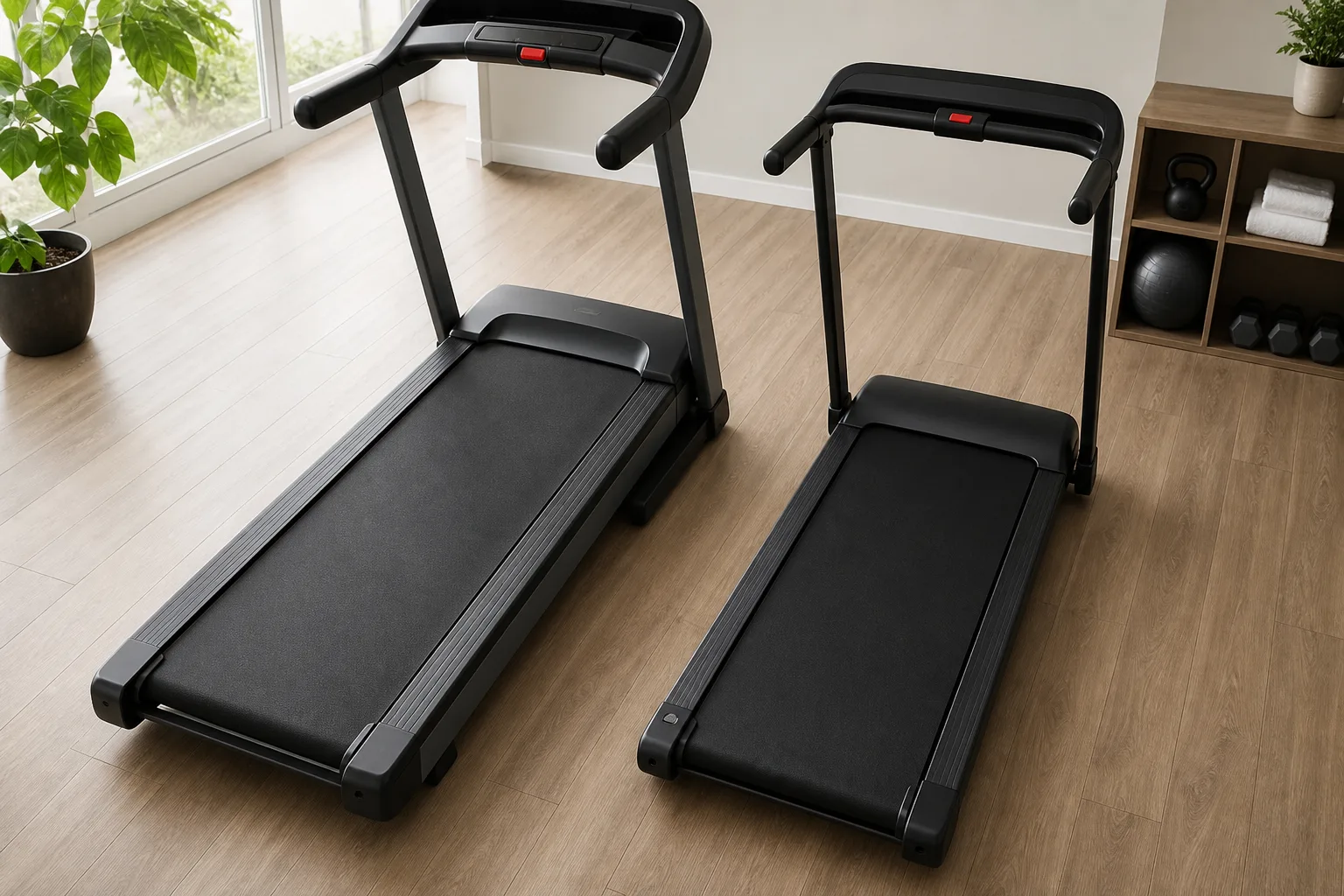
- Common Treadmill Belt Sizes Compared
- Belt Length: How Much Stride Room Do You Need?
- Belt Width: Compact Footprint or More Margin?
- Running Surface Size Is Not Machine Size
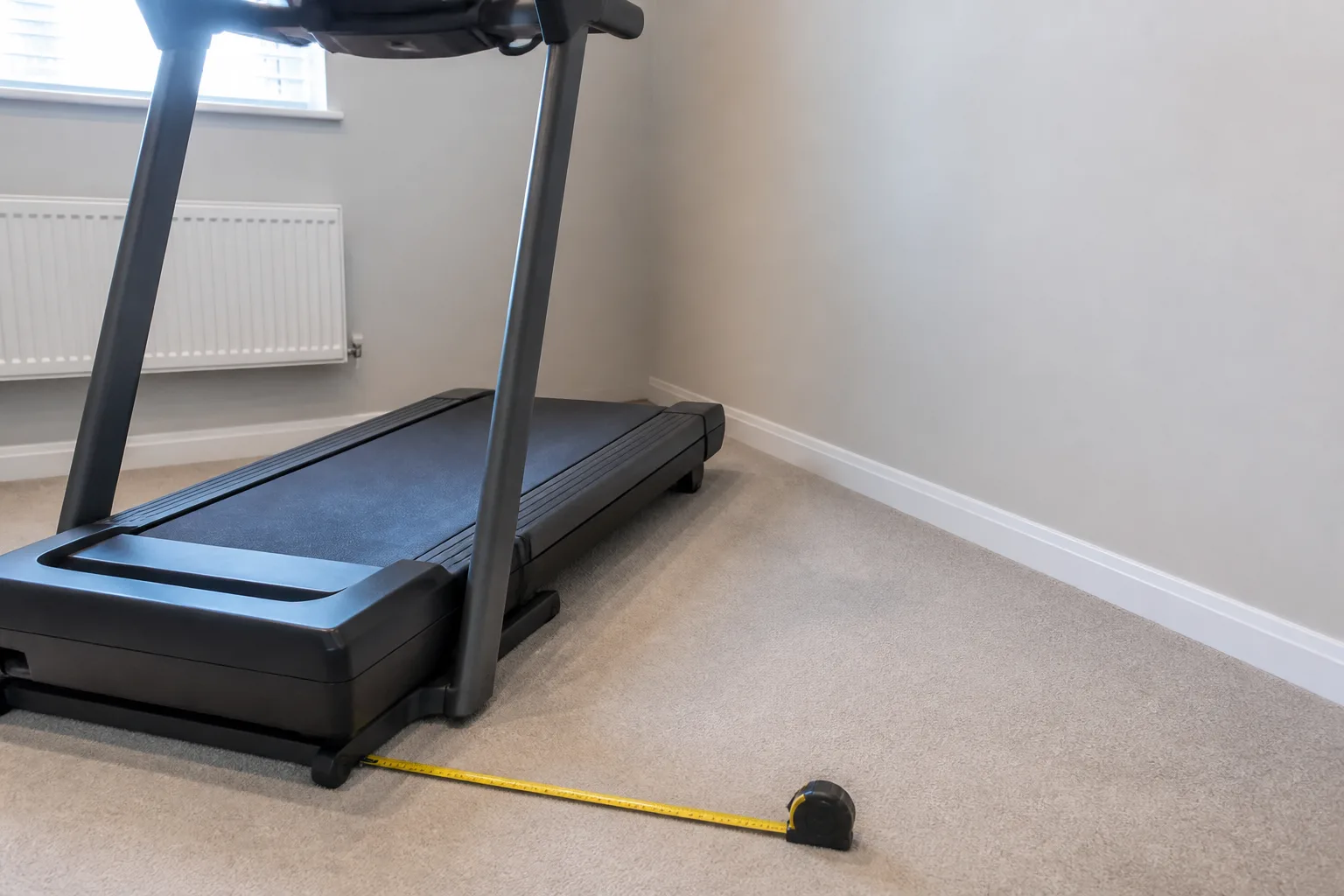
- How to Measure Before You Buy
- Worked Examples for UK Homes
- Treadmill Belt Size Checklist
- Frequently Asked Questions
Treadmill Belt Size Guide: The Quick Answer
The smallest suitable belt depends first on what you will do, not only how tall you are. Walking keeps the feet closer to the body and usually works on a shorter deck. Running lengthens the stride, adds more movement from side to side and makes a cramped surface more noticeable.
Useful starting ranges
- Walking and desk walking: roughly 40–45cm wide and 100–125cm long can work when speeds stay low.
- Brisk walking and occasional jogging: look around 45–50cm wide and 125–140cm long.
- Regular running: start around 50cm wide and 140cm long; a 145–152cm deck gives more room for a longer stride.
- Taller or faster runners: favour the longer end, but check your actual stride rather than buying by height alone.
I compared published running-surface and overall dimensions from manufacturers, then separated the belt measurement from the room footprint. That distinction matters: an attractively sized 50 x 140cm running area can still belong to a machine nearly two metres long.
Common Treadmill Belt Sizes Compared
| Running surface | Typical use | Strength | Likely compromise |
|---|---|---|---|
| About 40 x 100–120cm | Walking pads and low-speed walking | Smallest room footprint | Limited stride room and margin |
| About 45 x 120–130cm | Walking and compact home treadmills | Good space-saving balance | Can feel short for jogging |
| About 48–50 x 130–140cm | Brisk walking and mixed light use | Versatile for many homes | Not ideal for every fast runner |
| About 50–56 x 140–152cm | Regular jogging and running | More stride and lateral room | Larger, heavier machine |
These bands describe the usable moving surface, not the full outer deck. A retailer may quote “belt size”, “running area”, “walking surface” or “running surface”. Confirm that the number excludes fixed side rails and plastic end caps.
The label “compact” is also inconsistent. One manufacturer may use it for a short 42cm walking deck, while another applies it to a fully capable 50cm running surface housed in a carefully packaged frame. Compare the numbers, not the adjective. Look at photographs only after checking the specification table: wide-angle product images can make a modest deck appear longer than it is.
A centimetre conversion can create apparent differences that are only rounding. A belt advertised as 20 x 55 inches is roughly 51 x 140cm; another retailer may list the same surface as 50 x 140cm. Small discrepancies are less important than establishing whether the measurement refers to the usable surface and exact model variant.
For perspective, the official Life Fitness Aspire specification lists a generous 56 x 152cm running surface. Technogym’s MyRun documentation lists 50 x 143cm within a total machine measuring about 176 x 78.5cm. Both are useful real examples, but neither creates a universal minimum.
Belt Length: How Much Stride Room Do You Need?
Length is the dimension most likely to separate a walking treadmill from a comfortable running machine. Your foot lands in front of the body and travels backwards before lifting. As pace increases, that pattern occupies more deck.
Walking needs less length
At a steady walk, most users stay close to the front half of the surface. A compact 100–120cm belt may therefore be workable, particularly on a walking pad used beneath a desk. It still needs enough room that you are not constantly correcting position against the front housing or rear roller.
Walking technique, concentration and desk position can change where you stand. If you plan to type while moving, try the arrangement at low speed and use the machine exactly as its instructions permit. Our guide to different treadmill workouts explains why intended sessions should shape the machine choice.
Jogging exposes a short belt
A tentative jog on a short deck can feel manageable for thirty seconds and cramped after ten minutes. Fatigue, pace changes and small position shifts use the spare length. Around 130–140cm is a more useful mixed-use range, though a long-striding runner may want more.
Running benefits from 140cm or more
For regular running, 140cm is a sensible starting point and 145–152cm provides extra stride room. Taller runners often benefit, but height is only a proxy. Two people of the same height may run with different cadence and stride length.
Do not measure your outdoor stride and assume it transfers perfectly. Treadmill pace, incline, handrail position and confidence can all alter movement. The best evidence is a trial at the speed you will actually use.
The front of the belt matters as well as the rear. A large motor cover or low console crossbar can make you stand farther back, reducing the usable length you feel beneath you. Conversely, running too close to the front can shorten natural arm swing. During a trial, check that your normal position leaves visible belt both ahead of the lead foot and behind the trailing foot without forcing you to stare down.
Incline can change perception too. As the deck rises, some runners shorten their stride and move closer to the console; others drift backwards. Test the incline range you expect to use rather than judging the deck solely at zero gradient.
Belt Width: Compact Footprint or More Margin?
Width affects how much lateral margin you feel when arms swing, pace changes or attention drifts. It does not need to be enormous, but a narrow belt demands more precise tracking.
When 40–45cm can be enough
A 40–45cm surface can suit walking, gentle rehabilitation-style activity undertaken under appropriate guidance, and rooms where every centimetre counts. Narrow walking pads are built around this compromise. Check whether wide side rails make the complete machine less compact than the belt suggests.
Why 48–50cm is a useful middle ground
This range gives brisk walkers and light joggers more margin without automatically moving into commercial-gym proportions. In many UK spare rooms, the difference between a 45cm and 50cm belt is less important than the difference in complete frame width.
Who benefits from 51–56cm
Regular runners, people with a naturally wider gait and anyone who dislikes feeling boxed in may prefer a generous deck. The downside is obvious: wider belts need wider decks, rollers and frames. Measure doors and the final route into the room as well as the exercise space.
If overall cardio-machine footprint is still undecided, compare a treadmill, bike and rower before committing. A smaller belt is not a good saving if it makes the treadmill unsuitable for the intended training.
Running Surface Size Is Not Machine Size
This is the specification mistake I would most want to prevent. A 140 x 50cm running surface does not mean the treadmill occupies 140 x 50cm. The motor hood, front roller, rear casing, side rails, uprights and console all extend beyond it.
Measure five separate dimensions
- Total open length: front of motor housing to the furthest rear point.
- Total width: include rails, hinge hardware and protruding controls.
- Deck height: add the user’s height to check ceiling and head clearance, especially on incline.
- Rear clear area: preserve the manufacturer-specified space behind the machine.
- Folded envelope: include the raised deck, console and base rather than quoting saved floor area alone.
Our full home-gym space guide helps map equipment and movement zones. The treadmill should sit level, with its power lead routed safely and enough access for cleaning and adjustment.
Folding does not fix every space problem
A folding deck frees part of the floor when stored, but the machine remains tall and heavy. Check ceiling height at the deck’s highest stored point, whether the deck blocks a window or radiator, and whether you can lower it without moving other equipment.
Also check step-up height. A treadmill with a deep cushioned deck lifts the runner higher than a slim walking pad. In a low garage, loft conversion or room with a sloping ceiling, this can become the limiting measurement even when the belt itself fits easily. Add the tallest user’s standing height to the deck height, then allow extra room for the vertical movement of running and any incline setting.
The running surface also sits inside a maintained system. Belt tension, tracking and lubrication affect operation, so use our treadmill belt maintenance guide after purchase rather than treating the quoted dimensions as the only belt specification that matters.
How to Measure Before You Buy
Map the room first
- Mark the total machine footprint: use masking tape with the manufacturer’s complete open dimensions.
- Add required clearance: follow the manual for space behind and around the exact treadmill.
- Check vertical room: combine deck height, user height, incline rise and comfortable overhead clearance.
- Walk the delivery route: measure doors, stairs, landings and tight turns.
- Test the folded position: mark where the raised deck and console will project.
Estimate the usable belt you need
If possible, try treadmills with known running surfaces at a gym or showroom. Start walking, progress to your normal running pace and notice how much unused belt remains in front, behind and beside you. Do not hold the rails merely to make a small deck feel workable.
Record the smallest size that still feels natural, then add a little margin for pace changes. This is more informative than applying a height chart without context. Based on manufacturer specifications and common home formats, dimensions should be treated as a range rather than a pass/fail threshold.
If a showroom trial is impossible, compare the proposed deck with a known reference. Measure the belt at your gym, note the model specification, or lay out the candidate running surface on the floor with tape. Floor tape cannot reproduce a moving belt, but it quickly reveals when a proposed 40cm width is much narrower than the surface you are used to.
Keep the room measurements and product specification together. Screenshots are useful because retailers sometimes replace one model variant with another while retaining similar page copy. Before paying, confirm the model number, running surface, total open size, folded size, maximum user weight and delivery dimensions on the final order page.
Worked Examples for UK Homes
Walking desk in a small office
The priority is low-speed use and storage. A belt around 40–45cm wide and 100–120cm long may be enough. Check total height beneath the desk, console placement, maximum speed and whether the machine is designed for desk use. A longer running deck brings little benefit if it prevents the office chair returning to the room.
One treadmill shared by walkers and occasional joggers
This is where roughly 48–50cm by 130–140cm makes sense. It gives more breathing space than a walking pad without requiring the biggest chassis. The faster user’s trial should decide the final length.
Regular running in a garage gym
Prioritise a surface around 50cm or wider and 140–152cm long, then verify ceiling clearance and rear space. Garage dimensions may look generous until storage, a rack and a workbench are included. Our broader guide to choosing home-gym equipment helps decide which machine deserves permanent floor space.
Tall user who mainly walks
Height alone does not force a full 152cm running deck. A tall walker may be comfortable on a mid-length belt, while a shorter fast runner may prefer more. Intended pace and observed stride remain the better decision tools.
Treadmill Belt Size Checklist
Before ordering, make sure you can answer each point:
- Activity: walking, brisk walking, jogging or regular running?
- Usable surface: are the quoted dimensions for the moving belt rather than the full deck?
- Fastest user: has that person tried a similar length and width at realistic pace?
- Complete footprint: have you marked the full open dimensions on the floor?
- Vertical clearance: have you allowed for deck height, incline and user height?
- Safety space: does the room meet the exact manufacturer’s clearance instructions?
- Delivery: will the packaged or partly assembled treadmill reach the room?
- Storage: is the folded size compatible with doors, radiators and other kit?
My default recommendation is simple: do not shrink the belt below what your fastest intended use needs merely to save a few centimetres. If the appropriate running surface will not fit, a different cardio format is the better purchase.
Frequently Asked Questions
What is a good treadmill belt size for walking? Around 40–45cm wide and 100–125cm long can work for low-speed walking, while brisk walkers may prefer a longer and wider surface.
What treadmill belt length is best for running? About 140cm is a useful starting point for regular running, with 145–152cm offering more room for longer strides and pace changes.
Is a 40cm treadmill belt too narrow? Not necessarily for walking, but it can feel restrictive for jogging or running. Try the width at your intended pace before buying.
Does a taller person always need a longer treadmill? No. Height is one factor, but pace, cadence, stride and confidence also matter. An actual trial is more useful than height alone.
Does treadmill belt size include the side rails? Usually not. Running-surface measurements normally describe the moving belt; confirm the complete machine width separately.
How much room should I leave behind a treadmill? Follow the clearance stated in the exact manufacturer’s manual. Do not assume the running-belt length or folded footprint includes safe surrounding space.