The Fitbit Charge 6 is the best fitness tracker for weight training for most people. It is slim enough not to dominate wrist position, offers a dedicated strength workout mode and combines gym sessions with sleep and everyday activity trends. Choose WHOOP Peak when recovery habits matter more than an on-wrist screen, or the Amazfit Active 2 when you also want a larger watch display, GPS and broader sports features.
In This Article
- Trackers compared
- Six tracker reviews
- What trackers can measure
- Wrist tracking vs chest straps
- Using tracker data
- Comfort and lifting
- Final verdict
- Frequently Asked Questions
Fitness Trackers for Weight Training at a Glance
For lifting, comfort, session logging and useful long-term trends matter more than a huge exercise list. Optical heart-rate sensors can struggle when gripping hard, flexing the wrist or resting a watch against straps, so calorie and recovery scores should be treated as estimates.
| Tracker | Verdict | Format | Best use |
|---|---|---|---|
| Fitbit Charge 6 | Best overall | Slim tracker | Workout logging and everyday health features |
| Garmin vívosmart 5 | Best for Garmin users | Slim tracker | Simple gym and recovery overview |
| WHOOP Peak 5.0 | Best for recovery trends | Screenless wearable | Sleep, strain and recovery habits |
| Samsung Galaxy Fit3 | Best value for Android | Colour-screen tracker | Budget gym and daily activity tracking |
| HUAWEI Band 11 | Best slim budget band | Slim tracker | Long-wear activity and sleep tracking |
| Amazfit Active 2 | Best watch-style option | Smartwatch | Strength plus running and outdoor training |
The Six Best Fitness Trackers for Weight Training
1. Fitbit Charge 6 — Best Overall

Charge 6 is the strongest all-round band here. It combines a slim case, built-in GPS, exercise modes, heart-rate tracking and Fitbit’s established sleep and readiness presentation. Google Wallet and Maps are useful outside the gym, while the narrow body is less intrusive than a large sports watch during presses and front-rack work.
Some insights sit behind a membership after the included period, and automatic exercise recognition cannot reliably identify every set, rep or load. Log the session deliberately and keep a separate training record for weights and progression.
- Best for: Workout logging and everyday health features.
- Main limitation: lifting metrics remain estimates rather than direct measures of muscular work.
2. Garmin vívosmart 5 — Best for Garmin Users
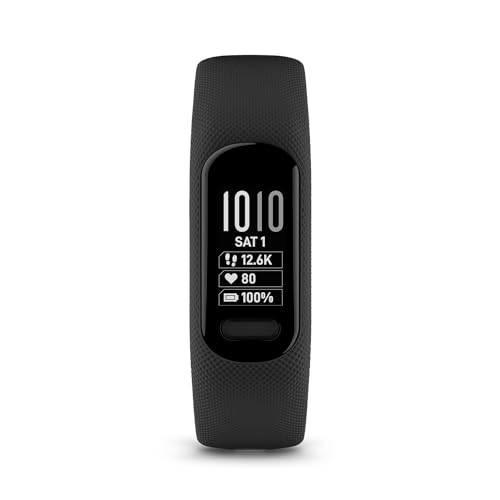
The vívosmart 5 suits someone already using Garmin Connect who wants a light band rather than another large watch. It tracks heart rate, sleep, stress and activities, with a simple display that stays out of the way during dumbbell and machine sessions.
It lacks built-in GPS and the screen is small for interacting between sets. Garmin’s recovery-style metrics are useful as trends, not instructions to skip or force a workout.
- Best for: Simple gym and recovery overview.
- Main limitation: lifting metrics remain estimates rather than direct measures of muscular work.
3. WHOOP Peak 5.0 — Best for Recovery Trends

WHOOP removes the screen and focuses on continuous strain, sleep and recovery trends. The selected Peak package includes a 12-month membership, which makes the true buying decision the ongoing service as much as the band. It suits people who will act on sleep consistency and training-load patterns.
There is no conventional watch display, and useful access depends on membership. Recovery scoring is an interpretation of sensor data, not a medical assessment or a direct measurement of muscle readiness.
- Best for: Sleep, strain and recovery habits.
- Main limitation: lifting metrics remain estimates rather than direct measures of muscular work.
4. Samsung Galaxy Fit3 — Best Value for Android

Galaxy Fit3 offers a bright colour display, workout modes, sleep and activity tracking at a value-led position. It is an appealing partner for a Samsung phone and gives clearer on-wrist controls than the smallest bands.
Compatibility is centred on Android and Samsung’s ecosystem. The larger rectangular case may catch on lifting straps or press into the wrist during deep extension, so check fit before loading a bar.
- Best for: Budget gym and daily activity tracking.
- Main limitation: lifting metrics remain estimates rather than direct measures of muscular work.
5. HUAWEI Band 11 — Best Slim Budget Band

Band 11 is a light, discreet choice for basic workout, sleep and daily activity trends. Its long-battery positioning suits people who abandon trackers when charging becomes frequent, and the slim shape is less likely to interfere with wrist wraps.
App compatibility and feature availability vary by phone and region. It is not the choice for detailed strength analytics; use it to record sessions and habits rather than expecting automatic set-by-set coaching.
- Best for: Long-wear activity and sleep tracking.
- Main limitation: lifting metrics remain estimates rather than direct measures of muscular work.
6. Amazfit Active 2 — Best Watch-Style Option

Active 2 makes sense when strength training sits alongside running, walking and outdoor sport. The selected model offers GPS, maps, a larger AMOLED display and extensive sport modes, so it replaces a basic smartwatch as well as logging gym sessions.
A bigger watch is easier to read but more intrusive around kettlebells, straps and wrist wraps. Exercise-mode quantity does not prove accuracy for resistance training, and AI summaries should not replace planned programming.
- Best for: Strength plus running and outdoor training.
- Main limitation: lifting metrics remain estimates rather than direct measures of muscular work.
What a Tracker Can and Cannot Measure
A tracker can record session duration, approximate heart-rate response, movement, sleep patterns and workout frequency. Those are useful for consistency. It cannot directly measure motor-unit recruitment, muscle damage, technique quality or whether a set was sufficiently close to failure.
- Useful: attendance, session duration, rest habits, sleep consistency and broad cardiovascular response.
- Approximate: calories, strain, readiness and wrist heart rate during gripping movements.
- Usually separate: exercise, sets, reps, load, range of motion and progression.
For strength progress, the training log still wins. Record the lift, load, repetitions and difficulty; use wearable data as context around that record.
Wrist Tracking vs a Chest Strap
Optical wrist sensors infer pulse from blood-flow changes. Heavy gripping, wrist flexion, vibration and a loose band can interrupt the signal. A compatible chest strap measures electrical activity closer to the heart and is often more responsive during intervals, but it still does not measure muscular effort.
Wear a wrist tracker snugly above the wrist bone and move it clear of wraps. If heart-rate accuracy during conditioning is important, check whether the chosen ecosystem accepts an external sensor. Do not use either device to diagnose symptoms or decide whether chest pain, dizziness or unusual breathlessness is safe.
How to Use Tracker Data for Lifting
- Start the workout manually: automatic detection may miss warm-ups or classify movements badly.
- Keep a proper lifting log: weights and reps matter more than calorie totals.
- Compare trends, not single days: sleep and resting data become useful over weeks.
- Use readiness as context: combine it with soreness, motivation, illness and planned workload.
- Ignore competitive calorie numbers: devices use different algorithms and are not directly comparable.
The NHS strength and flexibility guidance provides a sensible baseline for progressive activity. A tracker can support the habit, but it does not create a balanced programme.
Comfort, Grip and Durability
A tracker that interferes with front squats, straps or kettlebells will be removed and forgotten. Slim bands are easiest for lifting; larger watches provide better controls but need careful placement. Avoid trapping the case beneath a wrist wrap and remove it for movements where metal hardware can press into skin or contact equipment.
Water-resistance ratings do not make sweat and chalk harmless forever. Wipe the case and strap after training, let the skin dry, and follow the maker’s cleaning instructions. Stop wearing a band that causes persistent irritation.
Final Verdict
Fitbit Charge 6 is the best overall choice for most lifters. Garmin vívosmart 5 is the better fit for Garmin Connect users, while WHOOP Peak suits someone committed to recovery trends and the continuing membership.
Choose Galaxy Fit3 or HUAWEI Band 11 for value, depending on phone compatibility. Amazfit Active 2 is the best option when gym training is only one part of a broader watch-and-GPS requirement.
Frequently Asked Questions
Can a fitness tracker count weight-training reps?
Some attempt it, but movement patterns and exercise recognition vary. Check and correct the log rather than treating automatic rep counts as authoritative.
Are fitness-tracker calories accurate for lifting?
They are estimates based on personal data, heart rate and algorithms. Resistance training is particularly difficult to reduce to one calorie number.
Is WHOOP worth it for weight training?
It can be useful for sleep, strain and recovery habits if you value the subscription service. It does not replace a programme or training log.
Should I wear a tracker under wrist wraps?
No. Move it above the wrap or remove it so the case does not press into the wrist or distort the sensor signal.
Is a chest strap better for lifting?
It may track heart rate more responsively, especially during conditioning, but heart rate still does not measure muscular effort or set quality.
What is the most important fitness-tracker feature for lifting?
Comfort and reliable manual workout logging. A device you can wear consistently is more useful than one with more modes but an awkward case.