The best smart rowing machine for a UK home depends on whether you want training data, guided sessions on your own tablet or classes built into the machine. Choose the Concept2 RowErg with PM5 for self-directed, subscription-free training; consider the folding JLL JL-RW5941SMART for a lower-cost introduction to connected rowing. The Sunny SF-RW523021 adds more useful on-console rowing metrics to the same free SunnyFit app, but stores upright rather than folding its rail.
These are home-use buying recommendations based on manufacturer documentation, current product specifications and purchase conditions—not hands-on testing. None of the three includes a tablet or a built-in class screen. Hydrow and WaterRower need different buying checks, covered below.
Contents
- Best Smart Rowing Machines for UK Homes: Shortlist
- Three Connected Rowers Worth Comparing
- Built-In Classes and Water Resistance: Other Routes
- Fit, Floor Space and Safe Storage
- Total Cost, Seller Returns and Home Trials
- Making Connected Training Useful
- Which Smart Rower Should You Choose?
- Frequently Asked Questions
Best Smart Rowing Machines for UK Homes: Shortlist
Start with the kind of session you want, then check the machine fits you and your room. Paying for more resistance settings does not buy better coaching, and a Bluetooth logo does not guarantee compatibility with every app.
| Rower | Choose it for | Connected setup | Important trade-off |
|---|---|---|---|
| Concept2 RowErg, standard legs, PM5 | Structured intervals, pace and power data without a required subscription | PM5 plus free ErgData on your compatible phone or tablet | Air flywheel; 244 × 61cm machine; separates into two pieces |
| JLL JL-RW5941SMART | A lower-cost magnetic rower with a folding rail | Bluetooth, free SunnyFit and your own device | Basic console: time, strokes and calories, not a PM5-style pace/power display |
| Sunny SF-RW523021 | Magnetic resistance with distance, stroke rate and 500m splits on the console | Bluetooth, free SunnyFit and your own device | Dual rail stores upright as a whole machine; no built-in class screen |
Three Connected Rowers Worth Comparing
Concept2 RowErg Standard Legs with PM5: for data-led training

The PM5 is the reason to choose this over the cheaper magnetic machines. It shows pace, watts and stroke rate, supports programmed workouts and works without a paid membership. Concept2’s free ErgData app adds workout programming, history and online-logbook syncing on iOS or Android. The app connects to the PM5 by Bluetooth; compatible third-party apps may charge separately.
The standard-leg version has a 36cm seat height and an included device holder. Taller legs are a separate version, not a longer seat rail. The air flywheel is the main trade-off: choose this for its training system, not on a promise of silent early-morning exercise.
Choose it if you want to plan and record rowing sessions without committing to a class subscription. Skip it if an integrated instructor screen is the feature that will make you exercise.
JLL JL-RW5941SMART: for a folding, app-connected starter setup

The JLL Multi-Function Premium Magnetic rower pairs 16 manually adjusted resistance levels with Bluetooth and free SunnyFit sessions on your phone or tablet. Its device holder is included. That makes it a sensible lower-cost route if you want guided variety without buying an integrated touchscreen.
Its folding rail is a practical difference from the Sunny dual-rail model below. The basic monitor shows time, stroke count, total count and estimated calories; it does not provide the same standalone pace-and-power toolkit as the PM5. Pick it for guided sessions and simple tracking rather than comparing competitive 500m splits across machines. JLL specifies a 130kg maximum user weight.
Choose it if keeping the purchase cost down and folding the rail matter more than detailed console data. Skip it if you need distance and split time visible without relying on your device.
Sunny SF-RW523021: for magnetic rowing with more console feedback
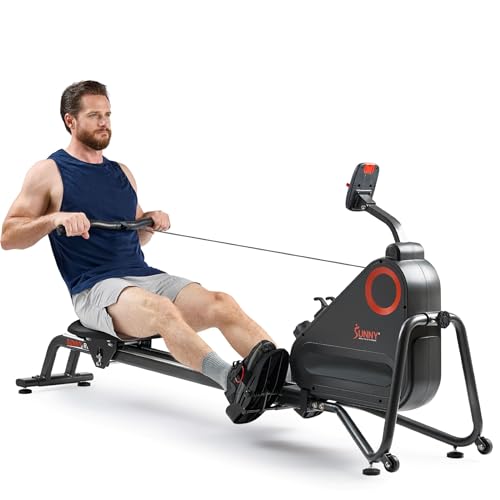
This is the dual-slide-rail model, not the older non-smart SF-RW5515. Like the JLL, it offers 16 manual magnetic settings and free SunnyFit connectivity, so paying more does not unlock a different app library. The useful upgrade is the console: distance, strokes per minute and time per 500m are shown alongside time and counts.
The manufacturer’s specifications also show a device holder and whole-machine upright storage. It occupies approximately 201 × 50cm when assembled; UK product information gives a 135kg user limit. These are fitting constraints, not evidence that it feels better than the JLL.
Choose it if you want magnetic resistance and more session feedback on the rower itself. Skip it if a folding rail is essential, or if you expect its pace figures to be directly interchangeable with Concept2 results.
Built-In Classes and Water Resistance: Other Routes
Hydrow Wave: investigate it when classes are the priority
A Hydrow Wave has a built-in 16-inch screen rather than a holder for your device. Its appeal is the integrated coached experience. Hydrow’s membership information distinguishes paid content from basic “Just Row” operation: cancelling membership does not turn the hardware into a full free class service.
For a UK purchase, establish the current hardware price, membership charge, UK support and return conditions with the supplier before comparing totals. Compare supported UK packages, not just screen size. If classes are non-negotiable, resolve those points rather than buying one of the three screenless machines and hoping it feels equivalent.
WaterRower: check the monitor, not just the wood finish
“S4” alone does not prove wireless connectivity. WaterRower distinguishes the S4 Bluetooth monitor from the older standard S4; a USB-compatible standard S4 needs the separate ComModule for compatible mobile-app connections. Confirm exactly which monitor and accessory package you are buying before treating a wooden WaterRower as ready for connected training. This is an alternative to investigate for water resistance, not an extra recommended purchase with assumed accessories.
Fit, Floor Space and Safe Storage
Check leg reach and clearance separately
Measure the room with the seat moving and your elbows clear, not just the storage corner. Concept2 specifies about 274 × 122cm of operating space. Its standard rail accommodates an inseam up to about 96.5cm; longer inseams may need an extended rail, not taller legs. Its published weight figures distinguish 227kg in Concept2’s own testing from 135kg under the European testing standard—ask Concept2 which rating applies to your intended use rather than treating them as the same certification.
JLL’s 130kg and the Sunny’s UK 135kg limits are not height limits. If you are unusually tall, ask the supplier to confirm usable seat travel for your inseam; overall rail length alone does not establish fit. Our rowing-machine buyer’s guide covers the wider fitting decisions.
Plan storage and power before delivery
- Concept2: separate the frame into two pieces. The manufacturer warns against standing the assembled rower on end because it can tip. The PM5 uses two D-cell batteries, supplemented by flywheel power during exercise.
- JLL: fold and secure the rail using the supplied instructions; keep hands clear of the moving joint. Its manual specifies two AAA monitor batteries.
- Sunny: follow the upright-storage procedure and control the sliding seat as you raise it. The current model manual specifies two AAA monitor batteries; it does not need mains power for rowing.
Your phone or tablet still needs charging, and online videos need an internet connection. None of these packages includes a separate heart-rate strap. Check the exact monitor/app compatibility before adding one. A floor mat may protect the surface, but neither a mat nor magnetic resistance guarantees that neighbours will hear nothing.
Total Cost, Seller Returns and Home Trials
Compare the machine, delivery or assembly charge, device, optional heart-rate sensor and any paid app over the same ownership period. For example, a service costing £30 per month adds £1,080 over three years; that is an illustration, not a quoted subscription price. The free core apps above avoid that recurring requirement. See our home-gym budget guide before spending the remaining budget on accessories.
Purchase conditions checked on 29 September 2026: the linked Concept2 offer was sold by Amazon; the JLL and Sunny offers were sold by JLL Fitness Ltd. We could not establish a seller-confirmed home trial, used-machine return acceptance, collection arrangement or collection/return charge for those exact purchases. Do not assume any includes a free home trial. Obtain those details in writing before ordering if you need to try the machine at home to decide.
The distinction matters: Concept2’s own 30-day guarantee applies to direct UK sales and makes shipping the buyer’s responsibility. JLL’s website guarantee describes unused returns within 30 days, buyer-paid return shipping and a minimum 20% deduction for opened or used goods. Neither website policy establishes the terms of the linked marketplace order. A defect warranty is separate from permission to return a functioning machine because you dislike it.
Making Connected Training Useful
Start with one app and a repeatable workout rather than subscribing to several services immediately. A short, steady session logged consistently is easier to compare with your own later sessions than unrelated classes with different targets. Do not compare calories or distances across different rower brands as though they were laboratory-equivalent measurements.
- Learn the movement first: practise the drive sequence of legs, body and arms before chasing a stroke-rate number. A screen cannot check every part of your technique.
- Use heart-rate data deliberately: our heart-rate-zone guide explains the context; confirm sensor compatibility before buying.
- Keep tracking simple: if you also use a fitness tracker or smartwatch, check whether the app syncs workouts to it and avoid duplicate recordings.
The NHS activity guidance provides the broader context for an exercise routine. A connected rower can help you keep a record; buying one does not guarantee that you meet those recommendations.
Which Smart Rower Should You Choose?
For structured rowing data, choose the Concept2 PM5 setup. For a less costly machine with a folding rail, choose the JLL if its simpler monitor is sufficient. Choose the Sunny when magnetic resistance and on-console pace information matter more than folding storage.
If a built-in class screen is the reason you are shopping, pause and investigate Hydrow’s full UK package instead. None of the three recommended machines is a direct substitute for that experience. Fit, training style and acceptable purchase conditions should settle the decision—not a universal “best overall” label. Keep it in proportion to the rest of your home-gym equipment.
Frequently Asked Questions
Do smart rowing machines need a subscription? Not necessarily. The Concept2 PM5 works on its own and ErgData is free. The recommended JLL and Sunny models connect to free SunnyFit. Optional third-party apps and Hydrow’s coached content have their own terms.
Do these rowers include a tablet or touchscreen? No. The three recommended machines have their own monitors and device holders, but you supply the phone or tablet for app sessions. Hydrow Wave is a different setup with an integrated screen.
Does every WaterRower S4 have Bluetooth? No. A standard USB-compatible S4 needs the separate ComModule for compatible mobile connections. The S4 Bluetooth version already has wireless connectivity. Confirm the supplied monitor before buying.
Can I return a rower after trying it at home? Only rely on a home trial if the seller confirms it for your purchase. A manufacturer-direct guarantee or defect warranty does not automatically establish used-return acceptance, collection or charges for another seller’s order.
Can a Concept2 RowErg be stored upright? Do not stand the assembled RowErg on end: Concept2 warns that it may tip over. Separate it into two pieces and follow the manufacturer’s storage instructions.
Is a magnetic rower silent? Do not assume that it is. Removing an air flywheel changes the noise source, but seats, drives and movement can still transmit sound. We have not measured noise from these machines in a home.